How AI Exposure is Reshaping Jobs in Creative Fields
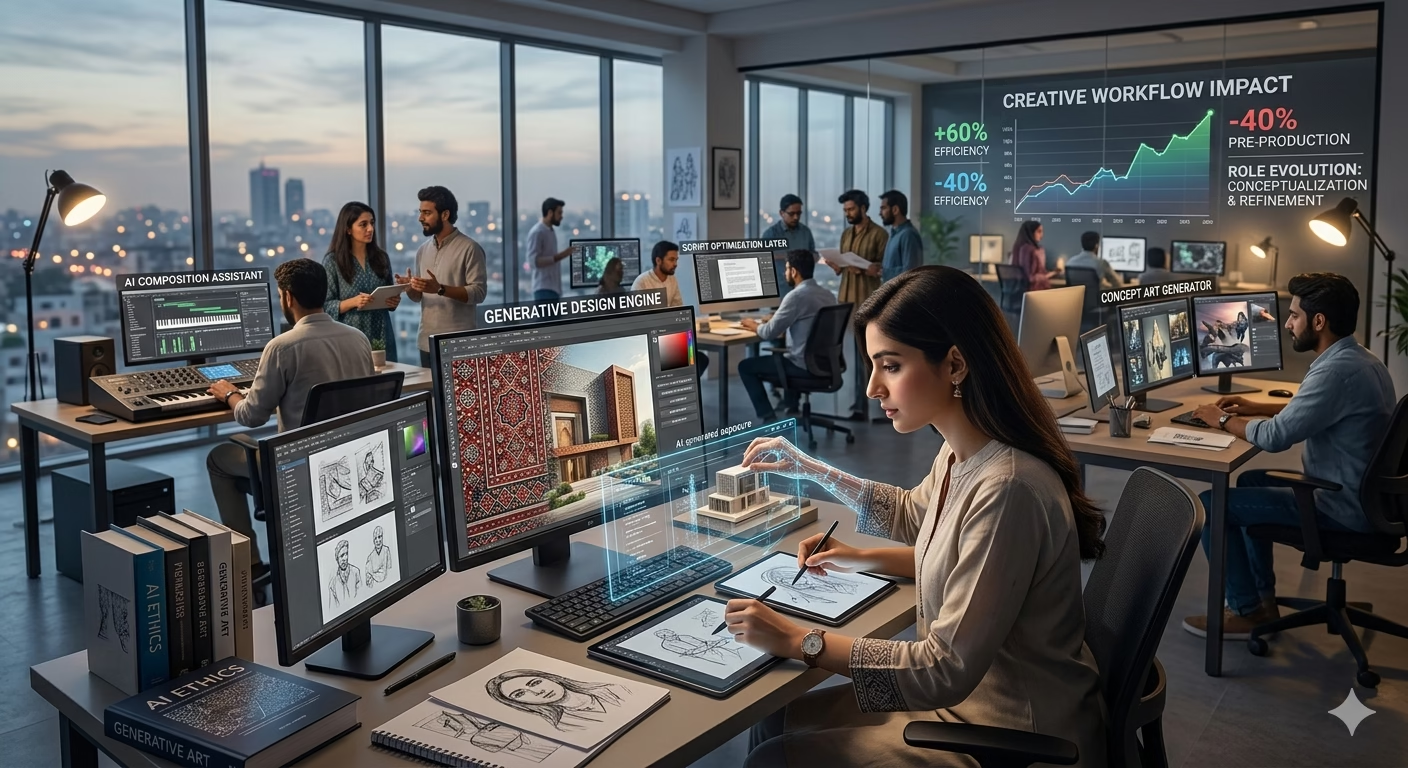
The integration of artificial intelligence into the creative economy has moved past simple experimentation into a core professional reality. As of May 4, 2026, the narrative surrounding ai taking creative jobs has shifted from pure displacement to a complex transformation of how artists and designers work. While there are valid concerns about artists losing jobs to ai, recent data indicates that highly exposed roles are finding ways to maintain earnings by evolving their workflows.
1. The Real Impact of AI Exposure on Creative Employment
The idea of ai taking over artists jobs is not a simple replacement of humans by machines, but rather a shift in the tasks that define a role.
- Employment Trends: Creative occupations with high AI exposure have seen slightly weaker employment growth compared to less exposed roles, though the gap remains modest.
- Earnings Stability: There is currently no broad evidence that generative AI has significantly reduced the average earnings of creative professionals.
- Productivity Gains: Implementing AI in creative tasks has led to productivity increases of 15% to 25%, allowing for faster project completion.
- Shift in Task Focus: Automation is primarily absorbing routine tasks like basic data organization and iterative design steps, leaving high-impact creative decision-making to humans.
2. Pros and Cons of AI in the Creative Industry
A comprehensive artificial intelligence in the creative industries a review reveals a landscape of significant opportunity balanced by cultural and professional risks.
Benefits of AI in Creative Industries
- Democratization: Generative tools allow individuals without traditional technical training to prototype complex ideas and participate in the creative economy.
- Efficiency: Nearly 74% of creators report that AI helps them overcome creative blocks and manage time-consuming iterative work more effectively.
- Rapid Innovation: The ability to generate 3D assets or musical compositions from text prompts has accelerated development cycles in gaming and film.
Cons and Risks
- Intellectual Property Concerns: Many models are trained on existing human work without clear compensation structures, leading to ongoing legal and ethical debates.
- Brand Sameness: Roughly 79% of marketing leaders worry that over-reliance on AI leads to a lack of original “human” flair, resulting in repetitive visual and written styles.
- Skill Gaps: There is a growing divide between those who can effectively use AI tools and those who lack the technical literacy to stay competitive.
3. Generative AI in Creative Industries: Market Dynamics
The market for generative ai in creative industries is projected to grow significantly, reaching an estimated $5.38 billion by the end of 2026.
- Adoption in Film and Media: In audiovisual sectors, adoption rates have reached nearly 90% for specific post-production tasks.
- Music Industry Pressure: UNESCO has warned that by 2028, revenue for human music creators could potentially drop by 24% if AI-generated music continues its current growth trajectory.
- The “Human-in-the-Loop” Model: The most successful agencies in 2026 are those that combine AI speed with human editorial oversight to ensure cultural relevance.
4. AI in Creative Spaces: The Future Workforce
Instead of a total loss of work, ai in creative spaces is giving rise to new specializations that require a blend of artistic vision and technical AI fluency.
- Prompt Engineering: This has become a recognized skill set, requiring a deep understanding of how linguistic nuances influence AI-generated outputs.
- AI Ethical Oversight: Roles focused on ensuring that AI-generated content is safe, original, and free from bias are becoming essential in corporate creative teams.
- Creative Strategy: As execution becomes cheaper and faster, the value of original strategy and the “big idea” has increased, favoring those who can think beyond the capabilities of the algorithm.
Frequently Asked Questions (FAQs)
1. Is AI really taking creative jobs away?
Data suggests that while employment growth in high-exposure roles is slower, it has not yet led to a massive wave of job losses. The trend is more toward “reshaping” rather than “eliminating” jobs.
2. How can artists protect their careers from AI?
The key is adopting a “human-plus-AI” approach. Learning to use these tools to handle repetitive tasks while focusing on high-level creativity and strategy is the best way to stay relevant in the 2026 market.
3. What are the biggest benefits for creators?
The main benefits are increased speed, the ability to prototype ideas almost instantly, and the removal of technical barriers for people with great ideas but limited traditional training.
4. Why are some people losing work to AI?
Losses are primarily occurring in entry-level or routine sectors, such as stock photography, basic translation, and simple copywriting, where AI can produce “good enough” results at a much lower cost.
5. Will human creativity ever be fully replaced?
Most industry experts believe that while AI is great at patterns and data, it lacks the emotional depth, lived experience, and unpredictable innovation that define true human creativity.
🚀Build a Stronger Digital Footprint with RojrzTech
In a constantly changing digital environment, brands succeed by staying flexible and focused. RojrzTech delivers tailored solutions across web development, UI/UX, SEO, branding, and social media to help businesses strengthen visibility and performance online.
📩 Start Your Digital Growth Journey
Connect with RojrzTech to create digital experiences that support long-term growth and meaningful engagement. Let’s shape a smarter, more impactful online presence