
Gas Prices Surge as Global Conflict Ignites: How High Could They Go?
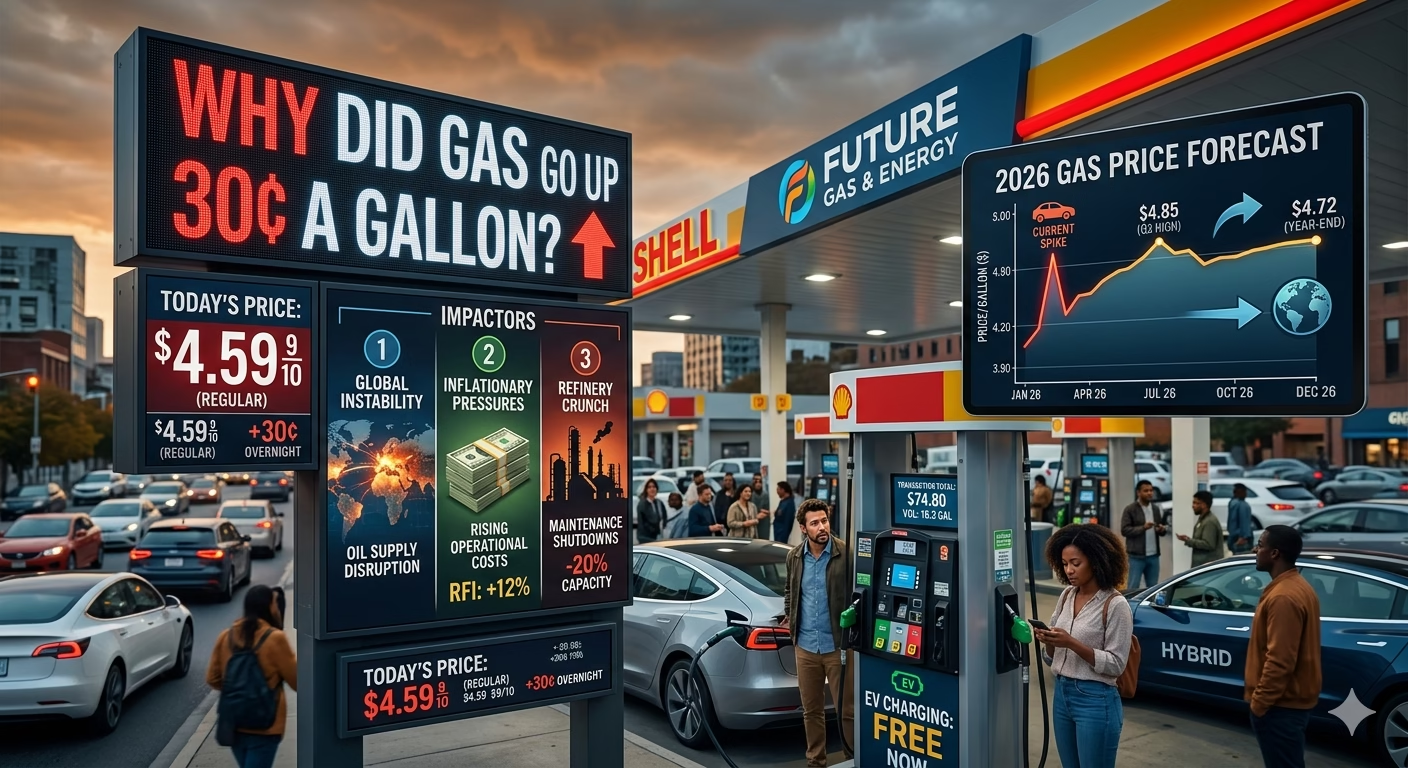
The global energy market has been thrown into a state of absolute chaos following the recent escalations in the Middle East. For millions of drivers across the globe, the reality at the pump has become a source of daily anxiety. If you have noticed that gas has gone up significantly, you are not alone. In fact, many regions reported that gas went up 30 cents today, marking one of the most aggressive weekly price hikes in recent memory.
With prices climbing at an unprecedented rate, the question on everyone’s mind is simple: How high can they go? Some experts suggest that gas prices are set to go through the roof, potentially reaching levels that would make the current spikes look minor.
1. Why Did Gas Go Up 30 Cents a Gallon?
To understand the current crisis, one must look toward the Strait of Hormuz. Following the outbreak of the iran us conflict 2026, this vital maritime artery has become a high-risk combat zone. Approximately 20% of the world’s liquid petroleum passes through this strait. With tensions rising, insurance premiums for oil tankers have skyrocketed, and some shipments have been halted entirely.
When people ask, “why did gas go up 30 cents a gallon today?“ the answer lies in a combination of supply fear and market speculation. Traders are pricing in the “worst-case scenario”—a total blockade of the Persian Gulf.
2. The Impact of the “Gas Money Today Report”
The latest gas money today report indicates that the national average is approaching a psychological breaking point. For many families, the sudden increase means that their weekly gas money again has to be diverted from essential groceries or savings.
Historically, energy shocks of this magnitude lead to a rapid cooling of consumer spending. If gas money doubles for the average commuter, the ripple effect across the economy could trigger a severe recession. Unlike previous years where fuel prices may finally come down after two months, the geopolitical nature of this conflict suggests that relief is not on the immediate horizon.
3. History vs. Reality: When Was Gas Less Than $2?
It feels like a lifetime ago, but consumers often ask, “when was the last time gas was less than $2 a gallon?” For most of the United States, that milestone was last seen during the height of the 2020 pandemic when global travel came to a standstill. Today, that figure seems like a distant dream. The current trajectory suggests we are moving toward a future where $6 or $7 per gallon could become a temporary “new normal.”
4. The Logistics of the 30-Cent Spike
It is rare to see such a massive jump in a single 24-hour window. Usually, gas prices move by a few cents at a time. So, why did gas go up 30 cents in one day?
- Inventory Panic: Gas stations, fearing they won’t be able to afford their next shipment, raise prices immediately to preserve capital.
- Refinery Costs: The crude oil being bought on the futures market today affects the prices set by refineries instantly.
- Logistical Rerouting: Shipping oil around Africa instead of through the Suez Canal or the Middle East adds thousands of miles and millions of dollars in fuel costs to the tankers themselves.
5. Can We Expect Relief?
There have been whispers that fuel prices may finally come down after two months, but this is highly dependent on a ceasefire or a diplomatic breakthrough. If the conflict expands, the “shaky” economy mentioned in previous financial reports will find itself in a state of permanent “real trouble.” For now, the best strategy for consumers is to plan for sustained high costs and seek out fuel-efficient alternatives where possible.
Strategic Energy Analysis: The 2026 Outlook
| Metric | Pre-Conflict (Late 2025) | Current (May 2026) | Projected (Late 2026) |
| National Average | $3.45 | $4.85 | $6.20+ |
| Crude Oil (Barrel) | $75 | $125 | $160 |
| Strait of Hormuz Status | Open | Restricted | Contested |
Frequently Asked Questions (FAQs)
1. Why did gas go up 30 cents a gallon in just one week?
The primary reason is the conflict in the Middle East, specifically near the Strait of Hormuz. The risk of a total supply cutoff has caused oil speculators to drive up prices, and gas stations have passed those costs onto consumers immediately.
2. Is there any sign that fuel prices may finally come down?
While some analysts hope for a correction after two months, most believe that as long as the war persists, prices will remain elevated. Only a significant increase in domestic production or a diplomatic resolution will bring long-term relief.
3. How can I save on gas money today?
Using fuel-tracking apps, maintaining proper tire pressure, and combining errands can help. Many are finding that their gas money again is being stretched thin, so carpooling has seen a massive resurgence in 2026.
4. What is the highest gas prices could go in 2026?
In a “worst-case” scenario involving a prolonged blockade of the Persian Gulf, some energy experts warn that prices could exceed $7.00 per gallon in several parts of the country.
5. Why is the U.S. at war if it makes gas so expensive?
Foreign policy is often driven by complex security alliances and maritime trade interests. While the economic cost at the pump is high, the government views the stability of global trade routes as a long-term national security priority.
🚀Build a Stronger Digital Footprint with RojrzTech
In a constantly changing digital environment, brands succeed by staying flexible and focused. RojrzTech delivers tailored solutions across web development, UI/UX, SEO, branding, and social media to help businesses strengthen visibility and performance online.
📩 Start Your Digital Growth Journey
Connect with RojrzTech to create digital experiences that support long-term growth and meaningful engagement. Let’s shape a smarter, more impactful online presence