
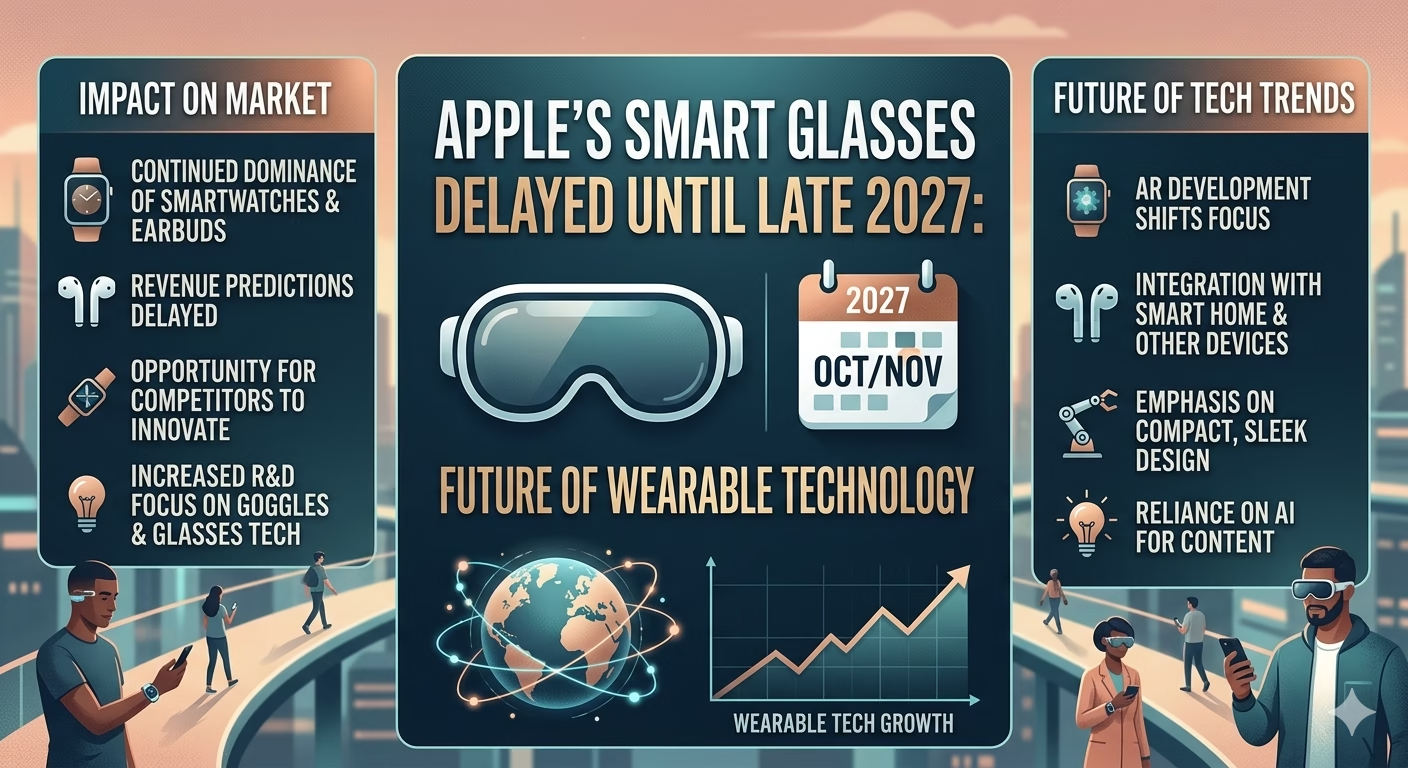
Apple’s Smart Glasses Reportedly Delayed Until Late 2027: What It Means for the Future of Wearable Technology
Apple is reportedly pushing back the launch of its highly anticipated smart glasses until late 2027, a move that has sparked significant discussion across the technology industry. The company has long been rumored to be working on a pair of intelligent glasses that could redefine how people interact with digital information, artificial intelligence, and everyday technology. While many expected Apple to enter the smart glasses market sooner, recent reports suggest the company is taking additional time to perfect the product before bringing it to consumers.
The delay arrives during a period of intense competition in wearable technology. Several technology companies are investing heavily in augmented reality, artificial intelligence, and smart eyewear. As these products continue evolving, Apple appears determined to ensure that its eventual entry into the market meets the company’s traditional standards for innovation, usability, and seamless integration.
Although some consumers may be disappointed by the extended timeline, the reported delay may ultimately benefit Apple. Historically, the company has often chosen to enter emerging markets later than competitors, focusing instead on delivering refined products that offer a superior user experience. The strategy has proven successful in categories such as smartphones, tablets, smartwatches, and wireless earbuds.
The Growing Importance of Smart Glasses
Smart glasses have become one of the most exciting categories in consumer technology. Industry experts view them as a potential successor to smartphones, offering hands-free access to information and digital services.
Unlike traditional glasses, smart glasses can incorporate advanced technologies such as cameras, microphones, sensors, speakers, artificial intelligence, and augmented reality capabilities. These features enable users to receive information, communicate, navigate, and interact with digital content without constantly looking at a phone screen.
The long-term vision for smart glasses involves creating a device that blends seamlessly into daily life. Instead of carrying a smartphone and constantly checking notifications, users could access information directly through voice commands, audio responses, or visual overlays.
For Apple, this category represents a major opportunity to expand its ecosystem beyond existing devices such as the iPhone, Apple Watch, Mac, and Vision Pro.
Why Apple Is Delaying Its Smart Glasses
Reports indicate that the delay is largely connected to technical challenges and the company’s broader artificial intelligence strategy.
Developing smart glasses is significantly more complex than creating a smartphone or smartwatch. Engineers must fit powerful computing capabilities into a lightweight and comfortable frame while maintaining battery life, performance, and user privacy.
Several factors may be contributing to the delay:
Artificial Intelligence Development
One of the biggest challenges involves integrating advanced AI features into a wearable device.
Apple is reportedly working to ensure that its smart glasses can understand user requests, interpret surroundings, and provide meaningful assistance in real time. Achieving this level of intelligence requires powerful software capable of processing information quickly and accurately.
As AI becomes increasingly important across Apple’s product lineup, the company appears focused on creating a strong foundation before launching new hardware.
Battery Life Concerns
Battery performance remains one of the most significant obstacles for smart glasses.
Consumers expect wearable devices to function throughout the day without requiring frequent charging. However, cameras, microphones, sensors, wireless connectivity, and AI processing can consume substantial amounts of power.
Apple is likely investing additional time into improving battery efficiency and optimizing hardware components to deliver a practical user experience.
Design and Comfort
Apple has built its reputation on creating products that are both functional and aesthetically appealing.
Smart glasses must be lightweight enough for all-day use while also accommodating sophisticated internal components. Achieving the right balance between performance and comfort is a major engineering challenge.
The company reportedly wants its glasses to resemble traditional eyewear rather than bulky technology products.
Privacy and Security
Privacy has become a growing concern in wearable technology.
Smart glasses equipped with cameras and microphones raise important questions regarding data collection, recording, and personal security. Apple has consistently emphasized privacy as a key differentiator, meaning the company is likely taking extra precautions to address these concerns before launch.
Apple Intelligence and the Future of Wearables
Artificial intelligence is expected to play a central role in Apple’s future products.
Recent developments suggest Apple is investing heavily in AI-powered experiences that can assist users throughout the day. Smart glasses could become one of the most natural platforms for these technologies because they allow users to interact with AI without pulling out a smartphone.
Potential AI-powered capabilities may include:
- Voice-based assistance
- Real-time translation
- Object recognition
- Navigation support
- Personalized recommendations
- Information retrieval
- Context-aware notifications
- Smart reminders
- Accessibility enhancements
The goal is to create technology that feels intuitive and helpful rather than distracting.
Competition in the Smart Glasses Market
While Apple continues development, competitors are moving forward aggressively.
Several technology companies have already introduced smart eyewear products that combine AI, cameras, and audio functionality. These devices allow users to capture photos, record videos, make calls, listen to music, and access virtual assistants.
The growing popularity of these products demonstrates increasing consumer interest in wearable computing. However, the market remains in its early stages, leaving significant room for innovation.
Apple’s delayed entry could allow the company to learn from competitors’ successes and mistakes while refining its own approach.
How Smart Glasses Could Change Everyday Life
The potential impact of smart glasses extends far beyond convenience.
If successfully implemented, the technology could transform how people interact with information and digital services.
Navigation
Users could receive turn-by-turn directions without constantly looking at a phone screen.
This feature would be particularly useful while walking, cycling, or traveling in unfamiliar locations.
Communication
Smart glasses could enable hands-free messaging, calling, and video communication.
Voice commands and AI assistance would make interactions faster and more natural.
Productivity
Professionals could access schedules, reminders, notes, and work-related information directly through their glasses.
This capability may improve efficiency in workplaces ranging from offices to manufacturing facilities.
Education
Students could benefit from interactive learning experiences and instant access to educational resources.
AI-powered assistance could help explain concepts, answer questions, and provide contextual information.
Accessibility
Smart glasses have enormous potential for assisting individuals with disabilities.
Features such as object recognition, text reading, navigation guidance, and real-time descriptions could improve independence and quality of life.
Apple’s Long-Term Wearable Strategy
The delay of smart glasses does not indicate reduced commitment.
In fact, many analysts believe Apple views wearable technology as one of its most important growth opportunities over the next decade.
The company has already achieved remarkable success with the Apple Watch and AirPods. Together, these products have generated billions in revenue while strengthening Apple’s ecosystem.
Smart glasses could represent the next major step in that evolution.
Rather than replacing smartphones immediately, smart glasses may initially function as companion devices that work alongside existing Apple products.
Over time, advances in processing power, battery technology, and artificial intelligence could enable glasses to become increasingly independent.
Challenges Facing the Industry
Despite excitement surrounding smart glasses, several obstacles remain.
Consumer Adoption
Many consumers are still uncertain about wearing connected devices on their faces throughout the day.
Manufacturers must demonstrate clear benefits that justify adoption.
Cost
Advanced wearable technology can be expensive.
Apple products often command premium prices, meaning affordability could influence market adoption rates.
Social Acceptance
New technologies frequently encounter social resistance during their early years.
Companies must ensure that smart glasses feel natural and socially acceptable in public settings.
Technical Limitations
Battery life, heat management, processing power, and display quality continue to present challenges.
Overcoming these limitations requires significant innovation and investment.
What Consumers Can Expect by 2027
By the time Apple’s smart glasses reportedly arrive, the wearable technology landscape may look very different.
Artificial intelligence will likely become more advanced, batteries more efficient, and hardware components smaller and more powerful.
Consumers can expect future smart glasses to offer:
- Improved AI assistance
- Better voice recognition
- Enhanced battery life
- Faster processing
- Stronger privacy protections
- Seamless ecosystem integration
- More natural user interfaces
- Advanced accessibility features
Apple’s extra development time could help ensure these capabilities are fully realized.
The Significance of the Delay
While delays often generate negative headlines, they are not always bad news.
Launching an unfinished product can damage customer trust and create long-term challenges. Apple has historically preferred waiting until technology reaches a level that meets its standards.
The reported delay suggests that the company remains committed to delivering a polished experience rather than rushing to compete.
For consumers, this may ultimately result in a better product that provides meaningful value rather than serving as an experimental gadget.
Conclusion
Apple’s reported decision to delay its smart glasses until late 2027 highlights the complexity of developing next-generation wearable technology. The company appears focused on perfecting artificial intelligence integration, battery performance, design, privacy protections, and overall user experience before introducing the product to the market.
Although competitors continue advancing their own smart eyewear solutions, Apple’s strategy has often involved entering markets later with more refined products. If successful, the company’s smart glasses could become one of the most important technology launches of the decade, potentially transforming how people access information, communicate, navigate, and interact with artificial intelligence.
The delay may test consumer patience, but it also demonstrates Apple’s commitment to delivering a product capable of meeting the high expectations associated with the brand. As wearable technology continues evolving, smart glasses remain one of the most promising frontiers in the future of personal computing.
FAQs
Why are Apple’s smart glasses reportedly delayed until 2027?
Reports suggest the delay is related to artificial intelligence development, software optimization, battery efficiency, hardware design challenges, and privacy considerations.
What are Apple smart glasses expected to do?
The glasses may provide AI-powered assistance, voice interactions, navigation support, real-time information, communication tools, and contextual awareness features.
Will Apple smart glasses replace the iPhone?
Initially, the glasses are expected to work alongside the iPhone rather than replace it. Future generations may become more independent as technology advances.
How will AI be used in Apple smart glasses?
AI could power voice assistance, object recognition, translations, navigation, personalized recommendations, and contextual information delivery.
What makes smart glasses different from smartphones?
Smart glasses offer hands-free access to information and services, allowing users to interact with technology without constantly looking at a screen.
Are smart glasses the future of wearable technology?
Many industry experts believe smart glasses could become a major computing platform in the future, although widespread adoption will depend on technological improvements and consumer acceptance.
When are Apple smart glasses expected to launch?
Current reports suggest Apple’s smart glasses may arrive in late 2027, though official details have not yet been announced.
Why is Apple taking longer than competitors?
Apple traditionally prioritizes refinement, usability, ecosystem integration, and user experience before launching new product categories.
📩 Want to Build a Future-Ready Digital Presence?
Don’t just follow tech trends—lead them. Connect with experts who understand how emerging technologies like XR, AI, and smart devices shape user behavior and digital growth.
Whether you’re building a brand, scaling a business, or exploring tech content opportunities, now is the time to align with the future of digital innovation.
👉 Start transforming your digital journey today and stay ahead in the evolving world of smart technology and immersive experiences.