
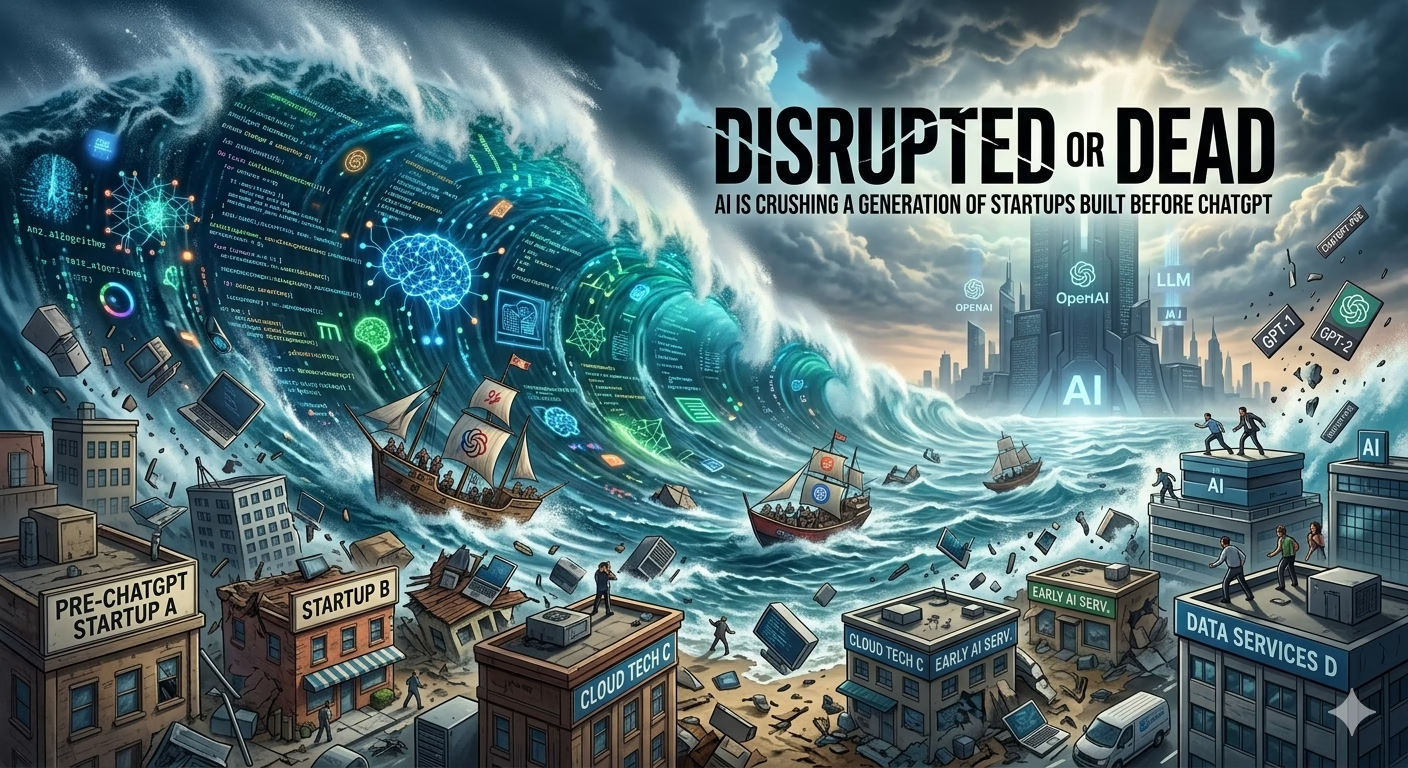
‘Disrupted or Dead’: AI Is Crushing a Generation of Startups Built Before ChatGPT
The artificial intelligence revolution is reshaping the startup ecosystem faster than any technological shift in recent memory. Startups that once appeared innovative, well-funded, and positioned for long-term growth are suddenly facing an existential threat from generative AI. Since the launch of ChatGPT, the business landscape has changed dramatically, forcing founders, investors, and entrepreneurs to rethink how technology companies are built and scaled.
The phrase “disrupted or dead” has become a common way to describe the challenges facing startups that were created before the generative AI boom. Many of these companies spent years building products designed to solve specific problems, only to discover that modern AI systems can now perform similar tasks within seconds. As artificial intelligence becomes more powerful and accessible, entire categories of software businesses are being challenged by AI-driven alternatives.
This transformation is not just affecting individual startups. It is changing venture capital strategies, company valuations, hiring practices, and the future direction of entrepreneurship itself. The rise of AI is creating winners and losers at an unprecedented pace, leaving many pre-ChatGPT startups scrambling to adapt.
The Startup World Before ChatGPT
Before generative AI became mainstream, startups typically followed a predictable path. Entrepreneurs identified a problem, developed software to solve it, secured funding, expanded their teams, and gradually built a customer base.
Many successful startups focused on specialized areas such as:
- Content creation
- Customer support
- Research and analytics
- Education technology
- Productivity tools
- Marketing automation
- Coding assistance
- Data management
Because these companies addressed specific business needs, they could establish strong market positions and attract significant venture capital funding.
However, the emergence of advanced AI models changed everything. Suddenly, a single AI-powered platform could perform many of the functions that previously required multiple software products. This shift dramatically altered the competitive landscape.
How Generative AI Changed the Rules
Generative AI introduced a new level of automation and intelligence that many startups were unprepared for. Instead of relying on separate tools for writing, coding, research, brainstorming, and customer communication, users can now access these capabilities through AI assistants.
This consolidation of functionality has created enormous pressure on traditional software startups.
For example, a startup that spent years developing a content-generation platform may now compete directly with AI systems capable of producing articles, emails, marketing copy, and reports instantly.
Similarly, coding platforms face competition from AI tools that can generate software code, identify bugs, explain programming concepts, and automate development tasks.
The result is a fundamental shift in value creation. Companies that once differentiated themselves through specific features are finding those features increasingly available through AI platforms.
Why Older Startups Are Struggling
One of the biggest reasons older startups are facing difficulties is that their business models were designed for a world where advanced AI did not exist.
Many software products were built around solving narrow problems. Generative AI, however, can solve multiple problems simultaneously.
This creates several challenges:
Reduced Product Differentiation
Features that once made startups unique can now be replicated by AI systems.
Increased Competition
AI lowers barriers to entry, allowing new competitors to launch products quickly.
Pricing Pressure
Customers may be less willing to pay for specialized tools when AI platforms offer similar functionality.
Faster Innovation Cycles
AI-powered competitors can develop and release new features at a much faster pace.
Changing Customer Expectations
Users increasingly expect intelligent automation, natural language interfaces, and personalized experiences.
These factors are forcing startups to evolve rapidly or risk losing relevance.
Is AI Making Companies More Efficient?
Artificial intelligence is unquestionably increasing efficiency across many industries.
Businesses are using AI to:
- Generate content
- Automate customer service
- Analyze data
- Conduct research
- Create marketing campaigns
- Write software code
- Improve productivity
Tasks that once required large teams can now be completed by smaller groups supported by AI tools.
This efficiency is transforming startup economics. Companies can operate with fewer employees while achieving greater output. Entrepreneurs can launch products faster and at lower costs than ever before.
As a result, many investors believe AI is creating a new generation of highly efficient businesses capable of scaling more rapidly than traditional startups.
The Rise of Lean AI Startups
A major trend emerging from the AI revolution is the growth of lean startups.
Historically, startups often expanded by hiring large teams and raising significant amounts of venture capital. Today, AI enables founders to accomplish much more with fewer resources.
Small teams can now handle tasks that previously required departments dedicated to:
- Marketing
- Customer support
- Research
- Product development
- Operations
This shift allows startups to remain agile while maintaining lower operating costs.
Many AI-native companies are generating substantial revenue with relatively small workforces, challenging traditional assumptions about startup growth.
Series B AI Startups Are Raising Huge Investments
While some older startups struggle, AI-focused companies are attracting record levels of investment.
Series B AI startups are securing large funding rounds because investors see enormous growth potential in artificial intelligence.
Areas attracting significant investment include:
AI Agents
Autonomous systems capable of completing tasks on behalf of users.
Enterprise AI
Solutions that help businesses automate operations and improve efficiency.
AI Infrastructure
Platforms that provide computing resources, model deployment tools, and data management systems.
Healthcare AI
Applications focused on diagnostics, medical research, and patient care.
AI Cybersecurity
Tools designed to protect organizations from increasingly sophisticated threats.
Investors view these sectors as critical components of the future technology ecosystem.
Generative AI Startups Are Leading the Market
Generative AI startups have become some of the most valuable companies in the technology sector.
Their rapid growth is driven by increasing demand for:
- AI content creation
- Intelligent assistants
- Automated workflows
- Code generation
- Business intelligence
- Customer engagement solutions
Because these technologies have broad applications across industries, investors believe the market opportunity is enormous.
Many generative AI startups are achieving milestones that previously took years to reach, reflecting the extraordinary demand for AI-powered products.
AI Startup Exits Are Accelerating
Artificial intelligence is also changing the startup exit landscape.
Large technology companies are actively acquiring AI startups to gain access to talent, intellectual property, and innovative technologies.
This acquisition activity is creating attractive exit opportunities for founders and investors.
Companies that develop unique AI capabilities often become acquisition targets for larger organizations seeking to strengthen their competitive positions.
As AI adoption continues expanding, startup exits are expected to remain a major focus within the technology industry.
So Many AI Startups: Is There a Bubble?
The explosive growth of AI startups has led some observers to question whether the market is becoming overcrowded.
Thousands of new AI companies have emerged since ChatGPT popularized generative AI.
While many offer innovative solutions, others rely on similar technologies and compete within increasingly crowded markets.
Concerns about an AI bubble generally focus on:
- Excessive valuations
- Intense competition
- Limited differentiation
- Investor enthusiasm exceeding business fundamentals
Although some startups may fail, many experts believe artificial intelligence represents a genuine technological transformation rather than a temporary trend.
The challenge will be identifying which companies possess sustainable competitive advantages.
Common Reasons AI Startups Fail
Despite strong investor interest, not all AI startups succeed.
Several common mistakes contribute to failure:
Lack of Unique Technology
Companies that rely solely on publicly available AI models may struggle to differentiate themselves.
Weak Revenue Models
User growth alone is not enough without sustainable revenue generation.
Dependence on Third-Party Platforms
Startups built entirely on external AI systems face risks if platform providers introduce competing features.
Limited Proprietary Data
Unique datasets often provide long-term advantages that competitors cannot easily replicate.
Overpromising Capabilities
Exaggerated claims can damage credibility and investor confidence.
Successful AI startups typically combine advanced technology with strong execution and clear customer value.
The Human Impact of AI Disruption
While AI creates opportunities, it also introduces challenges.
Many workers worry about automation replacing traditional job functions. Startups are increasingly using AI to perform tasks previously handled by employees.
Areas most affected include:
- Administrative work
- Customer support
- Content production
- Data analysis
- Entry-level programming
This does not necessarily mean jobs will disappear entirely, but job roles are evolving rapidly.
Workers and businesses alike must adapt to a future where AI becomes a central part of everyday operations.
The Future of Startups in the AI Era
Artificial intelligence is redefining entrepreneurship.
Future startups will likely focus on combining AI with:
- Industry expertise
- Proprietary data
- Specialized workflows
- Customer relationships
- Operational excellence
The companies most likely to succeed will be those that use AI as a foundation rather than simply adding it as a feature.
As the technology matures, competitive advantages will increasingly depend on execution, innovation, and domain knowledge.
The startup landscape of the next decade may look very different from the one that existed before ChatGPT.
A new generation of AI-native companies is emerging, while older startups face pressure to reinvent themselves. The businesses that successfully adapt will shape the future of technology and define the next era of innovation.
FAQs
What does “Disrupted or Dead” mean in the AI startup industry?
It refers to startups that were built before the rise of generative AI and now face significant disruption because AI platforms can perform many of the same functions more efficiently.
Why are pre-ChatGPT startups struggling?
Many older startups focused on solving narrow problems. Modern AI tools can handle multiple tasks simultaneously, reducing the need for specialized software solutions.
Is AI making companies more efficient?
Yes. AI helps automate repetitive tasks, improve productivity, reduce costs, accelerate development, and increase operational efficiency across industries.
What are generative AI startups?
Generative AI startups create products powered by artificial intelligence that can generate content, code, images, reports, and other outputs based on user prompts.
Why are investors investing heavily in AI startups?
Investors believe AI has the potential to transform industries, improve business efficiency, create new markets, and generate substantial long-term returns.
📩 Start Growing Your Digital Presence Today
Partner with RojrzTech to craft digital experiences designed for long-term success and real audience connection. Let’s build an online presence that works harder for your busines