
Sony and Honda Ain’t Feelin’ the Afeela Anymore
The EV car project that never made it to market — explained
In an unexpected and disappointing turn of events for electric vehicle (EV) enthusiasts, one of the most hyped new car projects of recent years has officially been cancelled. The much‑anticipated collaborative electric car from Sony and Honda — known as the Afeela — is no longer happening. What once promised to blend cutting‑edge entertainment technology with automotive performance will now remain a concept that never made it to showrooms.
The cancellation represents a significant shift in strategy for both companies. Sony and Honda had teased the Afeela for years as a breakthrough in modern car design. But economic realities, shifting priorities, and changes in the electric car market ultimately caused the partnership to call it quits. This article dives deep into what the Afeela was supposed to be, why it generated so much excitement, why it was cancelled, what it means for the companies involved, and what happens next for EV fans and potential buyers.
What Was the Sony Honda Afeela?
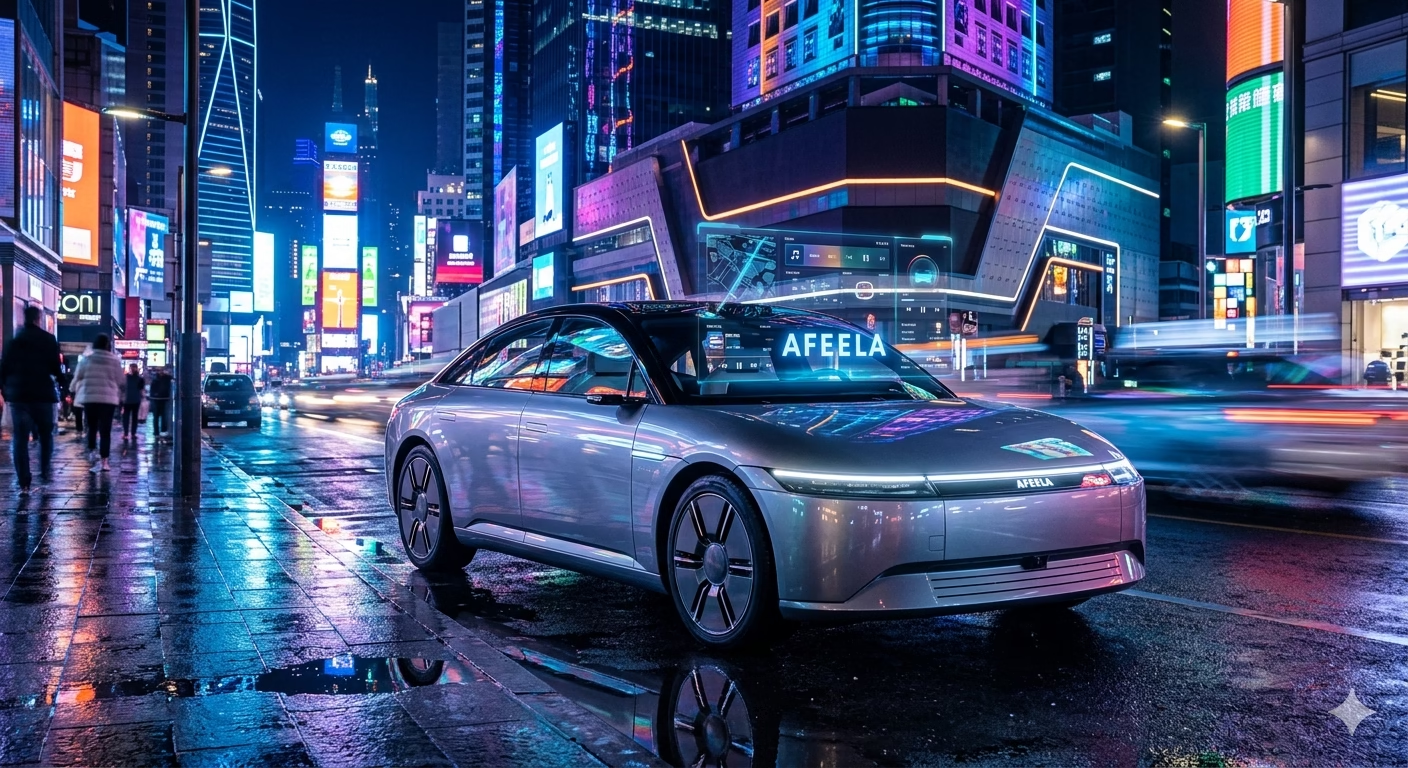
The Afeela was a concept electric vehicle designed by a joint venture between two major global companies: Sony, famous for its electronics and entertainment technology, and Honda, one of the world’s largest and most established automobile manufacturers. The idea was ambitious: take Sony’s strengths in software, sensors, infotainment, and user experience, and combine them with Honda’s decades of experience building reliable cars.
The Afeela was positioned as a modern, premium electric car. It was expected to go beyond the typical EV by offering an intuitive digital interface, smart technology that interacted with passengers, advanced driving assistance, and entertainment features that blurred the lines between a car and a high‑end tech device.
Fans imagined a vehicle that would not just transport people from point A to point B, but also act as a mobile entertainment hub — with powerful multimedia systems, responsive screens, and immersive user experience technology. Early concept teasers hinted at futuristic interiors, AI assistants, and performance specs that could challenge other premium electric cars.
Because of this combination of hardware and software vision, the Afeela attracted global attention from tech lovers, car enthusiasts, and industry watchers alike.
Why Did the Afeela Generate So Much Buzz?
There are a few reasons why the Sony Honda Afeela became one of the most talked‑about upcoming cars before it was even real:
1. Brand Power: Sony and Honda are both massive, trusted brands. Sony is legendary in consumer electronics and entertainment. Honda is respected for durability and engineering excellence. The idea that these two could work together on a car was exciting.
2. Innovation Potential: The concept promised something different from typical electric cars. Instead of focusing only on range or battery specs, it aimed to deliver a next‑level digital and user experience.
3. Tech Meets Mobility: With smart features, advanced interfaces, and entertainment systems built into a vehicle, the Afeela looked like a glimpse of future mobility — similar to how smartphones disrupted phones.
4. Early Reservations: Before launch, many people signed up to reserve or express interest in buying this new EV, expecting it to hit markets in the mid‑2020s.
Combined, these factors created hype — and many assumed the Afeela would be one of the most talked‑about new cars of 2026 and beyond.
Why Was the Afeela Cancelled?
Despite the buzz, the Afeela project was unexpectedly shelved. There were several key reasons for this decision:
1. Strategic Shift by Honda
Honda had been rethinking its approach to electric vehicles. Although the company invested in EV technology, it faced internal pressure to balance innovation with financial sustainability. Costs for developing EV platforms, electric drivetrains, and supporting infrastructure are very high. Honda decided to scale back some of its EV commitments, which affected the core plans that the Afeela project depended on.
2. Loss of Key Technology Support
A joint venture like the one behind the Afeela requires harmony in technology contributions. Part of the original vision depended on Honda’s electric vehicle components and engineering input. When Honda shifted focus and reduced its investment in certain EV technologies, the foundation of the project became unstable. Without the original level of support, completing the car as envisioned was no longer practical.
3. Weakening EV Market Demand
Electric cars have gained market share in many places, but demand has not risen evenly everywhere. In several major car markets, including North America and parts of Asia, demand slowed as buyers weighed cost, charging infrastructure availability, and competition. Premium EVs without a clear price advantage can struggle in such conditions. This real‑world market context made it harder for a new, unproven EV like the Afeela to justify its price and market entry.
4. Rising Costs and Global Economic Pressure
Global economic uncertainty, inflation, and rising production costs have affected many industries — including automotive. Developing a new electric vehicle from the ground up requires immense capital, and the financial risk for companies increases when returns are uncertain. This economic pressure was another factor that contributed to the decision to cancel the project.
What Happens to People Who Reserved the Afeela?
For people who showed early interest and placed reservation deposits, the news is understandable disappointment. Reservations were opened in anticipation of a planned release date. When a project is cancelled, most companies refund reservation fees or deposits, since production will no longer occur. This is a standard industry practice to ensure fairness for customers when a product is indefinitely delayed or cancelled.
Any buyers who paid fees or signed reservation agreements can expect to be compensated according to the terms they initially agreed to. However, because the car will never be delivered, there won’t be any vehicles to pick up or use.
What This Means for Sony and Honda
The cancellation marks a notable shift in both companies’ strategies:
For Sony:
The decision to pull back from the Afeela project highlights the difficulty of entering the car manufacturing business — even for giant tech firms. While Sony has strengths in entertainment and software, building cars is costly and complex. The company may instead choose to focus on areas where its core capabilities are stronger, such as software platforms, sensors, or entertainment systems that can be integrated into other vehicles.
For Honda:
Although Honda remains committed to evolving mobility, it appears to be taking a more cautious and focused approach to electric vehicles. Instead of spreading resources across ambitious new ventures, Honda may concentrate on more competitive models or technologies where it sees clear demand and profitability.
The cancellation is a signal that even major players have to adapt when market conditions change.
What Happens Next in the EV Space?
Although Afeela won’t be coming to the market, electric vehicles continue to grow in importance worldwide. Car manufacturers are experimenting with new platforms, battery technologies, and connected experiences. The exit of the Afeela project doesn’t slow overall industry momentum — but it does emphasize a few trends:
1. EV projects need clear market demand — Premium EVs must justify their price with tangible benefits.
2. Tech and automotive partnerships must align strategy — Strong collaboration is crucial for success.
3. Companies are cautious with investment — Economic uncertainty impacts long‑term development.
4. Innovation will continue in software and AI for vehicles — Even if whole cars aren’t built, elements like infotainment and driver assist tech are still growing.
Overall, the future of EVs remains bright, but the path forward is being recalibrated by real market forces.
Sony Afeela Price Expectations (Had It Launched)
Before cancellation, speculation about pricing had begun in various markets. Because of its premium design, advanced tech features, and high‑end components, industry watchers expected the Afeela to be priced higher than many mid‑range electric cars. In countries where such EVs have a strong presence, prices could have started in the premium range, making it less accessible for average buyers in markets like Pakistan and South Asia. But since the car is now cancelled, these price expectations no longer apply.
FAQs About the Afeela Cancellation
1. What was the Afeela car?
The Afeela was a collaborative electric vehicle project between Sony and Honda that combined entertainment technology with automotive design.
2. Why was the project cancelled?
It was cancelled due to shifting company strategies, changes in EV market demand, rising costs, and loss of core technology support.
3. Will customers get refunds?
Customers who placed reservations can expect refunds because the car will not be produced or delivered.
4. Was the Afeela ever going to be sold in Pakistan?
There was no official plan to release the Afeela in Pakistan before the project was cancelled.
5. Is Sony leaving the EV market entirely?
Sony may shift focus to other technologies rather than building complete cars, but its involvement in future mobility tech is still possible.
🚀Build a Stronger Digital Footprint with RojrzTech
In a constantly changing digital environment, brands succeed by staying flexible and focused. RojrzTech delivers tailored solutions across web development, UI/UX, SEO, branding, and social media to help businesses strengthen visibility and performance online.
📩 Start Your Digital Growth Journey
Connect with RojrzTech to create digital experiences that support long-term growth and meaningful engagement. Let’s shape a smarter, more impactful online presence