
US Economy Undershoots Expectations as Job Growth Slows Sharply
The US economy undershoots expectations after adding only 50,000 jobs, a figure that shocked markets and raised concerns about the strength of the American labour market. Economists had expected a stronger hiring pace, especially after months of resilience in employment data. The latest figures signal a possible turning point for the world’s largest economy at a time when investors already remain anxious about inflation, interest rates, and global financial stability.
The US jobs report delivered a clear message: momentum in hiring has weakened. Businesses showed hesitation in expanding payrolls, while several sectors recorded minimal job creation. This slowdown has revived discussions about the coming American labor market shock, a phrase now gaining traction among analysts who warn that prolonged softness could ripple across consumption, wages, and investment.
Labour Market Shows Signs of Strain
The labour market US had maintained strength throughout much of the past year, defying recession fears and higher borrowing costs. Recent data, however, paints a different picture. Hiring slowed across manufacturing, retail, and technology. Service sectors provided limited support, failing to offset broader weakness.
Small and medium-sized businesses expressed caution due to elevated financing costs and uncertain demand. Many employers opted to freeze hiring rather than initiate layoffs, suggesting a defensive posture rather than expansion. Economists now assess whether this signals a temporary pause or the early stages of the coming American labour market shock.
Wage growth also showed signs of moderation. Slower wage gains reduce inflationary pressure but also limit consumer spending power, a key driver of economic growth in the United States.
Markets React to Weak Economic Signals
Financial markets reacted quickly to the u s latest economic data. Equity markets experienced volatility as investors weighed the implications of weaker hiring against potential shifts in monetary policy. Traders debated whether slower job growth could push the Federal Reserve toward interest rate cuts later in the year.
Bond markets also reflected uncertainty. Investors continue to question why are global bond yields rising despite softer economic indicators. Rising yields often signal expectations of sustained inflation or increased government borrowing. In this case, concerns around fiscal deficits and long-term inflation risks kept yields elevated.
Observers also examined why US bond yields are rising even as hiring cools. Analysts point to heavy Treasury issuance, strong demand for higher yields, and lingering inflation expectations as key drivers.

Stocks and Jobs Data: A Complicated Relationship
Market participants often expect weak employment data to support equities by increasing the likelihood of rate cuts. Reality remains more complex. In recent months, US stocks plunge after robust jobs report raises concerns about interest rates, showing how strong hiring can trigger fears of tighter monetary policy.
This time, weaker hiring introduced a different concern. Investors fear that slowing employment could undermine corporate earnings and consumer demand. Technology stocks experienced mixed trading, while cyclical sectors such as industrials and financials faced pressure.
The divergence highlights the fragile balance markets now face. Strong data fuels rate concerns. Weak data raises growth fears.
Broader Economic Implications
The slowdown raises important questions about the future path of the US economy. Consumer spending remains steady but shows early signs of moderation. Credit card delinquencies have increased slightly, and household savings rates remain under pressure.
Business investment also reflects caution. Companies delay expansion plans while monitoring economic conditions. The combination of restrained hiring and conservative capital spending aligns with predictions of the coming American labor market shock, though economists remain divided on its severity.
Global markets feel the impact as well. The US economy influences trade flows, capital markets, and currency movements worldwide. Any sustained weakness in American employment affects global confidence and investment decisions.
Federal Reserve Policy Under Scrutiny
The Federal Reserve now faces a delicate challenge. Officials aim to balance inflation control with economic growth. The latest US jobs report adds pressure to reassess policy direction.
Inflation has cooled from previous highs but remains above target levels. Policymakers hesitate to declare victory. At the same time, slowing job growth increases risks of overtightening. Analysts expect the Fed to rely heavily on upcoming labour and inflation data before adjusting rates.
Markets speculate about possible rate cuts later in the year, though central bank officials maintain a cautious stance.
Sector-Level Performance
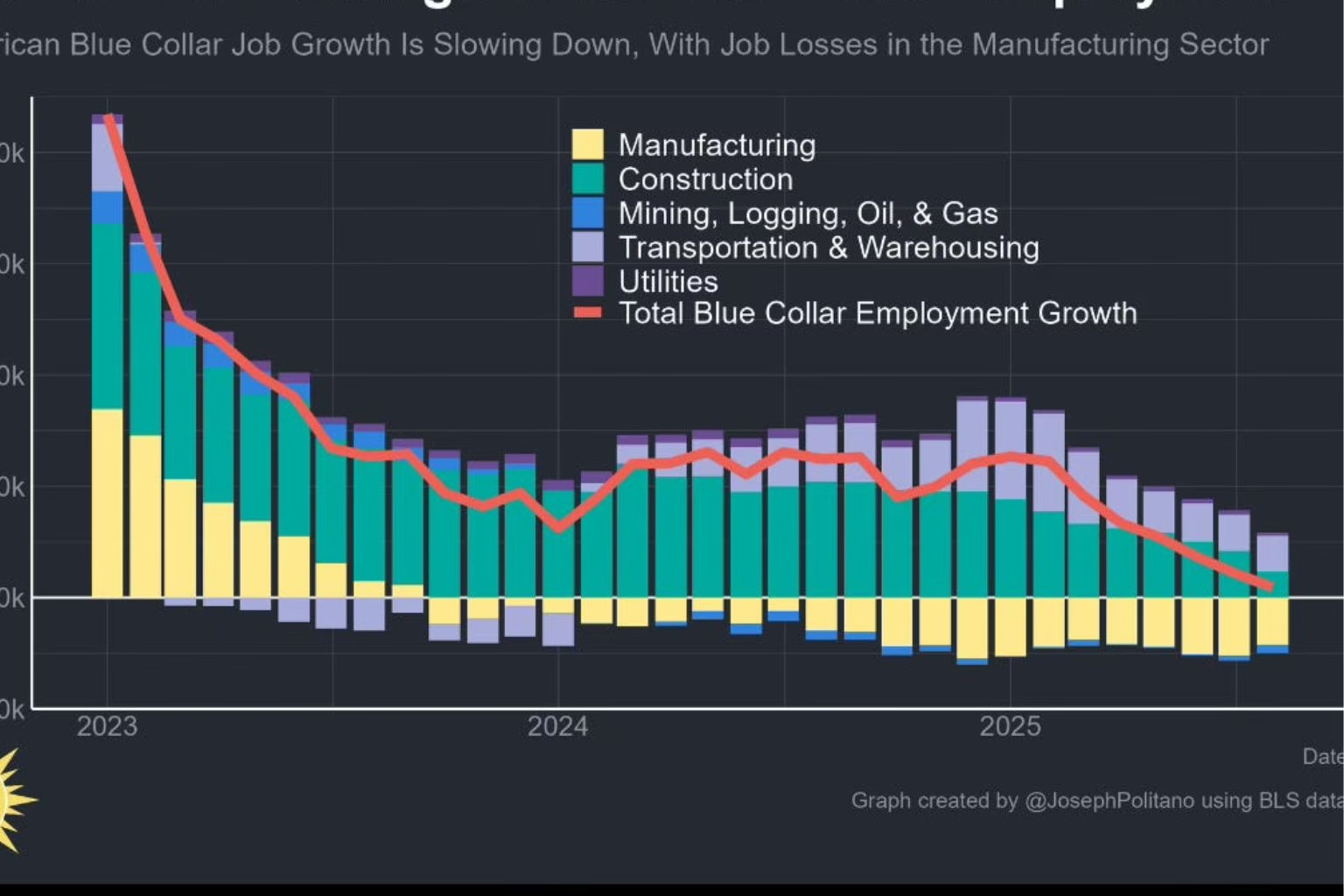
Manufacturing showed limited hiring growth as factories adjusted to softer demand. Construction added modest jobs but faced headwinds from high borrowing costs. Healthcare continued to provide stable employment gains, though at a slower pace than earlier months.
Technology firms focused on efficiency rather than expansion. Several companies emphasized automation and productivity improvements rather than workforce growth. Retail hiring softened as consumers showed restraint amid higher living costs.
Each sector contributes to the broader picture of a cooling labour market US, reinforcing concerns about sustained economic momentum.
Global Bond Markets and Investor Sentiment
Rising yields remain a focal point for investors worldwide. Questions persist about why are global bond yields rising at a time when growth indicators weaken. Market participants attribute this trend to government debt issuance, geopolitical uncertainty, and shifting inflation expectations.
Higher yields increase borrowing costs for governments and businesses, creating additional pressure on economic activity. Emerging markets feel the effects through capital outflows and currency volatility.
The US remains central to these dynamics. Movements in Treasury yields influence global financial conditions, reinforcing the importance of American economic data.
Outlook: Caution Dominates Forecasts
Economists now revise forecasts cautiously. Some predict a soft landing, where growth slows without triggering a recession. Others warn that delayed effects of high interest rates could intensify the coming American labour market shock.
Households remain resilient but sensitive to rising costs. Businesses prioritize efficiency over expansion. Policymakers tread carefully between inflation control and economic support.
The next series of employment reports will prove critical. Markets will monitor hiring trends, wage growth, and participation rates for confirmation of either stabilization or deeper slowdown.
Conclusion
The US economy undershoots expectations with weaker-than-anticipated job creation, signaling a pivotal moment for markets and policymakers. The latest US jobs report highlights mounting pressure on the labour market and intensifies debate about growth risks, interest rates, and financial stability.
While uncertainty dominates short-term outlooks, one reality remains clear: employment trends will shape market direction, policy decisions, and global economic confidence in the months ahead.
Frequently Asked Questions (FAQ)
What does “US economy undershoots expectations” mean?
When the US economy undershoots expectations, it means economic performance fell short of forecasts made by analysts. In this case, job creation came in far below estimates, signaling weakness in the labour market.
What does the latest US jobs report reveal?
The latest US jobs report shows that the economy added only 50,000 jobs, a sharp slowdown compared to previous months. This raises concerns about momentum in hiring and overall economic growth.
Why is this being described as the coming American labor market shock?
Economists refer to the coming American labor market shock because prolonged weak hiring could ripple across consumer spending, wage growth, and business investment, potentially slowing the broader economy.
🚀Build a Stronger Digital Footprint with RojrzTech
In a constantly changing digital environment, brands succeed by staying flexible and focused. RojrzTech delivers tailored solutions across web development, UI/UX, SEO, branding, and social media to help businesses strengthen visibility and performance online.
📩 Start Your Digital Growth Journey
Connect with RojrzTech to create digital experiences that support long-term growth and meaningful engagement. Let’s shape a smarter, more impactful online presence