
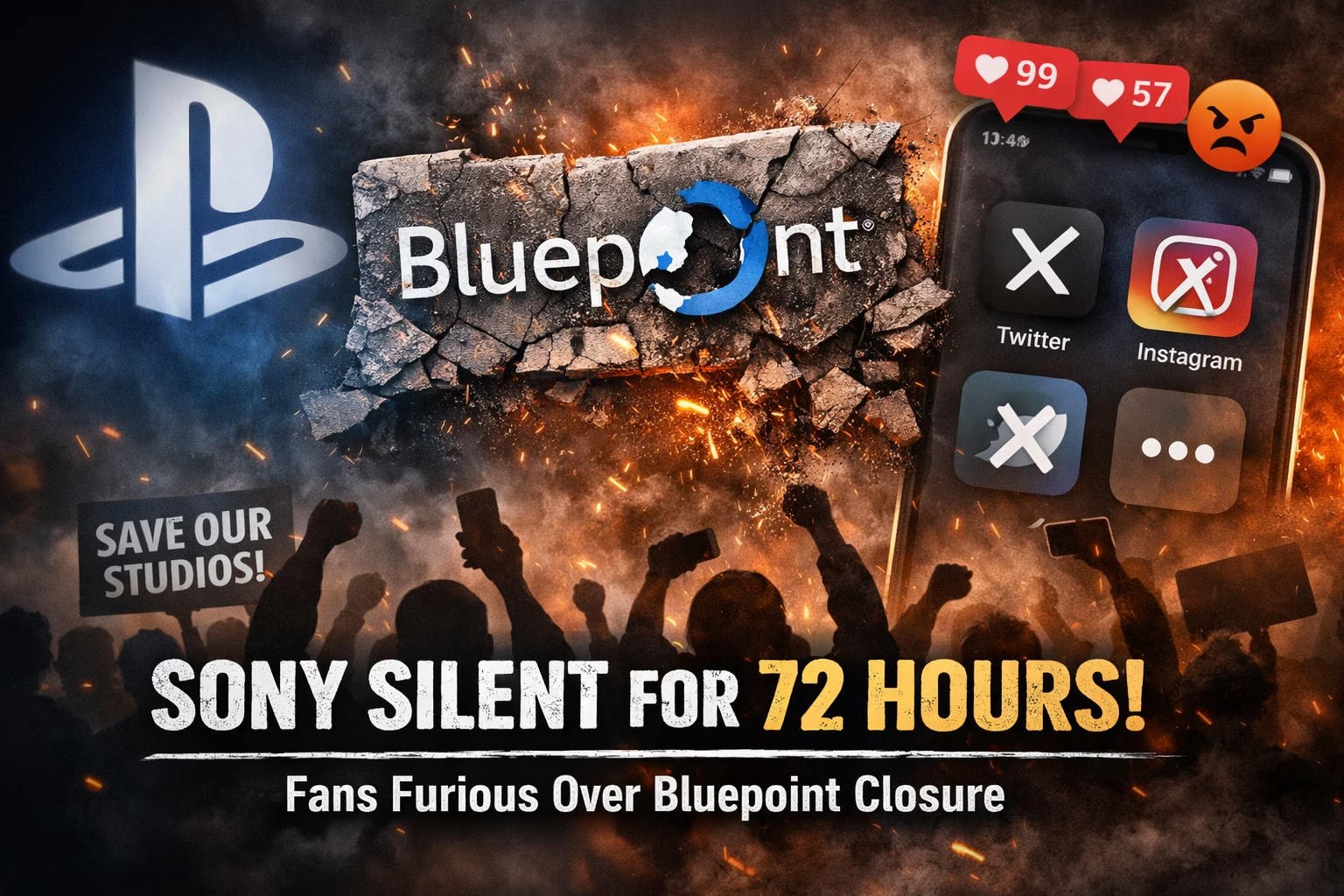
🎮 Sony Goes Silent on Social Media for Over 72 Hours
Sony has gone unusually quiet across its main social media channels for more than 72 hours, sparking even more controversy after the sudden closure of Bluepoint Games. The silence comes at a time when emotions are running high within the gaming community, with many fans expressing frustration, anger, and disappointment over the studio’s shutdown.
The phrase “Sony goes silent on social media for over 72 hours as fans turn feral following Bluepoint closure” has quickly become a trending discussion topic among PlayStation communities. What began as backlash over a studio closure has evolved into a larger debate about corporate communication, transparency, and the relationship between gaming giants and their loyal fanbases.
📉 The Bluepoint Closure That Sparked the Fire
Bluepoint Games earned widespread recognition for its high-quality remakes and remasters of classic PlayStation titles. The studio played a major role in revitalizing beloved franchises with modern visuals and refined gameplay mechanics. Its closure therefore came as a shock to many players who saw Bluepoint as a key pillar in preserving PlayStation’s legacy.
For longtime fans, this was not just another business restructuring — it felt personal. Bluepoint represented craftsmanship, nostalgia, and dedication to single-player excellence. When news of the shutdown surfaced, social media platforms were immediately flooded with reactions.
Instead of responding quickly to community concerns, Sony’s primary global accounts stopped posting altogether. The timing made the silence appear deliberate, and that perception only intensified the backlash.
📱 Sony Goes Silent on Social Media for Over 72 Hours
In today’s digital world, major brands rarely stay silent during controversies. Social media is typically used to clarify decisions, reassure customers, or manage public perception. That’s why Sony’s extended pause stood out so dramatically.
For more than three days, the company’s flagship accounts remained inactive. No new promotional posts, no acknowledgments, and no attempts to calm the situation. While some regional accounts continued automated content, the absence of official messaging from the central PlayStation channels became part of the story itself.
Many fans interpreted this silence as avoidance. Others speculated that Sony’s communications team was carefully preparing a formal statement before re-engaging. Regardless of the reason, the quiet period created a vacuum — and in online spaces, vacuums are quickly filled with speculation and emotional reactions.
🔥 Fans Turn Feral: The Backlash Intensifies
The phrase “fans turn feral” may sound dramatic, but it reflects the intensity of the online reaction. Comment sections on unrelated PlayStation posts became filled with criticism. Threads discussing other games shifted focus toward the Bluepoint closure. Even neutral announcements were met with waves of angry replies.
Some fans demanded transparency, asking why a respected studio would be closed so soon after being acquired. Others expressed concerns about the direction of PlayStation’s broader strategy, questioning whether the company is prioritizing the right types of projects.
In heated online communities, silence can sometimes amplify frustration. Without official updates, rumors spread faster. The absence of communication led some to believe Sony was intentionally ignoring its audience, further fueling resentment.
🎮 The Bigger Industry Context
The gaming industry has seen a wave of restructuring, layoffs, and studio closures in recent years. Economic pressures, shifting market trends, and evolving development costs have forced many publishers to make difficult decisions.
Bluepoint’s closure appears to be part of this broader trend. However, because of the studio’s reputation and connection to iconic PlayStation projects, its shutdown hit differently. It symbolized more than just a financial adjustment — it represented a perceived shift in priorities.
Fans who value narrative-driven, single-player experiences fear that industry focus may be leaning too heavily toward other models. This emotional undercurrent likely intensified reactions when Sony chose not to address concerns immediately.
🤔 Why Would Sony Stay Silent?
There are several possible explanations for why Sony went silent on social media for over 72 hours:
1️⃣ Strategic Cooling Period
Companies sometimes allow online backlash to settle before issuing a statement. By not responding immediately, Sony may be attempting to prevent further escalation.
2️⃣ Coordinated Messaging Preparation
Major corporations often coordinate global messaging across departments. Crafting a clear, unified statement can take time, especially in sensitive situations.
3️⃣ Avoiding Reactionary Statements
Responding too quickly without complete information can create additional controversy. A temporary pause might be aimed at ensuring accuracy and clarity.
4️⃣ Scheduled Content Pause
It’s possible that scheduled promotional posts were paused intentionally out of respect for affected employees and to avoid appearing tone-deaf.
While these possibilities are logical, the lack of visible communication left room for interpretation — and online communities are rarely patient.
📢 Communication in Modern Gaming Culture
Gaming companies today operate in an environment where fans expect near-instant updates. Social media has transformed how brands interact with audiences. Companies are no longer distant corporations; they are active participants in community discussions.
When silence replaces dialogue, it can feel like a step backward.
Sony’s situation highlights how modern fanbases demand transparency, empathy, and acknowledgment. Even a short message expressing understanding can significantly reduce tension. Without it, speculation thrives.
🧠 Impact on Brand Perception
Brand loyalty in gaming is deeply emotional. Players invest time, money, and passion into platforms and franchises. When a beloved studio closes and the parent company remains silent, trust can be tested.
However, prolonged backlash doesn’t always translate into long-term damage. Much depends on how Sony responds next. A thoughtful, transparent message could rebuild goodwill. Continued silence, on the other hand, risks prolonging frustration.
🔮 What Happens Next?
The situation remains fluid. Sony will likely resume social media activity soon, possibly alongside an official statement addressing the Bluepoint closure. Whether that response satisfies fans will determine how quickly tensions ease.
The episode serves as a reminder of how powerful communication — or the absence of it — can be. In an era where every corporate move is scrutinized instantly, silence can speak just as loudly as words.
🏁 Final Thoughts
The controversy surrounding “Sony goes silent on social media for over 72 hours as fans turn feral following Bluepoint closure” reflects more than just a temporary communications gap. It reveals the fragile balance between corporate decision-making and community trust.
Bluepoint’s closure triggered emotional reactions rooted in nostalgia and loyalty. Sony’s silence amplified those emotions. Whether this becomes a brief social media storm or a lasting reputational challenge depends on the company’s next move.
For now, the gaming world watches and waits — refreshing timelines, debating strategy, and hoping for clarity.
Frequently Asked Questions (FAQ)
1. Why did Sony go silent on social media for over 72 hours?
Sony went quiet on its official social media accounts following reports of Bluepoint Games’ closure. While no official reason was immediately given, many believe the silence was linked to internal restructuring and strategic decisions that had not yet been publicly clarified.
2. What happened to Bluepoint Games?
Bluepoint Games was reportedly affected by studio restructuring, leading to its closure. The studio was known for high-quality remakes and remasters that were especially popular among PlayStation fans.
3. Why were fans so upset about the Bluepoint closure?
Bluepoint had built a strong reputation for delivering polished remakes of beloved titles. Fans viewed the studio as a key part of PlayStation’s success in modernizing classic games. Its closure raised concerns about the future of similar projects.
🚀Build a Stronger Digital Footprint with RojrzTech
In a constantly changing digital environment, brands succeed by staying flexible and focused. RojrzTech delivers tailored solutions across web development, UI/UX, SEO, branding, and social media to help businesses strengthen visibility and performance online.
📩 Start Your Digital Growth Journey
Connect with RojrzTech to create digital experiences that support long-term growth and meaningful engagement. Let’s shape a smarter, more impactful online presence