Meta Strikes Nuclear Power Agreements With Three Companies to Secure Energy for AI Growth
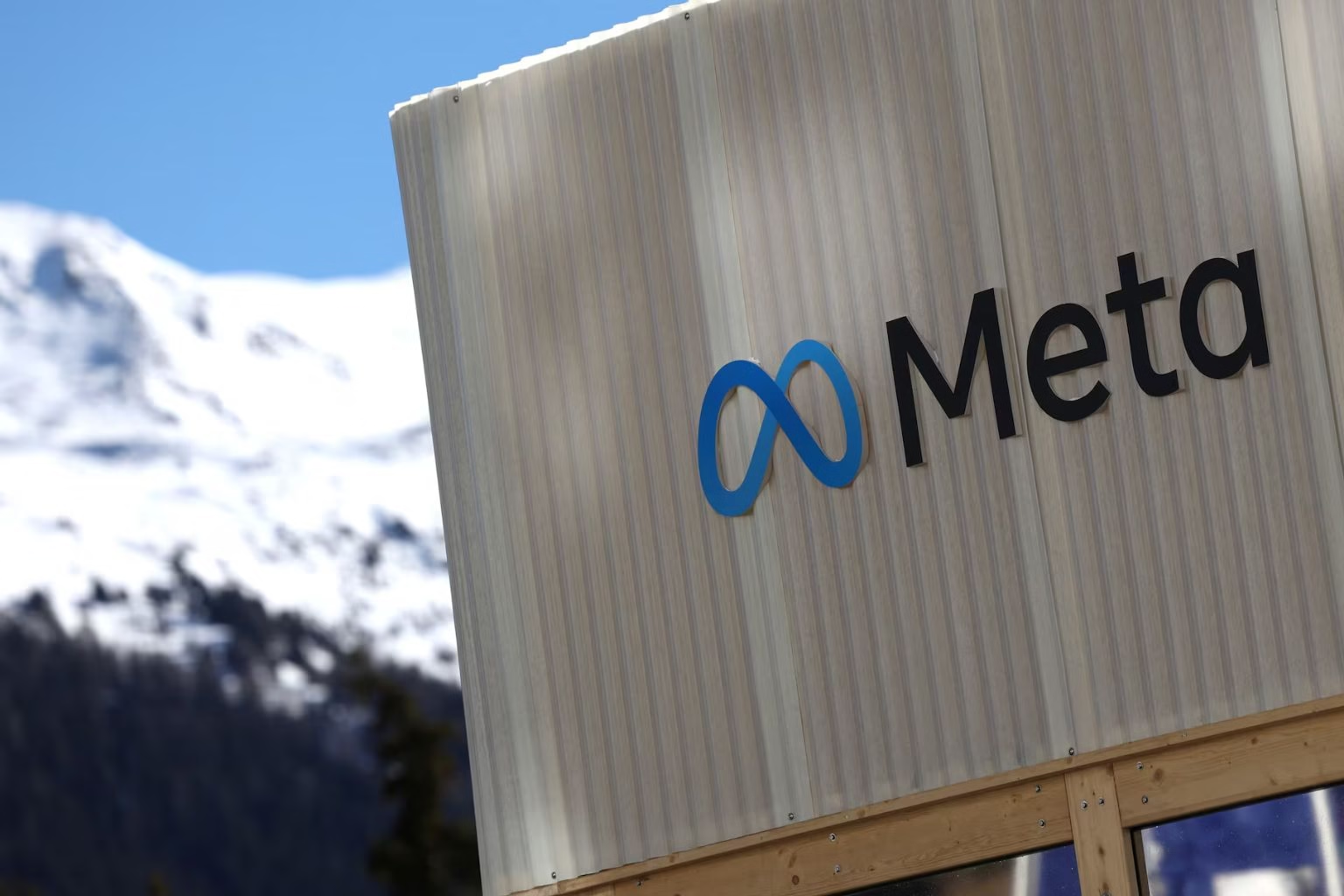
Meta has entered a new phase in its energy strategy by confirming that Meta strikes nuclear power agreements with three companies, a move that reflects how rapidly growing artificial intelligence workloads are reshaping global energy demand. The agreements signal a long-term commitment to stable, carbon-free electricity as Meta expands its data centers and AI infrastructure.
As computing requirements surge, traditional renewable sources alone no longer meet the constant power demands of large-scale AI systems. Nuclear energy offers continuous, high-capacity output, making it an increasingly attractive solution for technology giants seeking energy security.
Why Meta Is Turning to Nuclear Power
Meta’s platforms rely on vast data centers that operate around the clock. AI models, content moderation systems, and immersive technologies consume enormous amounts of electricity. This reality has revived discussions around a meta nuclear power plant model, where companies secure direct or long-term access to nuclear-generated electricity rather than relying solely on the open grid.
Unlike solar and wind energy, nuclear power provides uninterrupted baseload electricity. This reliability has become critical as Meta scales AI services across social media, virtual reality, and enterprise tools. The new agreements align with Meta’s broader sustainability targets while addressing operational needs.
AI Expansion Drives Energy Decisions
The emergence of AI-driven products has changed the equation for energy planning. Industry analysts now openly discuss the concept of an AI nuclear power plant, referring to energy systems dedicated to supporting artificial intelligence operations. Meta’s decision places it among the first companies to act decisively on this idea.
Training large AI models requires immense computational power. Once deployed, these models continue to draw energy through inference tasks, real-time moderation, and personalized content delivery. Nuclear power provides the consistency required to sustain these workloads without interruption.
How Meta’s Move Compares to Other Tech Giants
Meta’s strategy mirrors a broader shift across the technology sector. In recent years, headlines about amazon buys nuclear power plant demonstrated how cloud providers increasingly pursue direct energy assets to support growth. These moves reflect the reality that energy availability has become a competitive advantage.
Microsoft has also explored nuclear energy to support its cloud and AI ambitions. Discussions around microsoft nuclear power and microsoft nuclear investment highlight how enterprise cloud services depend on long-term energy planning. Microsoft’s approach focuses on securing stable electricity while supporting innovation in next-generation reactor designs.
Google follows a similar path. Its collaboration with reactor developers, often referenced under google kairos power, shows interest in small modular reactors designed for flexibility and safety. These projects aim to integrate nuclear energy into future data center ecosystems.

The Role of Existing Nuclear Infrastructure
Meta’s agreements involve both existing nuclear facilities and future reactor projects. Established plants such as the clinton clean energy center represent a critical part of the current nuclear grid. Supporting these facilities extends their operational life and ensures steady power supply for surrounding regions.
Existing plants offer immediate capacity, while new reactors promise long-term scalability. This dual approach allows Meta to meet near-term demand while preparing for future growth driven by AI and immersive technologies.
Facebook’s Evolution Into an Energy-Driven Company
Although Meta no longer operates under the Facebook brand alone, references to a facebook nuclear power plant capture how dramatically the company’s role has expanded. What began as a social media platform now functions as a global technology infrastructure provider.
Energy decisions once handled by utilities now influence strategic planning at the executive level. Meta’s nuclear agreements reflect a shift where energy strategy sits alongside product development and platform expansion.
Economic and Industrial Impact
The nuclear agreements bring economic implications beyond Meta’s operations. Investment in nuclear infrastructure supports skilled labor, engineering innovation, and domestic energy production. Regions hosting nuclear facilities often benefit from long-term employment and infrastructure upgrades.
By backing nuclear energy, Meta contributes to stabilizing the power grid during periods of rising demand. AI workloads often peak unpredictably, making reliable energy sources essential for maintaining service quality.
Balancing Clean Energy and Public Concerns
Nuclear energy continues to generate debate around safety, waste management, and regulatory oversight. Meta’s partnerships emphasize compliance with strict safety standards and regulatory frameworks. Modern reactor designs aim to improve efficiency while reducing environmental impact.
Small modular reactors and advanced cooling systems promise enhanced safety features compared to older nuclear technologies. These innovations shape the future of clean energy while addressing public concerns.
A Signal to the Industry
When Meta strikes nuclear power agreements with three companies, it sends a clear signal to the market. Energy availability has become central to digital competitiveness. AI innovation depends not only on algorithms but also on infrastructure capable of sustaining continuous computation.
Other companies may follow Meta’s lead, accelerating investment in nuclear energy as demand for AI services grows. This trend could redefine how technology firms collaborate with energy providers over the next decade.
What Comes Next
Meta plans to integrate nuclear-generated electricity into its long-term energy mix while continuing to invest in renewable sources. The goal centers on reliability, sustainability, and scalability. Nuclear power fills a critical gap as AI reshapes digital services and consumer expectations.
As data centers expand and AI adoption accelerates, energy strategies like Meta’s may become the industry standard rather than the exception.
Conclusion
Meta’s decision to secure nuclear power marks a turning point in how technology companies address energy challenges. By committing to long-term nuclear agreements, Meta strengthens its AI infrastructure while supporting clean energy development.
The move highlights a new reality: the future of artificial intelligence depends as much on energy strategy as on technological innovation.
Frequently Asked Questions (FAQ)
Why has Meta signed nuclear power agreements with three companies?
Meta has entered nuclear power agreements to secure a stable and long-term energy supply for its rapidly expanding AI infrastructure and data centers. Nuclear energy offers reliable, low-carbon power that supports uninterrupted operations.
How will nuclear power benefit Meta’s AI and data centers?
Nuclear power provides consistent electricity without weather dependency, making it ideal for AI workloads that require continuous computing power and high energy efficiency.
Is Meta building its own nuclear power plant?
Meta is not building a new nuclear facility. Instead, it is partnering with existing nuclear energy providers to access clean and dependable electricity for its operations.
🚀Build a Stronger Digital Footprint with RojrzTech
In a constantly changing digital environment, brands succeed by staying flexible and focused. RojrzTech delivers tailored solutions across web development, UI/UX, SEO, branding, and social media to help businesses strengthen visibility and performance online.
📩 Start Your Digital Growth Journey
Connect with RojrzTech to create digital experiences that support long-term growth and meaningful engagement. Let’s shape a smarter, more impactful online presence