
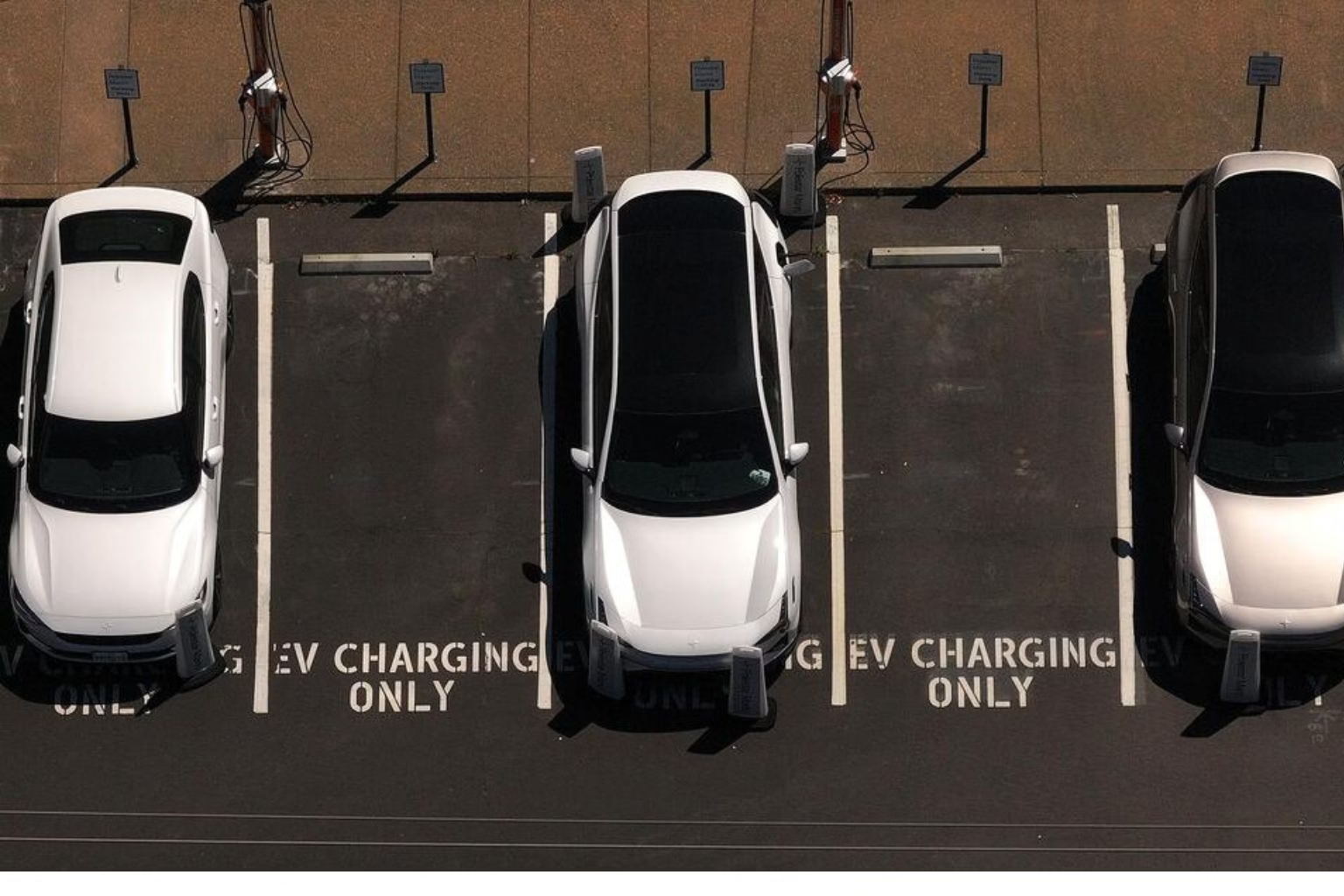
Electric Vehicles Had a Bumpy Road in 2025 — and One Pleasant Surprise
Electric vehicles (EVs) experienced a tumultuous year in 2025 marked by policy shifts, production setbacks, and fluctuating consumer demand — yet beneath the surface turbulence, a notable silver lining emerged for the industry.
Despite headline challenges, overall interest in EVs remains stronger than many expected, suggesting the long-term electrification trend still holds momentum.
Policy Reversals and Incentive Losses Put Pressure on EV Sales
One of the most significant developments in 2025 was the rollback of key federal incentives that had previously boosted EV adoption. A major tax credit of $7,500 for EV buyers was eliminated, and penalties for manufacturers that sold too many traditional gas-powered vehicles were removed. These changes undermined some of the financial incentives that had been reducing the effective price gap between EVs and internal combustion engine vehicles.
Such shifts sent shockwaves through the market. Buyers who rushed to take advantage of incentives earlier in the year contributed to a sales spike in late summer. However, once those credits expired, sales dropped sharply in the fall, illustrating how temporary policies had masked deeper structural issues in EV demand.
Product Cancellations and Strategic Retreats Among Automakers
Automakers responded to the unfavorable policy landscape and rising costs by canceling or postponing a number of ambitious EV projects. Some high-profile all-electric models, including truck platforms and commercial vans, were shelved before reaching production. Established names in the EV space experienced reduced support, and some legacy projects were replaced with hybrid variants that include traditional fuel tanks alongside large battery packs.
These strategic retreats illustrated both a recalibration of risk and a recognition that the EV market was undergoing a far more demanding transition than many had forecast.
Sales Trends: Peaks, Valleys, and Lingering Interest
EV sales in 2025 resembled a roller coaster. After a surge tied to expiring incentives, the market experienced a dramatic drop — as much as half of previous volume at certain points. Despite this volatility, the underlying consumer interest did not vanish.
Surveys of new car buyers showed that roughly one in four shoppers remained highly interested in electric vehicles, even after financial incentives were cut. This stable level of underlying demand suggests that for many consumers, EVs are not merely a policy-driven fad, but a genuine long-term preference.

Consumer Satisfaction and Repeat Intentions
Data from customer experience analysts reinforces the idea that EV appeal extends beyond tax credits. EV owners reported very high satisfaction rates with their vehicles — including driving experience, performance, and lower operating costs — and a strong likelihood of choosing another electric vehicle for their next purchase.
Nearly all current EV owners indicated they would buy another battery-powered vehicle. This is a strong indicator of brand loyalty and satisfaction that could support EV adoption even if broader market conditions remain challenging.
Cultural and Perceptual Barriers Remain
Despite steady interest from many buyers, EVs still encounter skepticism in certain segments of the market. In some regions, EV adoption has become entangled in broader political and cultural debates, which can influence purchasing decisions. Placing a hesitant driver behind the wheel often changes perceptions, revealing how enjoyable and accessible electric vehicles can be.
Other barriers — such as charging access for apartment dwellers and high upfront prices — continue to slow broader adoption. These challenges illustrate that while consumer interest may be resilient, infrastructure and affordability remain pressing hurdles.
Economic Ripple Effects of EV Market Shifts
The EV sector’s ups and downs in 2025 had broader economic consequences beyond vehicle sales. Suppliers who invested heavily in components for canceled projects found themselves grappling with unused facilities and reduced orders. As automakers pared back EV plans, some battery production lines and manufacturing jobs were reduced or reassigned. These shifts revealed how deeply EV ambitions had been integrated into broader automotive supply chains — and how abrupt changes can reverberate widely.
Global Perspective: EVs in the Wider Market
Although the U.S. market faced particular disruption, global EV trends told a more optimistic story. In many parts of the world, electric cars continued gaining share, with several markets reporting electric sales reaching or surpassing one-quarter of all new vehicles sold. This global expansion underscores that while policy and market dynamics vary by region, the underlying shift toward electrification remains robust.
Regions such as China continued to lead in EV market share and production volume, helping sustain global momentum even as some Western markets experienced slower growth or policy retrenchment.
The Pleasant Surprise: Enduring Consumer Interest
The most unexpected — and encouraging — development of 2025 was that consumer interest in EVs remained high even after financial incentives disappeared. Instead of collapsing, EV enthusiasm held steady among a quarter of new car shoppers, and satisfaction among current EV owners remained remarkably high. This suggests that the EV transition has taken on its own momentum, beyond the early push from subsidies and mandates.
Industry analysts noted that this persistence may be the most important legacy of 2025’s challenges. It signals that when drivers experience EVs firsthand — through test drives or ownership — many appreciate performance, cost advantages, and driving pleasure in ways that transcend policy incentives.
Looking Ahead: Challenges and Opportunities in 2026
As 2026 begins, industry watchers expect continued evolution, with automakers recalibrating strategies to balance profitability with electrification goals. Pressure to develop more affordable EV models — including simplified or minimalist approaches in some segments — may open new opportunities for growth. Long-term technological improvements in batteries, charging infrastructure, and grid support will remain key to sustained adoption.
In many ways, 2025’s “bumpy road” taught important lessons about market resilience and consumer behavior that could shape the next decade of electric transport.
Frequently Asked Questions (FAQ)
Q: Why did electric vehicle sales drop sharply in late 2025?
A: Sales declined after key federal tax credits were eliminated and penalties for gas vehicles were removed, reducing incentives that had driven earlier purchases.
Q: What happened to planned EV models in 2025?
A: Several high-profile all-electric vehicle projects were canceled or postponed as automakers shifted strategy due to profitability concerns and regulatory changes.
Q: Did consumer interest in EVs disappear?
A: No. Surveys indicated that about 25% of new car shoppers maintained strong interest in electric vehicles even without tax incentives.
🚀 Build a Stronger Digital Footprint with RojrzTech
In a constantly changing digital environment, brands succeed by staying flexible and focused. RojrzTech delivers tailored solutions across web development, UI/UX, SEO, branding, and social media to help businesses strengthen visibility and performance online.
📩 Start Your Digital Growth Journey
Connect with RojrzTech to create digital experiences that support long-term growth and meaningful engagement. Let’s shape a smarter, more impactful online presence