
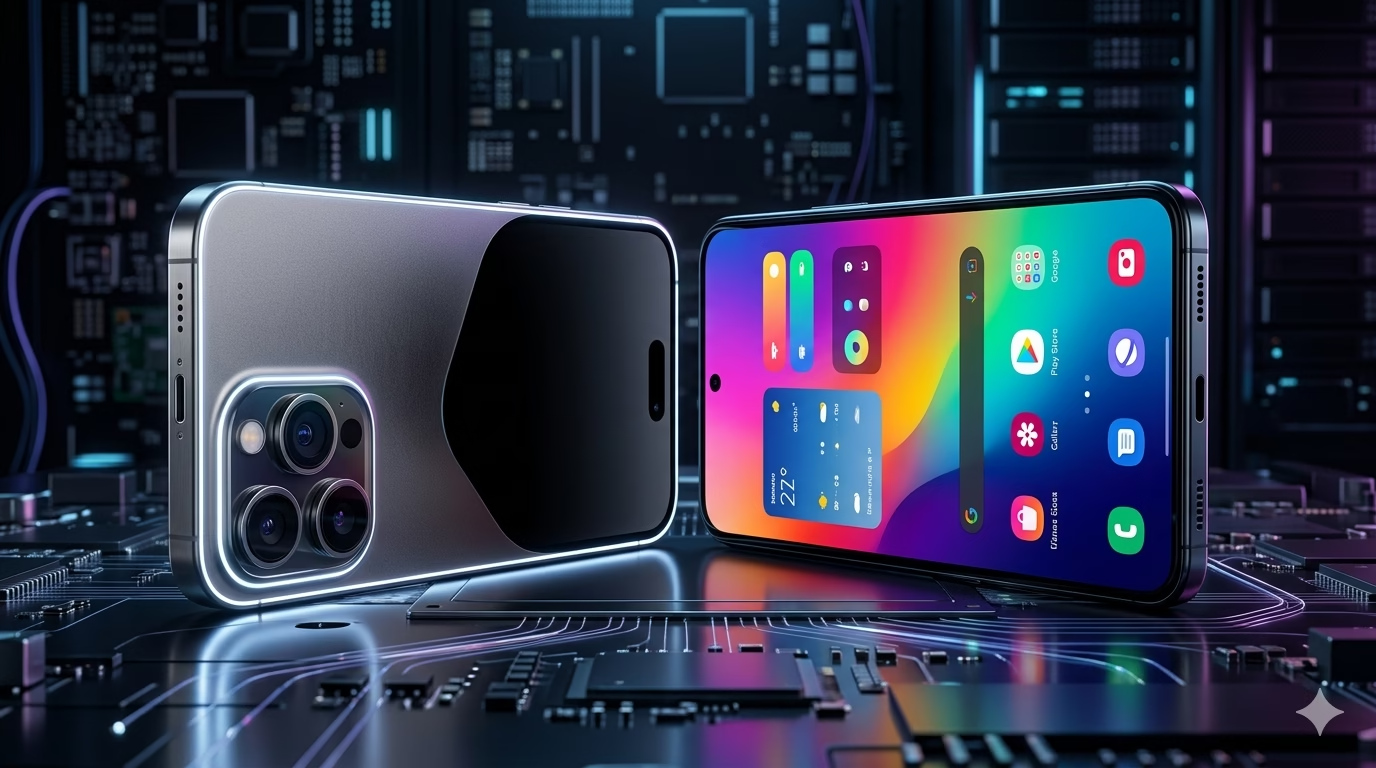
Apple Very Cautious About iPhone Ultra Sales as Samsung Wins Major Concession
The global smartphone industry is once again heating up as tech giants Apple Inc. and Samsung Electronics continue their long-standing rivalry. Recent developments suggest that Apple is taking a notably cautious approach toward the rumored iPhone Ultra, while Samsung appears to have secured a significant advantage in the competitive landscape.
This evolving situation reflects broader shifts in consumer behavior, market demand, and strategic positioning, especially as the battle for smartphone supremacy intensifies in 2024 and beyond.
Apple’s Careful Approach to iPhone Ultra
Apple has built its reputation on premium devices, but even the company is not immune to market pressures. Reports indicate that Apple is being “very cautious” about projected sales for its upcoming iPhone Ultra model. This caution stems from several key factors:
- Uncertain Demand for Ultra-Premium Devices: While Apple’s Pro models have consistently performed well, the Ultra segment represents an even higher price tier. Consumers worldwide are becoming more price-sensitive, especially amid economic uncertainty.
- Slowing Upgrade Cycles: Users are holding onto their smartphones longer than ever. Incremental upgrades no longer justify immediate purchases for many customers.
- Market Saturation: In developed markets, smartphone penetration is already high, limiting room for explosive growth.
This cautious stance aligns with recent concerns that Apple’s iPhone sales have faced pressure in multiple regions, contributing to revenue slowdowns. Despite this, Apple remains a dominant force and continues to innovate cautiously rather than aggressively overextending.
Samsung Gains Strategic Advantage
While Apple exercises restraint, Samsung is making bold moves. The South Korean tech giant has reportedly secured a “major concession,” strengthening its position in the global smartphone market.
Samsung’s advantage comes from several strategic areas:
- Component Supply Leadership: Samsung’s dominance in display and semiconductor manufacturing gives it leverage not only for its own devices but also in negotiations with competitors.
- Diverse Product Portfolio: Unlike Apple, Samsung caters to a wide range of price segments—from budget to ultra-premium—allowing it to capture a broader audience.
- Folding Phone Innovation: Samsung continues to lead in foldable smartphone technology, a category where Apple has yet to enter.
These strengths have helped Samsung maintain its competitive edge, especially in markets where affordability and variety play a crucial role.
Apple vs Samsung: The Battle for Smartphone Supremacy Heats Up
The competition between Apple and Samsung is often described as the ultimate tech rivalry. In 2024, this battle has become even more intense.
Apple has previously overtaken Samsung as the world’s biggest smartphone maker in terms of revenue and profitability, thanks to its premium pricing strategy and loyal ecosystem. However, Samsung continues to lead in global shipment volume due to its expansive product lineup.
Key differences in strategy include:
- Apple’s Ecosystem Approach: Apple focuses on seamless integration between devices, services, and software, creating strong customer loyalty.
- Samsung’s Market Coverage: Samsung prioritizes scale and accessibility, ensuring it reaches users across all economic segments.
This contrast highlights why the competition remains so dynamic. Apple dominates in value, while Samsung excels in volume.
Sales Trends and Market Dynamics in 2024
When examining Samsung vs Apple sales in 2024, several trends stand out:
- Premium Segment Growth: Apple continues to dominate the high-end market, although growth is slowing.
- Emerging Market Expansion: Samsung benefits more from growth in emerging economies due to its affordable offerings.
- Innovation vs Practicality: Consumers are increasingly prioritizing battery life, durability, and value over cutting-edge features.
Apple’s cautious outlook for the iPhone Ultra reflects these trends. Launching an ultra-premium device in a market that is becoming more price-conscious carries significant risk.
Why Apple Is Playing It Safe
Apple’s decision to be cautious is not a sign of weakness but rather a calculated move. The company has historically preferred:
- Controlled Product Rollouts
- High Profit Margins
- Strong Brand Positioning
By limiting expectations for the iPhone Ultra, Apple can avoid overproduction and maintain exclusivity—two factors that have contributed to its long-term success.
Samsung’s Momentum Continues
Samsung, on the other hand, is capitalizing on momentum. Its ability to adapt quickly, experiment with new form factors, and scale production efficiently gives it a competitive advantage in uncertain times.
The company’s willingness to push boundaries—especially in foldable devices—positions it as an innovation leader, even as Apple focuses on refinement.
The Future of the Smartphone Rivalry
Looking ahead, the rivalry between Apple and Samsung will likely be shaped by:
- Artificial Intelligence Integration
- Next-Generation Displays
- Battery and Charging Innovations
- Ecosystem Expansion
Both companies are investing heavily in these areas, ensuring that competition remains fierce.
Apple’s cautious approach to the iPhone Ultra may prove wise if demand for ultra-premium devices remains limited. Meanwhile, Samsung’s aggressive strategy could help it capture even more market share.
Conclusion
The smartphone industry is entering a new phase where growth is no longer guaranteed, and strategic decisions matter more than ever. Apple’s careful stance on iPhone Ultra sales reflects a deeper understanding of shifting consumer behavior, while Samsung’s recent gains highlight its adaptability and scale.
As the battle for smartphone supremacy continues, one thing is clear: both Apple and Samsung will remain at the center of innovation, competition, and global tech influence.
FAQs
Q1: Why is Apple cautious about iPhone Ultra sales?
Apple is concerned about high pricing, slower upgrade cycles, and uncertain demand for ultra-premium smartphones.
Q2: What advantage has Samsung gained recently?
Samsung has secured a strategic concession, likely related to components or supply chain leverage, strengthening its market position.
Q3: Who is leading in smartphone sales in 2024?
Samsung leads in shipment volume, while Apple often leads in revenue and profitability.
Q4: Has Apple overtaken Samsung as the biggest smartphone maker?
In terms of revenue and brand value, Apple has overtaken Samsung, but Samsung still dominates in total units sold.
Q5: What makes Samsung competitive against Apple?
Samsung’s wide product range, innovation in foldables, and control over key components give it a strong edge.
Boost Your Brand with Today’s Digital Insights!
Today’s news on Samsung Unveils the Groundbreaking Galaxy Z TriFold Smartphone shows how fast the tech world is evolving — and how quickly innovation changes the way people interact, shop, and consume content. Brands that adapt win. Brands that delay fall behind.
At RojrzTech, we help your business stay ahead in this fast-moving digital era. From Website Development to SEO, Social Media Management, Digital Marketing, and eCommerce Solutions, we deliver strategies that drive real results and long-term growth.
Whether you want to build a powerful online presence, boost engagement, or scale your business with modern digital tools — RojrzTech has you covered.
Contact us today and take your brand to the next level with innovation-driven digital solutions