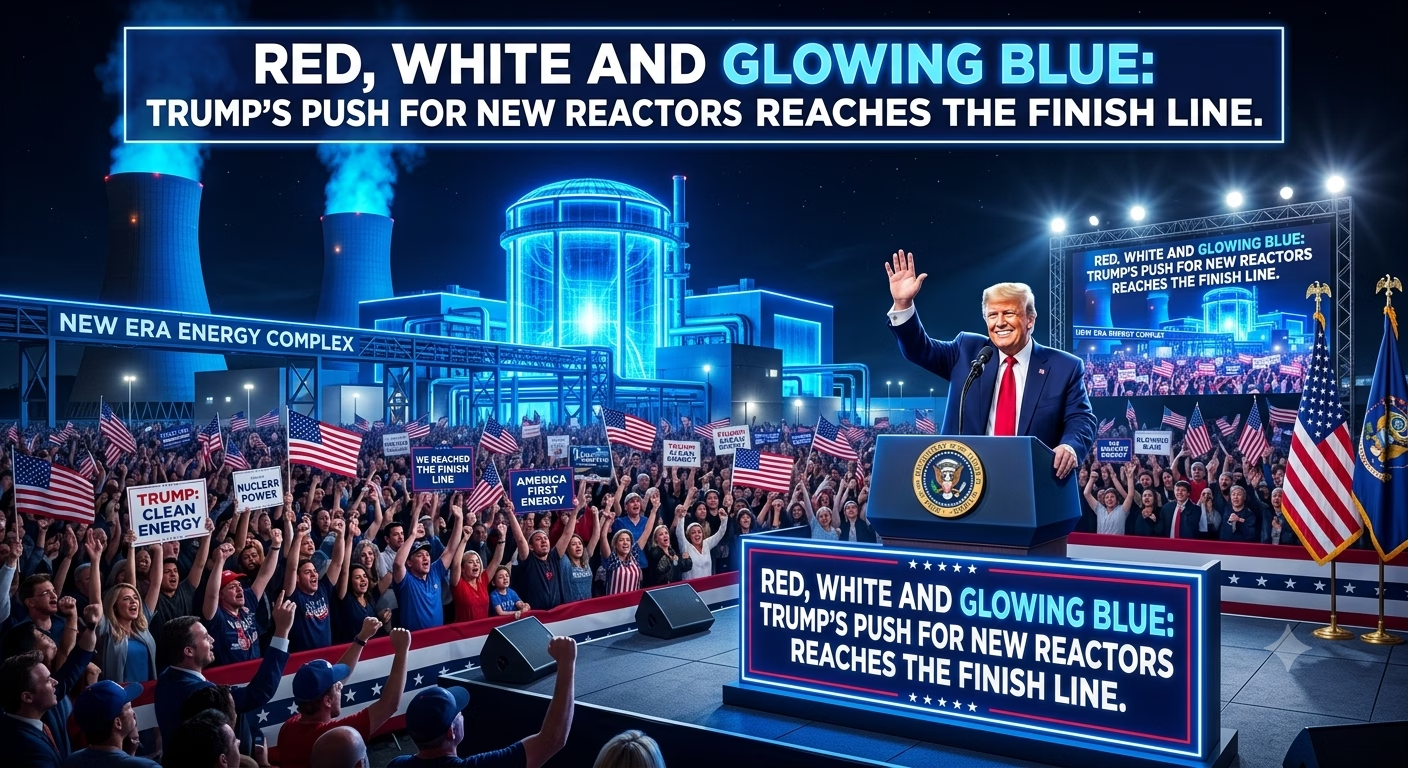
Red, White and Glowing Blue: Trump’s Push for New Reactors Reaches the Finish Line
The United States is entering a new chapter in its energy strategy as efforts to accelerate the development of advanced nuclear reactors gain momentum. President Donald Trump’s administration has placed nuclear power at the center of its long-term energy policy, arguing that expanding nuclear generation is essential for energy security, economic growth, technological leadership, and reducing dependence on foreign energy sources.
The latest push marks one of the most ambitious attempts in decades to revive America’s nuclear industry. Supporters believe modern reactor technologies can provide reliable, carbon-free electricity while strengthening domestic manufacturing and national security. Critics, however, continue to raise concerns regarding nuclear safety regulations, waste management, project costs, and the speed at which new reactors are being approved.
As discussions continue across government agencies, energy companies, and research institutions, the future of nuclear power has once again become one of the most important issues shaping America’s energy landscape.
Trump and Nuclear Power: A Renewed National Strategy
Trump and nuclear power have become closely linked through a series of executive actions and policy initiatives designed to accelerate reactor development across the United States.
The administration argues that nuclear energy provides dependable baseload electricity that can operate around the clock regardless of weather conditions. Unlike wind and solar power, nuclear reactors generate continuous electricity, making them an important component of a diversified energy system.
Officials have repeatedly stated that expanding domestic nuclear capacity will strengthen energy independence, create thousands of high-skilled jobs, support American manufacturing, and improve national security.
The administration also views advanced nuclear technology as an important area where the United States can compete globally against countries investing heavily in next-generation reactors.
Why Nuclear Energy Is Back in the Spotlight
Interest in nuclear power has increased significantly over the past several years due to rising electricity demand and rapid growth in artificial intelligence, cloud computing, and advanced manufacturing.
Modern data centers require enormous amounts of reliable electricity, placing additional pressure on existing power grids. At the same time, governments continue searching for low-carbon energy sources capable of meeting long-term climate and economic goals.
Advanced nuclear reactors are increasingly viewed as one potential solution because they can produce large amounts of electricity with relatively low greenhouse gas emissions.
Growing concerns about grid reliability have further strengthened arguments for expanding nuclear capacity.
Department of Energy Announces Initial Selections for New Reactor Pilot Program
One of the most significant developments involves the Department of Energy announces initial selections for new reactor pilot program initiative.
The pilot program is designed to accelerate deployment of advanced nuclear technologies by supporting promising reactor designs and demonstrating their commercial viability.
Rather than relying solely on traditional large-scale nuclear plants, the program encourages innovation through smaller, more flexible reactor concepts capable of serving diverse energy needs.
Officials believe pilot projects will help reduce financial risks, improve public confidence, and provide valuable operational experience before wider commercial deployment.
The initiative also promotes collaboration between government agencies, private companies, universities, and national laboratories.
Advanced Reactor Technologies Transform the Industry
The next generation of nuclear reactors differs substantially from conventional nuclear power plants.
Many advanced designs emphasize modular construction, enhanced passive safety systems, simplified operations, and reduced construction timelines.
Small Modular Reactors (SMRs) have attracted particular attention because they can be manufactured in factories before being transported to installation sites.
This approach could significantly reduce project costs while improving construction efficiency.
Developers are also exploring reactors capable of producing hydrogen, supporting industrial processes, and providing electricity to remote communities.
These innovations represent one of the most significant technological shifts in nuclear energy over the past several decades.
Nuclear Regulations Face Major Changes
The expansion effort has prompted renewed debate over nuclear regulations in the United States.
Supporters argue that existing licensing procedures have become overly complex and time-consuming, slowing innovation and discouraging private investment.
Government officials have proposed streamlining portions of the regulatory process while maintaining essential oversight responsibilities.
The objective is to reduce unnecessary administrative delays without compromising public safety or environmental protection.
Finding the appropriate balance between efficiency and oversight remains one of the central challenges facing policymakers.
Nuclear Safety Regulations Remain a Priority
Although regulatory reform is receiving increased attention, nuclear safety regulations remain fundamental to every stage of reactor development.
Every proposed facility must undergo detailed engineering reviews, environmental assessments, operational planning, and emergency preparedness evaluations.
Modern reactor developers emphasize that today’s technologies incorporate numerous passive safety systems capable of automatically responding to abnormal operating conditions.
These systems are designed to reduce reliance on human intervention while improving overall plant safety.
Regulatory agencies continue evaluating whether existing frameworks adequately address these emerging technologies.
Nuclear Safety Standards Continue to Evolve
The discussion surrounding nuclear safety standards extends beyond reactor construction.
Safety standards influence equipment design, operational procedures, employee training, cybersecurity protections, maintenance schedules, radiation monitoring, and emergency planning.
As reactor technologies evolve, regulators must continuously update technical requirements to reflect new engineering approaches and scientific understanding.
Industry experts generally agree that maintaining strong safety standards is essential for building public confidence in nuclear energy.
Public acceptance will likely play a major role in determining the long-term success of future reactor projects.
Nuclear Safety and Security Go Hand in Hand
Modern nuclear facilities require comprehensive approaches to both nuclear safety and security.
Safety focuses primarily on preventing accidents and protecting workers, surrounding communities, and the environment.
Security addresses potential threats including unauthorized access, cyberattacks, sabotage, and theft of sensitive materials.
Advanced monitoring technologies, digital security systems, physical barriers, and coordinated emergency response planning have become increasingly important as energy infrastructure becomes more interconnected.
Federal agencies continue working closely with operators to strengthen both physical and cybersecurity protections.
Department of Energy Trump Initiatives Expand Nuclear Investment
Several Department of Energy Trump initiatives aim to increase investment in domestic nuclear research and development.
Funding supports advanced reactor demonstration projects, fuel cycle innovation, workforce development, university research programs, and modernization of national laboratory facilities.
Officials believe government support can accelerate commercialization while encouraging private-sector participation.
These investments are intended not only to improve electricity generation but also to strengthen America’s overall nuclear technology leadership.
Research programs also contribute to advancements in medical isotopes, national defense applications, and scientific research.
Oklo Trump Partnership Draws Attention
One company receiving significant attention is Oklo.
The company has developed advanced reactor concepts focused on small-scale nuclear generation using innovative technologies.
Interest surrounding Oklo Trump has grown as policymakers emphasize advanced reactors capable of faster deployment and greater operational flexibility.
Supporters argue that companies developing compact reactors could help expand reliable electricity generation while supporting remote industrial facilities, military installations, and growing data center demand.
Whether these technologies achieve widespread commercial adoption remains to be seen, but investor interest continues growing.
Economic Benefits of Nuclear Expansion
Expanding nuclear power could generate significant economic benefits.
Large construction projects create thousands of engineering, manufacturing, and skilled labor positions.
Once operational, nuclear facilities provide long-term employment opportunities for highly trained workers while supporting surrounding local economies.
Domestic reactor construction also benefits suppliers producing steel, concrete, electrical equipment, precision components, and specialized engineering services.
Supporters believe strengthening America’s nuclear manufacturing base could improve international competitiveness and create valuable export opportunities.
Environmental Considerations
Nuclear power remains one of the lowest-carbon sources of electricity available today.
Unlike fossil fuel power plants, reactors generate electricity without producing carbon dioxide during operation.
Many energy experts argue that achieving long-term emissions reduction goals will require multiple energy sources working together, including renewables, natural gas, energy storage, and nuclear power.
However, environmental discussions continue regarding radioactive waste storage, decommissioning costs, and long-term waste management strategies.
Finding sustainable solutions to these challenges remains essential for broader public acceptance.
Challenges Facing New Reactor Development
Despite growing political support, numerous challenges remain.
Building nuclear facilities requires substantial financial investment and long-term planning.
Projects often involve complex engineering, regulatory approvals, supply chain coordination, and workforce development.
Public perception also plays an important role.
Some communities welcome nuclear investments because of economic opportunities, while others express concerns regarding safety, waste management, and environmental risks.
Addressing these concerns through transparency and public engagement will remain critical.
America’s Nuclear Future
The renewed emphasis on nuclear power represents one of the most significant shifts in American energy policy in recent years.
Whether advanced reactors become a major component of future electricity generation will depend upon successful technology demonstrations, effective regulation, public confidence, and continued investment.
As electricity demand continues growing alongside artificial intelligence, electric vehicles, and industrial modernization, policymakers increasingly view nuclear energy as an important part of maintaining reliable power supplies.
The coming decade may determine whether advanced nuclear technology fulfills its promise of transforming America’s energy future.
Conclusion
Red, White and Glowing Blue: Trump’s Push for New Reactors Reaches the Finish Line reflects a renewed national effort to revitalize America’s nuclear energy industry. Through expanded Department of Energy initiatives, support for advanced reactor technologies, and efforts to modernize nuclear regulations, the administration aims to strengthen energy security, economic competitiveness, and technological leadership. While supporters see enormous potential for reliable low-carbon electricity, critics continue emphasizing the importance of maintaining strong nuclear safety regulations, rigorous safety standards, and comprehensive security measures. As advanced reactors move from concept to reality, the future of nuclear power will depend on balancing innovation with public trust, environmental responsibility, and long-term safety.
Frequently Asked Questions (FAQs)
What is Trump’s nuclear power plan?
The plan focuses on accelerating advanced reactor development, expanding domestic nuclear energy production, modernizing regulations, and strengthening U.S. energy security.
Why is nuclear power becoming important again?
Growing electricity demand, AI data centers, energy security concerns, and low-carbon electricity goals have renewed interest in nuclear energy.
What is the Department of Energy reactor pilot program?
The program supports advanced nuclear reactor projects by helping demonstrate new technologies before large-scale commercial deployment.
What are advanced nuclear reactors?
Advanced reactors use modern technologies designed to improve safety, efficiency, flexibility, and construction timelines compared to traditional nuclear plants.
What are Small Modular Reactors (SMRs)?
SMRs are compact nuclear reactors that can be factory-built and transported to installation sites, reducing construction costs and timelines.
Why are nuclear regulations being updated?
Officials aim to streamline licensing processes while maintaining strong safety oversight to encourage innovation and investment.
How do nuclear safety regulations protect the public?
They establish strict requirements for reactor design, operation, emergency preparedness, radiation protection, environmental monitoring, and regular inspections.
What is the difference between nuclear safety and nuclear security?
Nuclear safety focuses on preventing accidents and protecting people and the environment, while nuclear security addresses threats such as cyberattacks, sabotage, and unauthorized access.
What is Oklo?
Oklo is a company developing advanced small nuclear reactor technology designed for reliable and efficient electricity generation.
What challenges does nuclear expansion face?
Major challenges include construction costs, regulatory approvals, waste management, public acceptance, workforce development, and long-term financing.
How does nuclear power help reduce carbon emissions?
Nuclear reactors generate electricity without producing carbon dioxide during normal operation, making them a low-carbon energy source.
.
🚀 Elevate Your Digital Presence with RojrzTech
The digital landscape evolves rapidly. Brands thrive when they adapt quickly, innovate continuously, and leverage robust online systems. RojrzTech empowers your business with tailored solutions in Website Development, UI/UX Design, Social Media Management, SEO, Branding, and Custom Digital Services.
Our expert team builds strategies that align perfectly with your goals, helping you achieve a stronger online presence, higher engagement, and sustainable growth. Every project is designed to give your brand a competitive edge in a fast-moving digital world.
📩 Ready to Transform Your Digital Future?
Don’t wait to take your brand to the next level. Contact RojrzTech today and start creating a digital experience that resonates, converts, and grows. Together, we’ll design, innovate, and elevate your brand’s online journey