
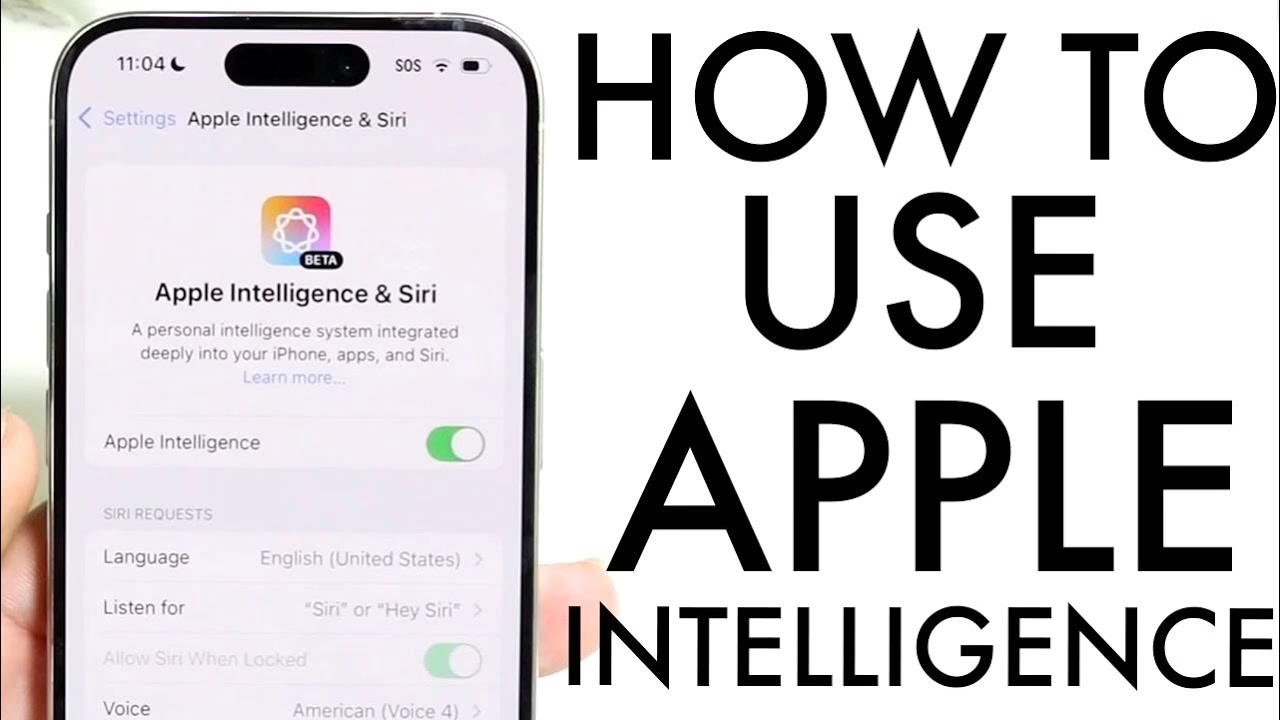
Apple Intelligence Siri Is Over a Year Late, but That Might Be a Good Thing
Apple has finally unveiled its long-anticipated upgrade to Siri under the banner of Apple Intelligence, delivering features that were widely expected much earlier. While Apple Intelligence Siri is over a year late, the delay may ultimately work in the company’s favor by allowing refinement, improved privacy integration, and deeper ecosystem support. The evolution of Apple’s AI strategy reflects careful balancing between performance and user trust.
As competitors race to embed generative AI into everyday experiences, Apple took its time to reimagine Siri — not as a simple voice assistant but as a contextually aware intelligence layer woven throughout iPhone, iPad, and Mac devices. This slower rollout may prove advantageous, especially as users demand tools that are both powerful and secure.
The Road to Apple Intelligence
Apple first hinted at an AI-driven overhaul of Siri more than a year ago. The announcement spotlighted ambitions to incorporate advanced language understanding, contextual awareness, and broad device integration. However, as rivals pushed aggressive timelines, Apple’s progress appeared sluggish in comparison. This led to criticism and speculation about the company’s ability to compete in the rapidly evolving AI landscape.
Despite the delay, the final product reflects a mature blend of generative AI capabilities with Apple’s signature emphasis on privacy. The extended development time allowed Apple engineers to refine models and ensure that intelligence features operate both reliably and securely across platforms.
Apple Intelligence Across Devices
Apple’s upgraded AI experience is designed to run seamlessly across multiple devices, each with distinct interaction patterns:
- Apple Intelligence iPhone 15 and iPhone 16 owners will see deep integration with everyday tasks, including contextual responses, intelligent suggestions, and enhanced voice interactions.
- The next generation, Apple Intelligence iPhone 17, is expected to offer even smoother performance with optimized hardware-software synergy.
- Tablet users benefit from expanded functionality on iPad, while Mac users enjoy access to powerful intelligence features tailored to desktop workflows.
Users curious about feature availability will soon discover that the system adapts to device capabilities and user preferences.
What Took So Long?
Many observers asked why Siri’s overhaul took longer than similar AI updates from competitors. Part of the answer lies in Apple’s philosophy: do not ship until it feels right. The company’s approach to AI integrates on-device processing, private cloud inference, and strict data protection standards — all of which add complexity to the development process.
Unlike some services that process all queries through large external servers, Apple’s strategy ensures that personal data, voice inputs, and interaction history remain encrypted and managed under the user’s control. This privacy-centric methodology necessitated additional development and testing, contributing to the extended timeline.

How to Use Apple Intelligence on iPhone
Once Apple Intelligence becomes available, users will find it embedded deeply in system interfaces. For iPhone owners, learning how to use Apple Intelligence on iPhone will be critical:
- Update to the latest iOS version.
- Access the intelligence features through Siri, search bars, and context menus.
- Apple Intelligence will suggest personalized actions based on usage patterns.
- Voice prompts can trigger contextual advice without needing to open separate apps.
For iPhone 14 users wondering how to get Apple Intelligence on iPhone 14, updates and support information will be provided directly through Apple’s software updates, ensuring broad compatibility.
iPad and Mac Integration
Apple Intelligence extends beyond the iPhone. Those interested in how to use Apple Intelligence on iPad will find similar integration within iPadOS — particularly across multitasking tools, writing assistance, and productivity features.
For desktop users, the question of how to use Apple Intelligence on Mac revolves around improved search, enhanced document analysis, and system-wide suggestions. Apple aims to make intelligence features feel native and productive without overwhelming users with complexity.
Broader Expectations and User Experience
The delayed launch also benefits user experience design. Apple’s longer timeline allowed its designers to refine contextual interactions, reduce friction, and make the AI feel less intrusive. Rather than offering generic responses, Apple Intelligence attempts to tailor every suggestion to the individual’s routines and preferences.
This personalization extends to notifications, keyboard suggestions, calendar insights, and reminders that feel proactive without being pushy — a delicate balance that many competitors have yet to perfect.
Balancing Innovation and Privacy
An ongoing tension in consumer AI revolves around privacy. Apple has positioned its intelligence strategy as a key differentiator by emphasizing that personal data will not be exploited for advertising or third-party profiling.
To deliver this, Apple combines on-device processing with private cloud support tailored to secure environments. Users retain control over their data, choosing which applications and contexts can access intelligent suggestions.
This emphasis may explain why Apple Intelligence Siri is over a year late — not due to a lack of technical capability, but because of Apple’s commitment to safeguarding user information.
Download and Availability
For users ready to explore the new features, Apple Intelligence will become available through standard software updates. Once the latest updates are installed, users can expect contextual suggestions, AI-assisted search, and enhanced Siri interactions.
The availability timeline will vary depending on device models and geographical markets. The rollout strategy seeks to ensure stability and gradual adoption rather than overwhelming servers and support systems.
Community and Developer Insight
Developers and tech communities have reacted with measured optimism. Some praised Apple’s thoughtful pacing, while others hoped for even more aggressive feature sets. Enthusiasts on forums frequently compare Apple’s approach with other AI leadership efforts, debating user privacy, performance, and the depth of Siri integration.
Discussions around Apple’s pacing often cite how cautious implementation can result in more robust and user-trustworthy tools — making Apple Intelligence iPhone 17 and future versions a platform to watch.
Critics and Alternative Views
Not all commentary is positive. Critics argue that Apple missed opportunities by delaying Apple Intelligence, allowing competitors to capture consumer attention with more visible AI features. Others contend that some aspects of the announced updates still fall short of public expectation.
Yet, even detractors acknowledge that Apple’s focus on privacy and thoughtful rollout distinguishes it from others who have rushed AI features to market with fewer safeguards.
What the Future Holds
Looking ahead, Apple Intelligence is poised to evolve with hardware advancements and software refinements. Future iterations may include deeper machine learning capabilities, multimodal interactions, and extended ecosystem support.
As users grow more comfortable with AI enhancements across devices, Apple’s cautious start may prove to be a foundational advantage — setting expectations for how intelligent personal computing should behave in everyday life.
FAQ – Apple Intelligence Siri
Q1: Why is Apple Intelligence Siri over a year late?
Apple’s commitment to privacy, secure architecture, and seamless integration added complexity that extended the development timeline.
Q2: Will Apple Intelligence work on older iPhones?
Compatibility varies, but Apple aims to support many recent models through software updates.
Q3: How to use Apple Intelligence on iPhone?
Update to the latest iOS, then access AI features through Siri, search bars, and contextual suggestions.
🚀 Build a Powerful Online Presence with RojrzTech
Quiet updates often carry the loudest consequencesIn an ever-evolving digital landscape, brands grow by adapting fast and executing smart. RojrzTech offers customized solutions in web development, UI/UX design, SEO, branding, and social media—helping businesses improve visibility, engagement, and overall digital performance.
📩 Start Growing Your Digital Presence Today
Partner with RojrzTech to craft digital experiences designed for long-term success and real audience connection. Let’s build an online presence that works harder for your business