
‘Good for Russia, Good for China, Bad for America’: The 2026 Iran War and the New Global Order
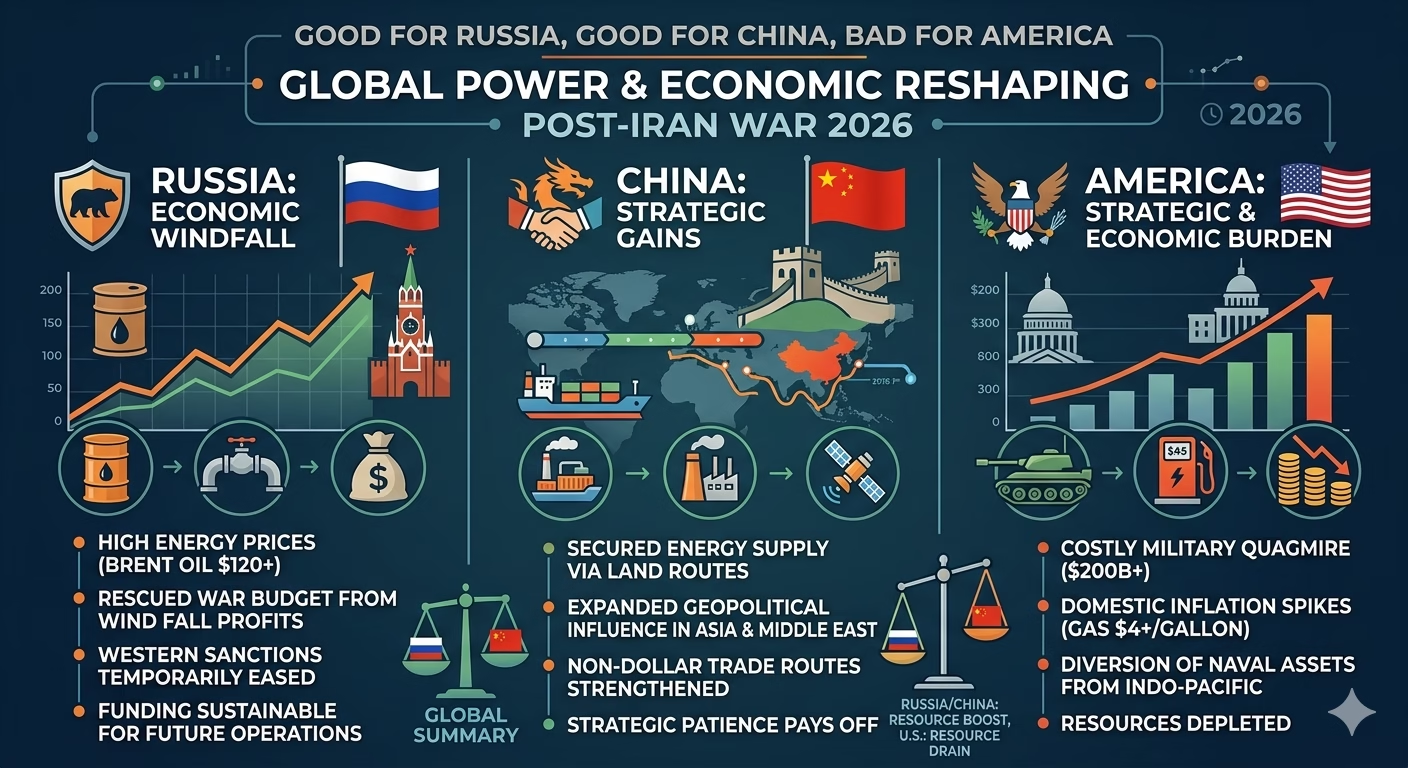
The joint military strikes launched by the U.S. and Israel against Iran in early 2026 were intended to be a “swift and surgical” neutralization of a regional threat. Instead, they have triggered a systemic rupture in the global economy. As of April 10, 2026, the data is clear: while Washington finds itself entangled in a costly Middle Eastern quagmire, Moscow and Beijing are reaping the strategic and financial rewards of a war they did not have to fight.
1. Russia’s Economic Windfall
For Vladimir Putin, the Iran war has been a “get out of jail free” card for the Russian economy. Prior to the conflict, Western sanctions and the immense cost of the Ukraine war had pushed Russia toward a fiscal precipice, with energy revenues in freefall.
The eruption of war in the Persian Gulf changed everything. Brent crude, which hovered around $60 a barrel, surged past $120 following the closure of the Strait of Hormuz. In a desperate bid to stabilize global markets, the Trump administration was forced to temporarily ease sanctions on Russian oil. This allowed the Kremlin to sell off its “shadow fleet” stocks, potentially injecting up to $160 billion into the Russian budget—more than their entire fiscal deficit for 2025. This windfall ensures that Russia can sustain its military operations in Europe for years to come.
2. China’s Strategic Patience
While the U.S. military is preoccupied with drone swarms and maritime blockades, Beijing is playing a long game of “calculated silence.” China remains Iran’s largest trading partner, secured by a 25-year cooperation agreement that provides Beijing with discounted energy in exchange for infrastructure investment.
By remaining on the sidelines, President Xi Jinping is achieving two goals:
- Energy Security: While the West faces soaring prices, China continues to receive Iranian and Russian oil through overland pipelines and non-dollar trade routes.
- Geopolitical Vacuum: As American naval assets are diverted from the Indo-Pacific to the Persian Gulf, China has found more room to expand its influence in the South China Sea and across Central Asia.
3. The American Quagmire
For the United States, the war has become an economic and strategic burden. The cost of military operations has already exceeded $200 billion, and the domestic impact is being felt at the gas pump. Gasoline prices in the U.S. have jumped to over $4 per gallon, the highest since 2023, complicating the Federal Reserve’s battle against inflation.
Strategically, the war has accelerated the consolidation of the Russia-China partnership. The “Nixonian” principle of keeping Moscow and Beijing divided has been shattered as both powers find common ground in watching the U.S. deplete its resources in the Middle East.
The Reshaped Global Economy: A Summary
| Impact Area | Winner/Loser | Why? |
| Energy Prices | Russia | Oil price surge rescued the Kremlin’s war budget. |
| Geopolitics | China | U.S. distraction allows for Indo-Pacific expansion. |
| Inflation | USA/Europe | Energy shocks are driving up the cost of food and travel. |
| Military Tech | Iran/Russia | Iran’s drone tactics mirror Russia’s, creating a unified threat model. |
Frequently Asked Questions (FAQs)
Q1: Why is this war considered “good” for Russia?
Mainly due to oil prices. Russia’s federal budget was built on $60/barrel oil. When the Iran war sent prices to $120/barrel, it effectively doubled Russia’s export revenue, allowing them to bypass the pressure of Western sanctions and fund their own military goals.
Q2: How is China winning if they depend on Middle Eastern oil?
China has diversified its supply. They receive oil from Russia and Iran via land-based routes that bypass the U.S.-monitored Strait of Hormuz. Additionally, as the U.S. spends money on the war, China is using its capital to build infrastructure and diplomatic ties across the Global South.
Q3: What has happened to the Strait of Hormuz?
Iran effectively closed the Strait using naval mines and drone swarms. This blocked 20% of the world’s oil supply, causing a “global energy security challenge” that hasn’t been seen since the 1970s.
Q4: Is the U.S. economy in a recession?
Not yet, but risks are high. The combination of high energy prices and the massive cost of war (over $200 billion) has slowed growth. If the war continues through the summer of 2026, many economists predict a stagflationary period for the U.S. and Europe.
Q5: Why did the U.S. ease sanctions on Russia during this war?
To prevent a total global economic collapse. When Iranian oil was cut off, the world needed an immediate alternative to prevent oil from hitting $200/barrel. Russia was the only producer with enough “stuck” supply to fill the gap quickly.
Q6: What is the “Doomsday” scenario for energy?
Analysts warn that if Iranian missiles continue to target Qatari LNG (Liquefied Natural Gas) facilities, the world could face a permanent shift in energy costs, making electricity and heating significantly more expensive for years.
🚀Build a Stronger Digital Footprint with RojrzTech
In a constantly changing digital environment, brands succeed by staying flexible and focused. RojrzTech delivers tailored solutions across web development, UI/UX, SEO, branding, and social media to help businesses strengthen visibility and performance online.
📩 Start Your Digital Growth Journey
Connect with RojrzTech to create digital experiences that support long-term growth and meaningful engagement. Let’s shape a smarter, more impactful online presence