
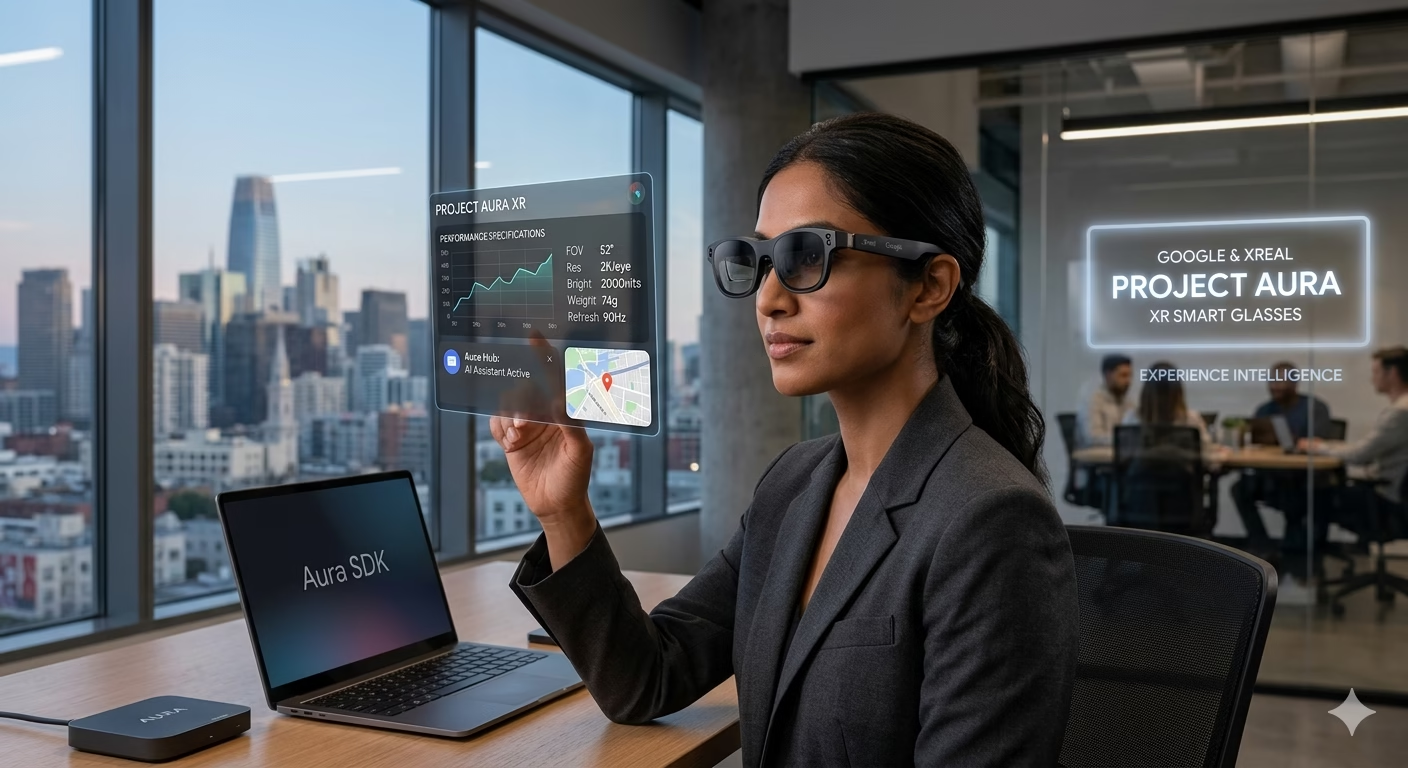
Google and Xreal’s “Project Aura” XR Smart Glasses Are Legit
Introduction
Google and Xreal’s upcoming Project Aura XR smart glasses are gaining serious attention as one of the most promising entries in the next generation of augmented reality (AR) and extended reality (XR) devices. Unlike earlier experimental attempts in wearable tech, this project is being positioned as a real, production-ready platform built on Android XR, Google’s new spatial computing ecosystem.
Early demonstrations and developer previews suggest that Project Aura is not just a concept—it is a fully developed hardware-software collaboration expected to launch in 2026.
What is Project Aura?
Project Aura is a pair of optical see-through XR glasses developed by Xreal in partnership with Google. It runs on the Android XR platform, which is designed to power a new generation of spatial computing devices.
Key highlights include:
- Lightweight XR glasses with transparent display
- Powered by Android XR operating system
- Built in collaboration with Google and Xreal
- Designed for immersive AR and mixed-reality experiences
- Expected launch timeframe: 2026
The project represents a major step toward practical, everyday AR computing.
Key Features of Project Aura
1. Optical See-Through Display
Unlike VR headsets, Project Aura allows users to see the real world while overlaying digital content directly into their field of view.
2. High Field of View (FOV)
The device reportedly offers a wide 70-degree field of view, enabling more immersive AR experiences.
3. Tethered Compute System
Instead of packing all processing into the glasses, Aura uses a separate compute puck, reducing weight and improving comfort.
4. Android XR Integration
The system is deeply integrated with Android XR, allowing:
- App support from the Android ecosystem
- AI-powered assistance via Google Gemini
- Real-time spatial computing experiences
5. AI-Powered Interaction
Project Aura is expected to support voice and AI-driven controls, including:
- Real-time translation
- Object recognition
- Navigation assistance
- Smart notifications and overlays
Why Project Aura Is a Big Deal
XR devices have struggled for years due to limited practicality, high cost, and poor usability. Project Aura is different because:
- It focuses on lightweight everyday use
- It avoids bulky headset design
- It integrates AI at the core
- It uses a scalable Android ecosystem
This combination makes it one of the strongest contenders in the AR glasses market.
Android XR Ecosystem Advantage
One of the biggest strengths behind Project Aura is the Android XR platform, which is designed to unify multiple device types:
- XR headsets
- AR glasses
- AI smart glasses
- Developer-friendly spatial apps
This ecosystem approach means developers can build once and deploy across multiple XR devices.
Competition in the XR Market
Project Aura enters a competitive space dominated by:
- Meta smart glasses ecosystem
- Apple Vision Pro (mixed reality headset segment)
- Other AR startups like Magic Leap
However, Google and Xreal are targeting a different direction:
👉 Lightweight AR glasses instead of heavy VR headsets
This could give them a strong advantage in mainstream adoption.
Expected Use Cases
Project Aura is designed for practical daily use cases such as:
- Navigation overlays in real-time
- Live translation of conversations
- Hands-free messaging and notifications
- Educational AR content
- Remote collaboration tools
- AI-assisted productivity tasks
Challenges Ahead
Despite strong potential, Project Aura still faces challenges:
- Battery life limitations
- Price uncertainty
- App ecosystem maturity
- Real-world comfort and usability
- Consumer adoption barriers
XR has historically struggled with these issues, so execution will be critical.
Release Date and Pricing (Expected)
- Release Date: Expected in 2026 (no exact date confirmed)
- Price: Not officially announced, but likely positioned as premium XR hardware
Industry estimates suggest pricing could vary depending on configuration and display capabilities.
Conclusion
Google and Xreal’s Project Aura represents a serious step forward in XR smart glasses technology. With Android XR, AI integration, and a lightweight design approach, it stands out as one of the most promising attempts to bring augmented reality into everyday life.
While still in development, early signs suggest that Project Aura is not just experimental—it is a legitimate product aiming to redefine how we interact with digital content in the real world.
FAQs
1. What is Project Aura?
Project Aura is an XR smart glasses platform developed by Xreal in partnership with Google using Android XR.
2. Is Project Aura real or just a concept?
It is a real development project expected to launch in 2026.
3. What operating system does it use?
It runs on Android XR, Google’s spatial computing platform.
4. What makes it different from VR headsets?
It is lightweight AR glasses that overlay digital content on the real world instead of fully immersive VR.
5. When will it release?
It is expected to launch sometime in 2026, but no official date has been confirmed.
📩 Want to Build a Future-Ready Digital Presence?
Don’t just follow tech trends—lead them. Connect with experts who understand how emerging technologies like XR, AI, and smart devices shape user behavior and digital growth.
Whether you’re building a brand, scaling a business, or exploring tech content opportunities, now is the time to align with the future of digital innovation.
👉 Start transforming your digital journey today and stay ahead in the evolving world of smart technology and immersive experiences.