
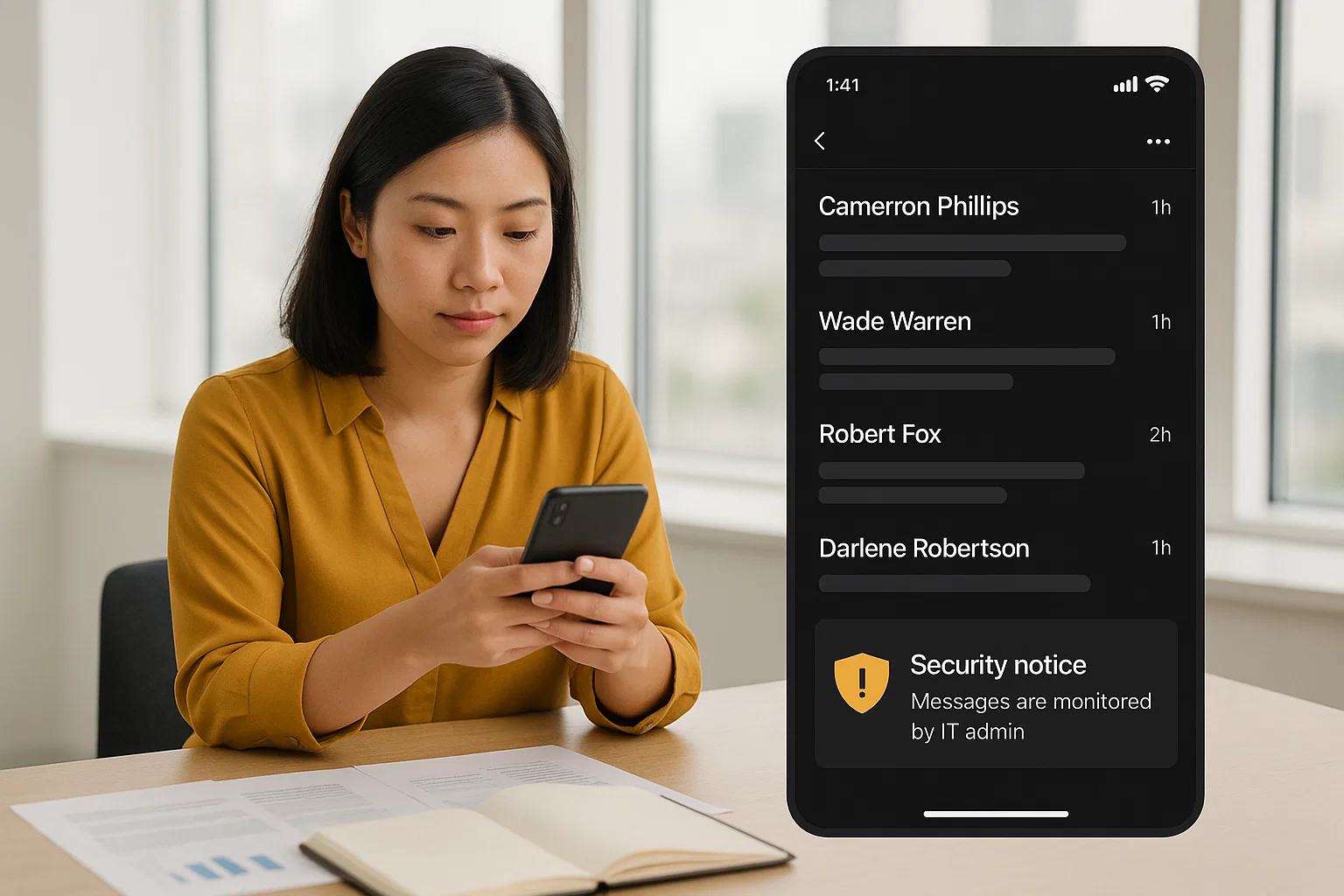
Google Just Started Sharing All Your Text Messages — Even Private Chats Aren’t Safe Anymore
Forget what you thought was private. If your phone is managed by your employer and runs Google Messages, everything you text — SMS or RCS — could now be visible to your boss. This shock wave is rolling across companies worldwide after Google enabled a new feature allowing employers to archive and read your messages. That includes not just what you send, but also edits or deleted messages.
This isn’t a rumor. It’s real. Your messages on work phones may no longer be private.
What Just Happened — Your Texts Can Be Archived
- Google recently rolled out RCS Archival on work-managed Android devices (starting with Pixel phones but expanding to other compatible devices).
- With this new update, employers can intercept and store all RCS and SMS messages sent or received on those devices — text, multimedia, edits, even deleted messages.
- The official line: this helps companies comply with regulations for record-keeping. But in practice, it means that private conversations become visible to corporate IT or compliance departments — regardless of whether the conversation is personal or professional.
End-to-end encryption no longer guarantees privacy when your device is managed by your employer. Once messages are decrypted on your phone, the archival feature captures them.
Why This Update Is Terrifying — All the Things You Thought Were Private Aren’t
Many people use Google Messages because it “felt safer” than email. You typed a text, saw a read receipt, maybe sent some images — and thought it stayed between you and the other person. That illusion just broke.
- Your personal chats could end up logged on a company server
- Even if you “delete” a message or edit it, the archival tool might have saved the original or edited version.
- That means jokes, personal rants — anything — becomes part of corporate record.
For many, this is a violation of privacy. Especially if the work phone doubles as a personal device.
What Users Are Asking — Long-Tail Questions That Matter
You might be wondering:
- How do I share a text on Google Messages?
- Can I share text messages privately or publicly?
- Why are my text messages suddenly shared?
- Is it legal to share text messages via Google Messages?
- Is there an app to share text messages securely?
Now the real question: Can you trust Google Messages to keep your messages private if your employer controls the device? Right now — no.
Many people also worry: Can you legally share text messages? Legality depends on consent and jurisdiction. But when the employer sets up archival on an employer-owned device, the “sharing” isn’t by you — it’s automatic.
Some wonder if they can bypass this — maybe use a third-party messaging app. That might offer more privacy, as long as you stay off the employer-managed device.
Real-World Impact — Why Workers Are Worried
Privacy advocates, employees, and everyday users are raising alarms. Some of the most common concerns:
- Blurred boundary between personal and professional life. A quick message to family or friend can now show up on corporate logs.
- Permanent record — even deleted or edited chats may be archived. That erases the safety net of “oops, I didn’t mean that.”
- Job risk — an off-hand remark, a joke, an argument — anything you say could be used in internal investigations.
- Loss of trust — people feel surveilled, even after hours, and might avoid using company devices altogether.
Workers report shock and anger. Many said they’d believed texting was private. Now they are rethinking what “private” even means.
What Google and Employers Say — The “Official” Explanation
From Google’s side, the update aims to help companies meet compliance and regulatory demands. Industries like finance, healthcare, and legal sectors often require detailed logging of all communications. Encrypted RCS made that difficult.
With RCS Archival, companies get:
- Full logs of all messages (text, media, edits, deletions)
- Audit trails with timestamps, metadata, read receipts, even typing indicators if needed
- A system compliant with regulatory requirements
They argue this improves transparency and protects businesses if legal issues arise.
What You Should Do Right Now — Protect Your Privacy
If you care about personal privacy, consider these steps immediately:
- Use a personal phone — don’t mix work and personal messaging on employer-managed devices.
- Switch to alternative apps — messaging apps with strong personal encryption (that you manage yourself) may provide better privacy.
- Assume anything you type can be recorded — treat work-managed devices like you’re writing an official email.
- Read device settings — check if you see a notice “Managed by your organisation” or “Messages are being archived” in Google Messages.
- Don’t store sensitive personal messages — bank info, private opinions, personal relationships — keep those off employer devices.
- Consider legal or HR implications — understand your company’s policy. In some places, use of employer-owned devices for personal chat may violate privacy norms.
What This Means for the Future of Privacy & Messaging
This move by Google could set a precedent. As more companies adopt RCS Archival and similar tools, “private messaging” on work phones may become a thing of the past.
Expect:
- More demand for private, secure messaging apps
- Increased separation between work and personal communication devices
- Greater awareness among employees about digital privacy
- Possible regulatory or legal challenges, especially in regions with strong privacy laws
Tech insiders warn: this might not be the last time privacy takes a hit under the name of “compliance.”
Final Verdict — The Texts You Sent Thinking Were Private Might Not Be Anymore
If your Android phone is employer-managed and uses Google Messages, assume your RCS and SMS chats are being archived. That “private conversation” may now be visible to others.
This isn’t just a policy update. It’s a shift in how digital privacy works in 2025. Your messages, your jokes, your complaints — none are safe if they travel through a managed device.
You still have choices: prefer personal devices, use secure apps under your own control, or keep sensitive chats off company phones. But above all: stay alert.
FAQs
You can share a text by long-pressing the message and selecting the “Share” option, but employer-managed devices may log your shared messages.
Not on employer-controlled Android devices. RCS Archival allows employers to access your messages even if you delete them.
Google enabled RCS message archival, which allows your employer to record SMS and RCS chats on work-managed devices.
Laws vary by country, but in most cases, employers can archive messages on company-owned devices.
Yes, but only on personal devices. Employer-managed phones cannot guarantee privacy due to RCS archival.
Stay Alert With RojrzTech — Your Trusted Source for Tech Truth
Your privacy matters more than ever.
RojrzTech keeps you ahead of every major tech update, every AI shift, and every security risk before it hits the mainstream.
From Google’s message-sharing alerts to the latest breakthroughs in AI, mobile security, and digital privacy — we bring you fast, factual, and fearless reporting every single day.
Don’t let shocking updates catch you off guard.
Stay informed. Stay secure. Stay ahead.