
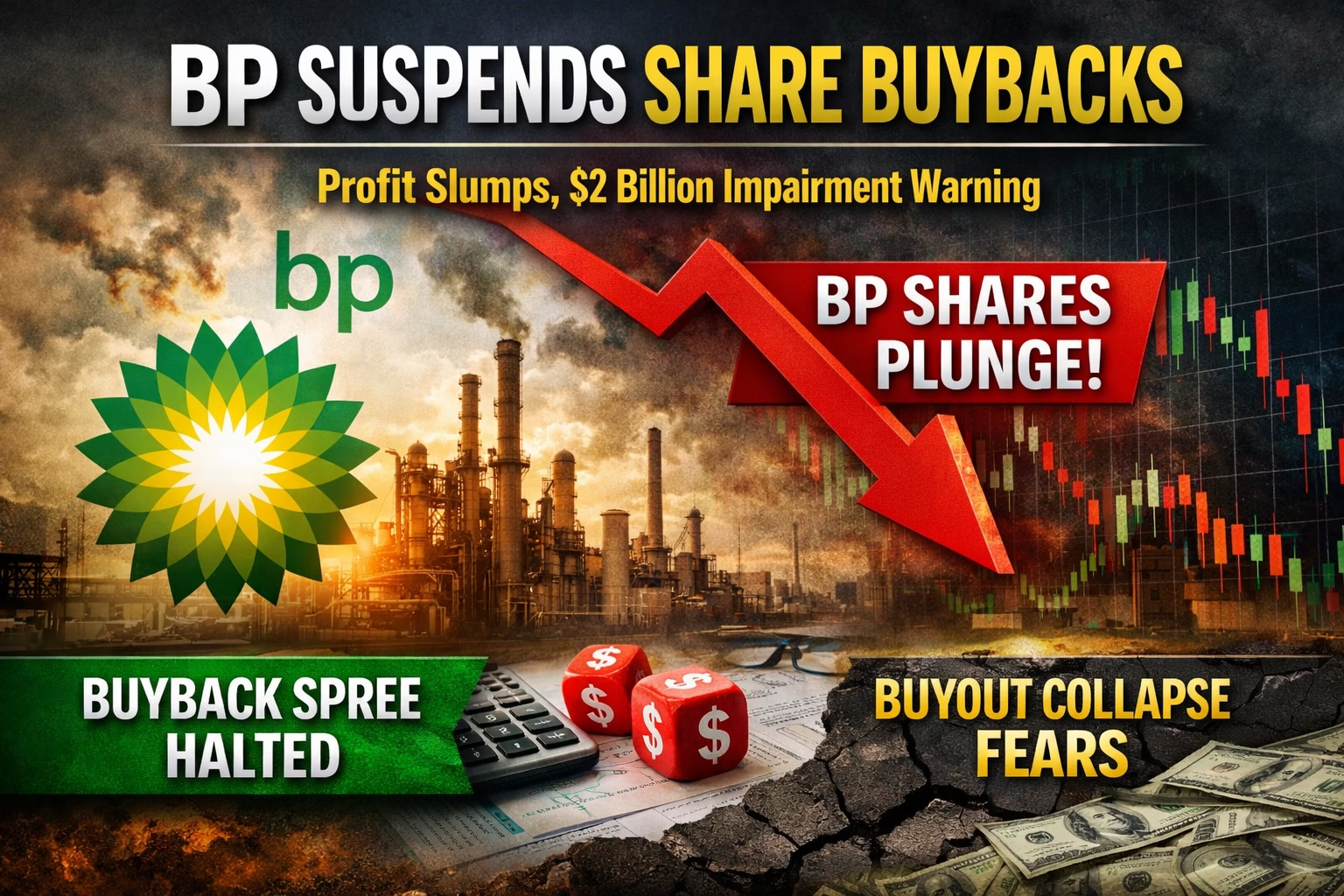
BP Suspends Share Buybacks as Profit Slumps
BP has announced the suspension of its share buyback program after reporting a sharp decline in profits, sending shockwaves through global energy markets and triggering a BP shares slump after warning of $2 bn impairment. The move comes at a time when investors were still digesting mixed signals from global stock markets, including a bullish spree continues at PSX as shares briefly cross 80,000 barrier, highlighting the contrast between regional optimism and global corporate caution.
Why BP Decided to Suspend Share Buybacks
For years, BP share buyback programs were a cornerstone of the company’s strategy to reward shareholders. However, weaker oil prices, rising operational costs, and impairment risks have forced the energy giant to reassess its capital allocation priorities.
The company recently warned of a potential $2 billion impairment, mainly linked to lower long-term energy price assumptions and slower demand growth. This impairment warning directly contributed to the decision to BP suspend buybacks, as management shifted focus toward balance-sheet stability rather than aggressive shareholder returns.
From a share buyback analyst perspective, this move reflects a broader industry trend where oil majors are becoming more conservative amid volatile energy markets and tighter regulatory pressure.
Impact on BP Shares and Investor Sentiment
The immediate market reaction was swift. BP shares slump after warning of $2 bn impairment, as investors interpreted the suspension as a signal of reduced confidence in near-term earnings growth.
Historically, buybacks help support share prices by reducing the number of outstanding shares. When a company pauses this strategy, markets often perceive it as a defensive move. In BP’s case, the reaction was amplified because the company had previously expanded share buybacks amid second biggest profit in a decade, setting high expectations among investors.
The sudden reversal raised questions about long-term profitability, capital discipline, and BP’s ability to navigate the energy transition effectively.
From Buyback Spree to Buyback Pause
Only a few years ago, BP was part of a global buyback spree, fueled by record energy profits following geopolitical tensions and supply disruptions. At that time, oil majors used surplus cash to aggressively repurchase shares, signaling confidence in their financial strength.
However, the current environment is very different. Oil prices have softened, renewable investments are capital-intensive, and geopolitical risks remain unpredictable. The buyback spree that once defined the sector is now slowing, with BP becoming one of the most prominent examples.
This shift also reflects lessons learned from past market cycles, where excessive buybacks during boom periods sometimes left companies vulnerable during downturns.
Comparing Global Markets: BP vs PSX Momentum
Interestingly, BP’s challenges contrast sharply with emerging market optimism. While BP struggles, a bullish spree continues at PSX as shares briefly cross 80,000 barrier, driven by strong local earnings, improved macroeconomic indicators, and renewed foreign investor interest.
This divergence highlights how regional market dynamics can differ significantly from global energy trends. While oil majors face structural challenges, certain emerging markets are benefiting from reform momentum and valuation-driven buying.
For investors, this underscores the importance of diversification and understanding sector-specific risks rather than relying solely on global brand strength.
Is This a Sign of a Broader Buyout Collapse?
Some analysts are linking BP’s decision to fears of a broader buyout collapse across capital-intensive industries. While this may sound dramatic, there is growing caution around large-scale acquisitions, buybacks, and leveraged financial strategies.
Rising interest rates and uncertain growth prospects have made companies more selective about how they deploy capital. Instead of buybacks, firms are prioritizing debt reduction, operational efficiency, and long-term investments.
In BP’s case, suspending buybacks does not necessarily signal distress but rather a strategic reset aimed at preserving flexibility.
Long-Term Strategy: What Comes Next for BP?
Despite the setback, BP maintains that it remains committed to shareholder value over the long term. The company is expected to:
- Focus on cost discipline and operational efficiency
- Rebalance investments between traditional energy and renewables
- Resume buybacks when cash flow visibility improves
While BP expands share buybacks amid second biggest profit in a decade may no longer be the immediate narrative, management has not ruled out restarting the program once market conditions stabilize.
For long-term investors, the key question is whether BP can successfully transition its business model while maintaining competitive returns.
Conclusion
The decision to BP suspend share buybacks marks a significant shift in strategy, reflecting lower profits, impairment risks, and a more cautious outlook on global energy markets. The resulting share price decline highlights how sensitive investors remain to capital allocation decisions.
At the same time, contrasting market movements—such as the bullish spree continues at PSX as shares briefly cross 80,000 barrier—remind investors that opportunities and risks vary widely across regions and sectors.
Ultimately, BP’s move may prove prudent if it strengthens the company’s financial resilience in an increasingly uncertain energy landscape
FAQs
Why did BP suspend its share buyback program?
BP paused buybacks due to declining profits, softer oil prices, and a warning of up to $2 billion in asset impairments, prompting a shift toward financial stability.
How did the market react to BP’s decision?
The announcement led to a decline in BP’s share price, as investors viewed the suspension as a cautious signal about future earnings.
What is a share buyback and why does it matter?
A share buyback reduces the number of shares in circulation, often boosting earnings per share and supporting stock prices.
🚀 Elevate Your Digital Presence with RojrzTech
The digital landscape evolves rapidly. Brands thrive when they adapt quickly, innovate continuously, and leverage robust online systems. RojrzTech empowers your business with tailored solutions in Website Development, UI/UX Design, Social Media Management, SEO, Branding, and Custom Digital Services.
Our expert team builds strategies that align perfectly with your goals, helping you achieve a stronger online presence, higher engagement, and sustainable growth. Every project is designed to give your brand a competitive edge in a fast-moving digital world.
📩 Ready to Transform Your Digital Future?
Don’t wait to take your brand to the next level. Contact RojrzTech today and start creating a digital experience that resonates, converts, and grows. Together, we’ll design, innovate, and elevate your brand’s online journey