
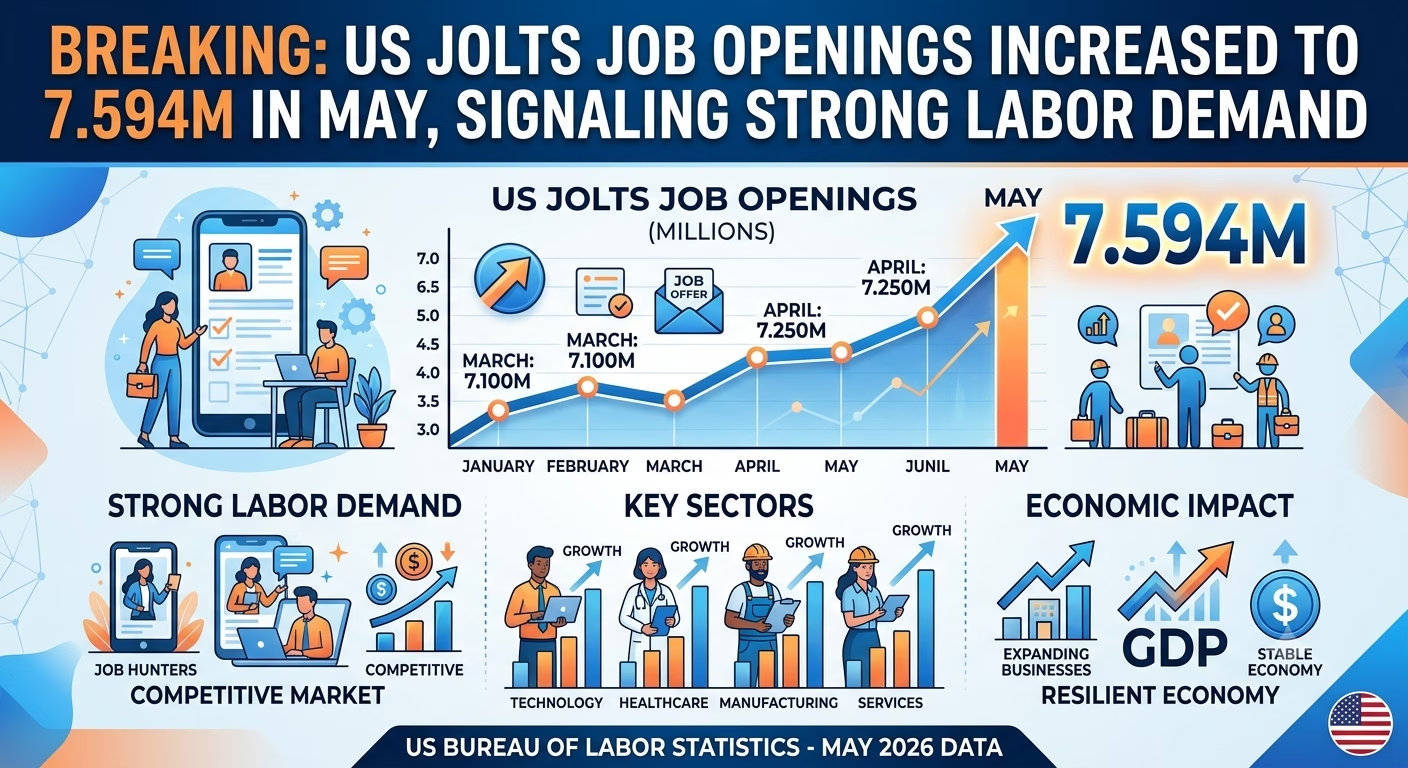
Breaking: US JOLTS Job Openings Increased to 7.594 Million in May
The U.S. labor market showed renewed strength in May as the Job Openings and Labor Turnover Survey (JOLTS) reported that available positions increased to 7.594 million, surpassing market expectations. The latest figures suggest employers continue to seek workers despite elevated interest rates and ongoing economic uncertainty.
The stronger-than-expected JOLTS report reinforces the view that the U.S. job market remains resilient, potentially influencing future monetary policy decisions by the Federal Reserve. Investors, economists, and businesses closely monitor this report because it provides one of the clearest indicators of labor demand across the American economy.
What Is the JOLTS Report?
The Job Openings and Labor Turnover Survey (JOLTS) is a monthly report published by the U.S. Bureau of Labor Statistics (BLS). It measures labor market activity by tracking:
- Job openings
- New hires
- Employee quits
- Layoffs and discharges
- Other separations
Unlike the monthly nonfarm payroll report, JOLTS offers deeper insight into employer demand and worker confidence.
US JOLTS Job Openings Rise to 7.594 Million
According to the latest data, U.S. employers reported 7.594 million job openings in May, indicating businesses are still actively hiring despite tighter financial conditions.
The increase exceeded economists’ expectations and suggests companies continue to face demand for workers across several industries.
The stronger reading points to a labor market that remains healthier than many analysts had anticipated.
Why the Increase Matters
Higher job openings generally indicate that employers remain confident about future business activity.
When companies advertise more positions, it often reflects:
- Strong business confidence
- Stable consumer demand
- Ongoing economic expansion
- Continued hiring plans
Although hiring has slowed compared to the post-pandemic recovery period, the latest data shows labor demand remains relatively solid.
JOLTS Job Quits Remain an Important Indicator
One of the most closely watched components of the report is JOLTS job quits.
The quits rate measures how many workers voluntarily leave their jobs.
A higher quits rate typically suggests:
- Employees are confident about finding new work.
- Wages may continue rising.
- Labor demand remains healthy.
Conversely, declining quits may indicate workers are becoming more cautious about changing employers.
What the Hiring Rate Shows
The U.S. hiring rate chart has gradually normalized after reaching record highs during the economic recovery.
Although hiring activity has slowed from previous peaks, employers continue adding workers at a pace consistent with a stable labor market.
Many economists believe this moderation reflects a return to more sustainable employment conditions rather than significant weakness.
State Job Openings and Labor Turnover
The JOLTS report also provides state job openings and labor turnover data, helping analysts identify regional employment trends.
Different states often experience varying labor market conditions depending on industries such as:
- Manufacturing
- Healthcare
- Technology
- Construction
- Hospitality
- Energy
These regional figures help businesses and policymakers better understand local workforce dynamics.
How Job Posting Data Reflects Labor Demand
The latest job posting data continues to show steady employer demand in many sectors.
Industries experiencing continued hiring include:
- Healthcare
- Professional services
- Information technology
- Financial services
- Construction
- Logistics
While some technology companies have reduced hiring, many other industries continue seeking qualified workers.
Job Posting Index Remains Stable
Economists frequently monitor the job posting index to assess hiring momentum.
Although online job advertisements have cooled compared to recent highs, current levels remain above many pre-pandemic averages.
This suggests employers continue searching for workers even as economic growth moderates.
Relationship Between JOLTS and ADP Employment Data
Many investors compare the JOLTS report with U.S. ADP employment data, which measures private-sector payroll growth.
Together, these reports provide a broader picture of labor market health before the official monthly employment report is released.
Strong JOLTS data combined with positive ADP figures often reinforces expectations of continued labor market resilience.
When Does the JOLTS Report Come Out?
Many investors ask, “When does the JOLTS report come out?”
The Bureau of Labor Statistics typically publishes the JOLTS report once each month, usually on the first business Tuesday following the reference month.
The report is closely watched because it often influences financial markets and expectations regarding Federal Reserve policy.
Impact on Federal Reserve Policy
The stronger-than-expected increase in job openings may influence how Federal Reserve officials assess inflation risks.
A resilient labor market can support:
- Higher consumer spending
- Wage growth
- Economic expansion
However, continued labor strength could also make policymakers more cautious about cutting interest rates too quickly.
Future inflation and employment data will remain key factors in upcoming policy decisions.
Market Reaction
Financial markets often respond immediately to major labor market reports.
Following the latest JOLTS release:
- Treasury yields may experience increased volatility.
- The U.S. dollar could strengthen if investors expect higher interest rates.
- Stock markets may react depending on how investors interpret the implications for Federal Reserve policy.
Markets generally prefer balanced labor market conditions that support economic growth without fueling excessive inflation.
What This Means for Job Seekers
The increase in job openings is encouraging news for workers.
More available positions generally provide:
- Greater employment opportunities
- Increased career mobility
- Better wage negotiation power
- More industry choices
However, competition may still vary depending on occupation and geographic location.
Looking Ahead
Economists will continue monitoring several upcoming indicators, including:
- ADP private employment data
- Nonfarm payrolls
- Weekly unemployment claims
- Wage growth
- Inflation reports
- Federal Reserve statements
Together, these reports will provide a clearer picture of whether the labor market continues its current momentum throughout the summer.
Conclusion
The rise in U.S. JOLTS job openings to 7.594 million in May highlights the continued resilience of the American labor market despite higher borrowing costs and broader economic uncertainty. The stronger-than-expected data suggests employers remain willing to hire, reinforcing confidence in overall economic activity. While the report may strengthen expectations that the Federal Reserve will remain cautious on interest rate decisions, future employment and inflation data will ultimately determine the direction of monetary policy. For businesses, investors, and job seekers alike, the latest JOLTS report provides another important signal that labor demand remains solid heading into the second half of the year.
Frequently Asked Questions (FAQs)
What is the JOLTS report?
The Job Openings and Labor Turnover Survey (JOLTS) measures U.S. job openings, hiring, quits, layoffs, and other labor market activity.
How many job openings were reported in May?
The latest JOLTS report showed 7.594 million job openings in May.
Why is the JOLTS report important?
It helps economists evaluate labor demand, hiring trends, worker confidence, and potential Federal Reserve policy decisions.
What are JOLTS job quits?
Job quits measure the number of workers who voluntarily leave their jobs, often reflecting confidence in finding new employment.