

Amazon Says 3 Data Centers Were Damaged by Drone Strikes in the Middle East
Amazon has confirmed that three of its data centers in the Middle East were damaged by drone strikes, causing significant disruptions to some of its cloud computing services. The incidents represent a rare and striking example of how regional conflict can affect global digital infrastructure.
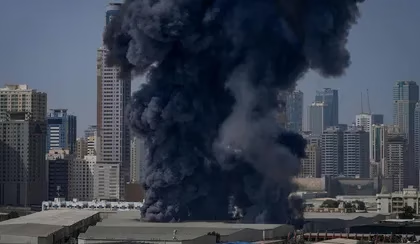
According to Amazon Web Services (AWS), the attacks occurred in two facilities in the United Arab Emirates (UAE) and one in Bahrain. In the UAE, the drone strikes directly hit two data centers, causing physical harm to buildings, power systems, and other critical equipment. In Bahrain, a nearby explosion caused secondary damage to one of the company’s facilities. Although AWS initially described the events as being caused by unidentified objects, the company later confirmed that the damage was the result of drone activity.
These data centers form part of AWS’s cloud infrastructure in the Middle East, where they support a wide range of computing services for businesses, governments, and other organizations. Such facilities typically host the processing and storage of data, enabling customers to run applications, store files, and manage workloads in the cloud.
Service Impact and Outages
Following the strikes, AWS reported that several services in the affected regions experienced outages, degraded performance, or elevated error rates. Some customers using computing, storage, database, and other fundamental cloud services noticed disruptions, particularly those whose operations relied heavily on infrastructure in the UAE and Bahrain. AWS is working to reroute workloads and restore service stability, but full recovery may take time due to the physical nature of the damage.
In the UAE region, two of the core Availability Zones — isolated clusters of data centers designed to ensure redundancy — were significantly impacted. While one zone in the UAE continues to operate normally, its capacity is limited because of links to the damaged facilities. In Bahrain, the affected data center also experienced operational challenges as a result of physical harm and safety precautions.
To protect personnel and limit further risks, AWS temporarily evacuated staff from the impacted sites while assessing the extent of the damage. The company has emphasized safety as its priority and is coordinating with local authorities to facilitate repairs and secure the sites.
Broader Context and Cause
AWS attributed the impact to drone strikes linked to wider regional tensions, especially amid recent escalations in military activity in the Middle East. The strike on AWS infrastructure underscores the growing overlap between physical conflicts and digital infrastructure vulnerabilities.
While cloud providers design their networks to be resilient to many types of failures, including natural disasters and equipment malfunctions, attacks on physical facilities represent a much rarer and more challenging risk. In most regions around the world, data centers are protected against weather events, power disruptions, and other typical hazards, but they are generally not built to resist intentional physical assaults in conflict zones.
AWS Data Center Locations and Regional Reach
AWS operates a global network of data centers in various geographic regions to provide high availability and redundancy for customers worldwide. In the Middle East, the UAE and Bahrain are strategic locations, serving local enterprises, international businesses, and cloud users who require compliant and low-latency connectivity.
Data centers are typically grouped into regions and Availability Zones. This setup allows AWS to isolate failures in one zone without affecting others, enabling customers to deploy services across multiple locations for greater reliability. However, when multiple zones in a particular area are hit simultaneously — as appears to have happened in the UAE — service continuity becomes more challenging.
AWS customers outside the Middle East have generally not reported widespread global outages tied to these incidents. The impact has been largely localized to services hosted in the affected facilities.
Customer Guidance and Next Steps
In response to the disruptions, AWS has advised customers with workloads running in the affected regional infrastructure to consider migrating critical systems to other AWS regions to reduce risk exposure. Customers have also been encouraged to back up important data and maintain redundancy by deploying workloads across multiple geographic locations.
Restoration work is underway, and Amazon has indicated that bringing the damaged facilities back to full operation will depend on safety clearances, physical repair requirements, and coordination with local authorities.
Why This Matters
This incident highlights that even cloud infrastructure — often thought of as “virtual” and shielded from physical risks — remains rooted in real physical facilities that can be vulnerable to conflict environments. As more businesses rely on cloud services for mission-critical workloads, infrastructure security — both virtual and physical — continues to be a major consideration for customers and providers alike.
Physical attacks on data centers are rare, especially for major cloud services, but this event shows that geopolitical instability can have direct and significant consequences for digital systems. It also underscores the importance of redundancy, multi-region deployment strategies, and risk management for organizations that depend on cloud platforms.
Frequently Asked Questions (FAQ)
1. How many data centers were damaged?
Three AWS data centers were reported to be damaged — two in the UAE and one in Bahrain.
2. What caused the damage?
Amazon confirmed the damage was caused by drone strikes amid regional tensions in the Middle East.
3. Did the strikes affect AWS services?
Yes. Some cloud services experienced outages, degraded availability, or error spikes where customers relied on the damaged facilities.
4. Are AWS customers outside the Middle East affected?
Most disruptions have been localized to the UAE and Bahrain. Services outside the region have largely continued normally.
5. What should AWS customers do?
AWS recommends that customers back up important data and consider moving critical workloads to other regions to avoid similar service interruptions.
6. How does AWS build redundancy?
AWS uses geographic regions and multiple Availability Zones to spread risk. Deploying across Zones or regions improves resilience against localized failures.
🚀 Elevate Your Digital Presence with RojrzTech
The digital landscape evolves rapidly. Brands thrive when they adapt quickly, innovate continuously, and leverage robust online systems. RojrzTech empowers your business with tailored solutions in Website Development, UI/UX Design, Social Media Management, SEO, Branding, and Custom Digital Services.
Our expert team builds strategies that align perfectly with your goals, helping you achieve a stronger online presence, higher engagement, and sustainable growth. Every project is designed to give your brand a competitive edge in a fast-moving digital world.
📩 Ready to Transform Your Digital Future?
Don’t wait to take your brand to the next level. Contact RojrzTech today and start creating a digital experience that resonates, converts, and grows. Together, we’ll design, innovate, and elevate your brand’s online journey