
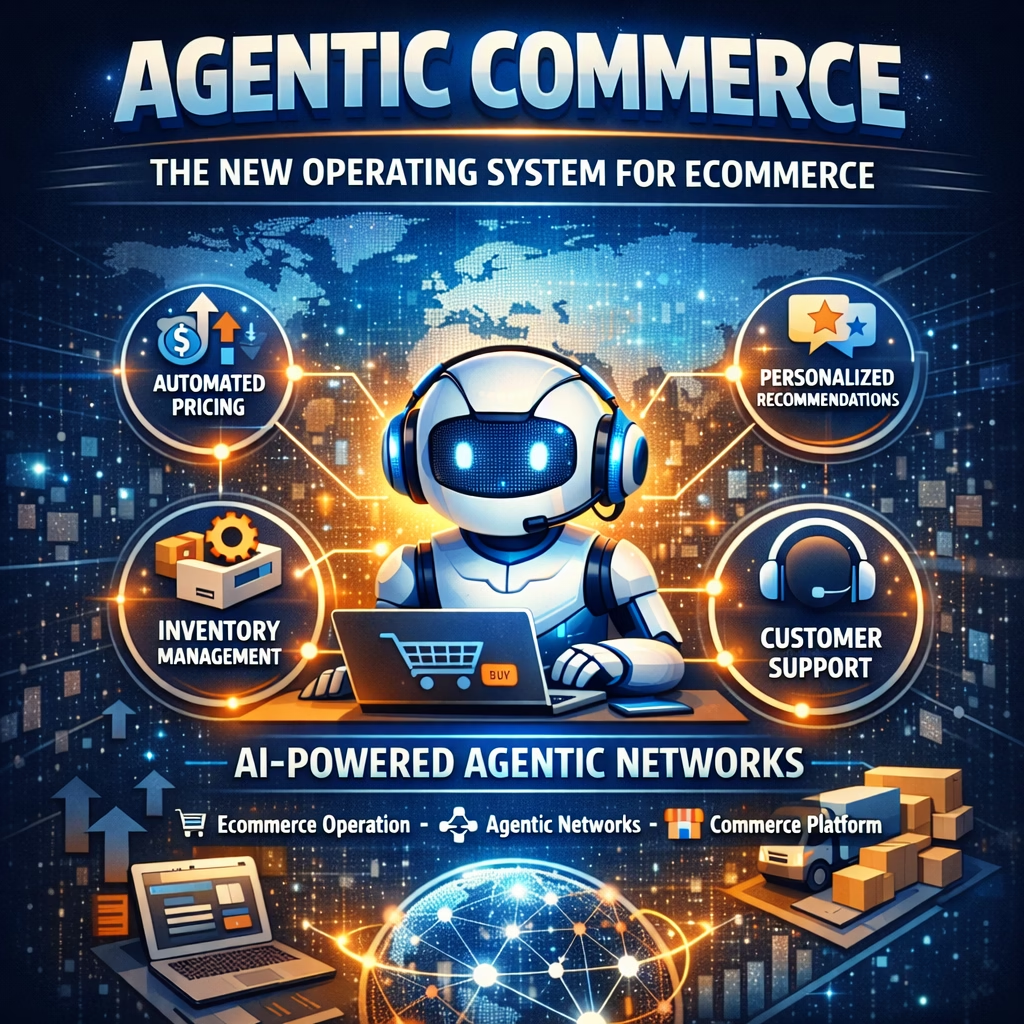
Agentic Commerce Emerges as Ecommerce’s New Operating System in Netcore Report
The ecommerce industry is entering a new phase of digital transformation with the rise of agentic commerce. According to recent industry insights, agentic commerce is being positioned as the next-generation agentic operating system for online businesses, redefining how digital transactions are managed and optimized.
Traditionally, ecommerce has focused on building storefronts and managing transactions manually or through rule-based automation. However, as competition intensifies and consumer expectations evolve, businesses are looking for smarter, more adaptive systems. This is where agentic commerce steps in.
At its core, ecommerce is a commercial exchange between business conducted over the internet. But agentic commerce takes this definition further by enabling autonomous AI agents to actively manage and enhance every stage of the customer journey — from discovery and personalization to fulfillment and retention.
What Is Agentic Commerce?
Agentic commerce refers to an AI-powered commerce model where autonomous digital agents perform tasks traditionally handled by humans or static systems. These agents analyze data in real time, make decisions, and execute actions without requiring continuous manual input.
Instead of relying solely on dashboards and human oversight, businesses can deploy intelligent agents that:
- Adjust pricing dynamically
- Personalize product recommendations
- Manage inventory forecasting
- Automate customer support responses
- Optimize marketing campaigns
In this way, agentic commerce becomes more than just a commerce platform — it evolves into a self-improving system.
How Agentic Networks Power Ecommerce Operation
A key concept behind agentic commerce is the use of agentic networks. These networks connect multiple AI agents across systems, enabling them to collaborate and share insights.
For example:
- A pricing agent can communicate with an inventory agent.
- A customer behavior agent can inform a marketing automation agent.
- A logistics agent can respond to demand fluctuations instantly.
This interconnected structure transforms traditional ecommerce operation models into intelligent ecosystems capable of responding instantly to market changes.
Why Agentic Commerce Matters for Ecommerce Development
The adoption of agentic commerce has significant implications for ecommerce development:
1️⃣ Real-Time Personalization
AI agents can analyze browsing behavior and transaction history instantly, delivering tailored recommendations and offers.
2️⃣ Operational Efficiency
Automated decision-making reduces manual workload while improving speed and accuracy.
3️⃣ Scalability
Agentic systems adapt to spikes in demand without requiring infrastructure overhauls.
4️⃣ Data-Driven Optimization
Continuous learning allows the system to refine strategies over time, improving conversions and retention.
As digital markets expand, businesses that implement agentic commerce frameworks may gain a competitive advantage over those relying solely on traditional automation.
Addressing Misconceptions
Some discussions around ecommerce trends sometimes include unrelated financial topics such as “ecom surgent net worth,” but it’s important to focus on the structural transformation happening within ecommerce technology itself. Agentic commerce is not about influencer valuations or hype-driven metrics; it’s about building smarter, more autonomous commerce infrastructures.
The Future of the Agentic Operating System
If current trends continue, agentic commerce could become the standard architecture for modern online businesses. Rather than acting as passive platforms, ecommerce systems will actively manage pricing strategies, supply chains, customer engagement, and marketing execution.
This shift represents a move from reactive ecommerce systems to proactive, intelligent ecosystems — effectively becoming the agentic operating system for digital trade.
FAQs
1. What is agentic commerce?
Agentic commerce is an AI-driven ecommerce model where autonomous digital agents manage and optimize online business processes without constant human intervention.
2. How is agentic commerce different from traditional ecommerce operation?
Traditional ecommerce operation relies on rule-based automation and manual control. Agentic commerce uses intelligent agents that make real-time decisions and continuously improve performance.
3. What are agentic networks?
Agentic networks are interconnected AI systems that collaborate across different business functions such as marketing, pricing, logistics, and customer service.
4. Is agentic commerce a new commerce platform?
It goes beyond being just a commerce platform. It acts as an intelligent framework that actively manages and optimizes digital transactions.
5. How does agentic commerce impact ecommerce development?
It improves scalability, automation, personalization, and operational efficiency, making businesses more adaptable to changing market conditions.
6. Why is agentic commerce being called an operating system?
Because it serves as the core decision-making layer that powers and coordinates the entire ecommerce ecosystem.
Boost Your Brand with Today’s Digital Insights!
Today’s news on AI transforming how UAE consumers shop and spend shows how rapidly digital innovation is changing global markets. Businesses that stay ahead of these shifts grow faster, adapt stronger, and capture new opportunities with confidence.
Don’t let your brand fall behind. At RojrzTech, we help you stay ahead with powerful digital services including Website Development, Social Media Management, SEO, Branding, and Smart eCommerce Solutions. Our team ensures your brand becomes more visible, more engaging, and more competitive in an evolving digital landscape.
Whether you want to strengthen your online presence, attract the right audience, or accelerate your business growth, RojrzTech has you covered.
Contact us today and take your brand to the next level