

US Dollar Sinks to Its Lowest Level in Four Years as Global Pressure Mounts
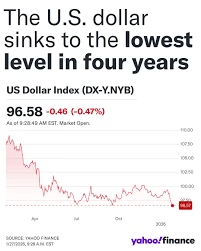
The US dollar sinks to its lowest level in four years, sending shockwaves through global currency markets and raising urgent questions about the future strength of the world’s most dominant reserve currency. Investors, governments, and central banks now face a rapidly shifting financial landscape as the dollar continues losing ground against major and emerging-market currencies alike.
Market data shows the dollar’s decline accelerated over recent weeks as economic uncertainty deepened in the United States. Slowing growth, rising fiscal pressure, and changing expectations around interest rates combined to weaken confidence in the greenback. Analysts describe the situation as a turning point rather than a short-term correction, with signs pointing toward a prolonged period of dollar weakness.
Dollar Losing Ground Across Global Markets
Currency traders report that the dollar losing ground has become a persistent trend rather than an isolated event. The euro, British pound, Japanese yen, and several Asian currencies strengthened as investors shifted capital away from US-denominated assets. Emerging-market currencies gained momentum as well, reflecting a broader reassessment of risk and return.
Foreign exchange desks note that global funds reduced dollar exposure amid concerns over Washington’s fiscal outlook. Rising government debt, political gridlock over spending, and uncertainty surrounding future tax policy undermined investor confidence. Large institutional players responded by diversifying reserves and seeking stability elsewhere.
Market strategists emphasize that this dollar diminishing trend reflects structural issues rather than speculative trading alone. Demand for safe-haven assets shifted toward gold and non-dollar currencies as investors reassessed long-term stability.
US Dollar Falls Sharply Against Pakistani Rupee
One of the most striking developments emerged in South Asia, where the US dollar falls sharply against Pakistani rupee. Currency dealers in Pakistan observed a steady appreciation of the rupee as dollar inflows slowed and market sentiment shifted.
The strengthening rupee provided temporary relief for Pakistan’s import bill, particularly for energy and essential commodities priced in dollars. Importers welcomed lower costs, while inflationary pressure eased slightly due to reduced currency-related price shocks.
Financial analysts in the region attribute the rupee’s gains partly to the broader global dollar decline rather than domestic fundamentals alone. As the US dollar sinks, currencies that previously struggled under strong-dollar conditions now find room to recover.
However, economists caution that sustained stability depends on Pakistan’s own economic reforms, export performance, and foreign reserves. A weaker dollar may help in the short term, but it does not replace structural economic discipline.
Dollar Decrease Reason: Why the Greenback Is Struggling
The dollar decrease reason lies in a combination of economic, political, and monetary factors. Analysts identify several key drivers behind the currency’s slide.
First, expectations of interest rate cuts weighed heavily on the dollar. Investors anticipate that the US central bank may ease policy sooner and more aggressively than previously expected as growth slows and labor markets cool. Lower interest rates reduce the dollar’s appeal by shrinking yield advantages over other currencies.
Second, ballooning fiscal deficits eroded confidence. Government spending continues to outpace revenue, fueling concerns about debt sustainability. Credit markets closely watch these trends, and currency traders respond quickly when fiscal discipline comes into question.
Third, global central banks accelerated diversification away from the dollar. Several countries increased holdings of alternative currencies and gold as part of long-term reserve strategies. This gradual shift reduced baseline demand for dollars in international trade and finance.
Fourth, geopolitical uncertainty undermined the dollar’s safe-haven status. While past crises often strengthened the dollar, current tensions pushed investors to spread risk rather than concentrate it.
Together, these factors explain why the US dollar sinks to its lowest level in four years rather than stabilizing after early losses.
Dollar Diminishing and the Impact on Global Trade
The dollar diminishing trend reshapes global trade dynamics. Exporters in the United States gain a pricing advantage as their goods become cheaper overseas. Manufacturing and agricultural sectors stand to benefit from increased competitiveness in foreign markets.
Conversely, US importers face higher costs, especially for consumer electronics, machinery, and luxury goods sourced abroad. These price pressures may feed into domestic inflation if businesses pass costs on to consumers.
For developing economies, a weaker dollar eases debt servicing burdens on loans denominated in US currency. Countries with high external debt welcomed the dollar’s slide, as repayments became less expensive in local currency terms.
Commodity markets also responded to the dollar losing ground. Oil, gold, and industrial metals prices moved upward as traders adjusted for currency effects. Since commodities trade primarily in dollars, a weaker greenback often lifts prices in nominal terms.
Financial Markets React to Currency Shift
Stock markets reacted cautiously as the dollar’s decline reshaped investment strategies. Multinational corporations with strong overseas earnings benefited from favorable exchange rates, boosting reported profits when converted back into dollars.
At the same time, financial institutions exposed to currency volatility adjusted risk models and hedging strategies. Banks increased monitoring of foreign exchange exposure as fluctuations intensified.
Bond markets reflected growing uncertainty. Investors demanded higher yields on long-term US debt, citing inflation risk and fiscal concerns. These moves reinforced pressure on the dollar and fueled debate about the sustainability of current economic policies.
Currency strategists warn that rapid shifts can amplify volatility if confidence deteriorates further. A sudden loss of faith in dollar stability could accelerate capital outflows and deepen market stress.
What Comes Next for the US Dollar
Economists remain divided on how long the dollar’s weakness will last. Some expect stabilization once markets fully price in interest rate changes and fiscal adjustments. Others argue that structural trends point toward a longer period of dollar softness.
Global trade patterns continue evolving, with regional currency settlements gaining traction. Technological shifts in payment systems also reduce reliance on the dollar for cross-border transactions. These developments suggest that the dollar’s dominance may gradually erode rather than collapse suddenly.
Policy decisions in Washington will play a decisive role. Clear fiscal planning, credible debt management, and consistent monetary policy could restore confidence. Without such measures, the dollar diminishing trend may persist.
For now, markets accept one reality: the era of an unchallenged, ever-strengthening US dollar no longer feels guaranteed.
Conclusion
The US dollar sinks to its lowest level in four years amid a powerful mix of economic uncertainty, shifting monetary expectations, and global diversification. The dollar losing ground affects everything from international trade to emerging-market stability. The US dollar falls sharply against Pakistani rupee highlights how global currency shifts ripple into regional economies.
Understanding the dollar decrease reason helps explain why this moment matters beyond daily exchange rates. As the dollar diminishing trend reshapes financial markets, governments and investors must adapt to a world where currency dominance no longer comes without question.
Frequently Asked Questions (FAQ)
Why did the US dollar sink to its lowest level in four years?
The US dollar sinks due to slowing economic growth, rising fiscal deficits, and expectations of interest rate cuts. Investors also reduced dollar exposure as global confidence weakened and alternative assets gained appeal.
What is the main dollar decrease reason analysts are pointing to?
The primary dollar decrease reason involves changing interest rate expectations, increasing US government debt, and global diversification away from dollar reserves. These factors reduced demand for the currency in international markets.
How is the dollar losing ground affecting global markets?
As the dollar losing ground continues, global markets see higher commodity prices, shifting trade balances, and increased currency volatility. Exporters in the US gain competitiveness, while import costs rise.
📩 Start Growing Your Digital Presence Today
Partner with RojrzTech to craft digital experiences designed for long-term success and real audience connection. Let’s build an online presence that works harder for your busines