
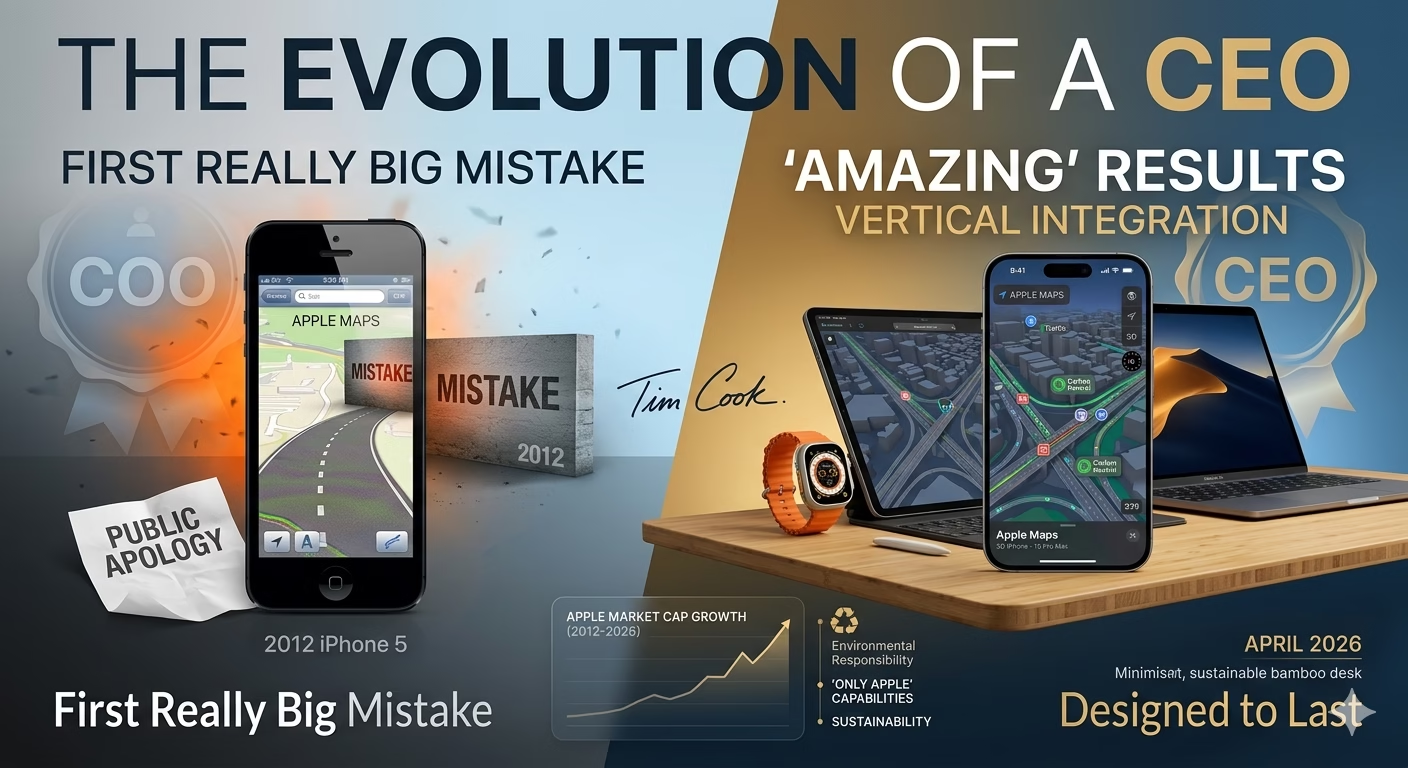
Tim Cook Reflects on the Apple Maps Launch: The ‘First Really Big Mistake’ and the Evolution of a CEO
In a world where tech executives often guard their reputations with polished PR statements, Tim Cook has taken a different path in 2026. During a series of retrospective interviews, the man at the helm of Cupertino for over fifteen years has grown increasingly reflective. Most notably, Cook has officially labeled the 2012 launch of Apple Maps as his “first really big mistake” as CEO. This admission offers a rare window into the early days of his tenure and provides a foundation for understanding the leadership philosophy that transformed Apple into a multi-trillion-dollar powerhouse.
1. The Burden of Succession: From COO to CEO
To understand why the Maps failure was so significant, one must look at the timeline. Tim Cook is the CEO of Apple, but his journey started long before he took the top job. Many remember Tim Cook then chief operating officer during a conference call with investors in 2009, where he famously laid out the “Apple Doctrine.” He spoke about the company’s need to own and control the primary technologies behind the products they make.
However, when he transitioned from COO to CEO in 2011, he was stepping into the shoes of a legend. The Apple Maps launch in September 2012 was intended to be a declaration of independence from Google. Instead, it became a punchline. For Cook, admitting this was a mistake isn’t just about software; it’s about the realization that even the most meticulous planning can fail if the user experience isn’t the primary north star.
2. What it Takes to Run the World’s Largest Company
Running a company of Apple’s scale is a task of unimaginable complexity. Cook often discusses Tim Cook what it takes to run apple the world’s largest company, citing a blend of intuition, data, and an unwavering commitment to quality. The Maps fiasco taught him that at Apple’s scale, there is no such thing as a “small” error.
Since that mistake, Cook has institutionalized a culture of rigorous testing and “software-as-a-service” refinement. He learned that while Tim Cook describes iPhone launches as an extraordinary experience, that experience is fragile. A single broken app can tarnish the luster of the most advanced hardware. This realization shifted Apple’s focus toward “services” as a core pillar of their identity, eventually leading to the massive success of iCloud, Apple Music, and the current, much-improved iteration of Apple Maps.
3. The “Amazing” Standard and Only Apple Capabilities
Despite the early stumble with Maps, the Cook era has been defined by a relentless string of successes. Critics often point to Tim Cook amazing results in terms of supply chain efficiency and market cap growth. But for Cook, the pride lies in the synergy of hardware and software. He frequently uses the phrase Tim Cook only apple can do when referring to the integration of their custom silicon with their ecosystem.
The Maps failure was a lesson in “only Apple can do” going wrong. It showed that controlling the technology is not enough; you must also provide the best-in-class service. Today, Apple Maps is a world leader in privacy-focused navigation, a direct result of the lessons learned in the 2012 firestorm.
4. Sustainability and the Longevity of the Device
One of the most significant shifts under Cook’s leadership has been toward environmental responsibility. Tim Cook suggests that apple products are designed to last a long time, a statement that directly challenges the “planned obsolescence” narrative.
By ensuring that older iPhones can still run the latest iOS versions, Apple has built a level of brand loyalty that is unprecedented. Cook views a long-lasting product as a form of respect for the consumer’s investment. This philosophy has also helped Apple achieve its ambitious Carbon Neutral goals, as the most sustainable product is often the one that doesn’t need to be replaced every twelve months.
5. Looking to the Future: The Next CEO
As Cook looks toward the horizon, the question of his successor is frequently raised. In a recent high-profile conversation, Tim Cook tells Dua Lipa he wants the next CEO of Apple to be an internal hire. This reflects his belief in the unique “Apple DNA” that cannot be easily replicated by an outsider.
He wants someone who understands both the “amazing” highs of a successful product launch and the humbling lows of a “really big mistake.” By grooming internal talent like Jeff Williams or Greg Joswiak, Cook is ensuring that the lessons of the Maps failure—and the triumphs of the iPhone era—remain part of the company’s institutional memory.
6. The Legacy of a Pragmatist
Tim Cook will likely be remembered as the CEO who operationalized Steve Jobs’ vision and scaled it to the entire planet. While he may lack the theatrical flair of his predecessor, his candidness about his mistakes has made him a more relatable leader in the eyes of many.
The admission that Maps was his first big error serves as a full-circle moment. It shows a leader who is secure enough in his record to admit his flaws. It proves that even at the world’s largest company, growth comes from failure, and perfection is a journey, not a destination.
Frequently Asked Questions (FAQs)
1. Why does Tim Cook call the Apple Maps launch his “biggest mistake”?
Cook views it as a mistake because it failed the customer. At the time of launch, Maps was riddled with errors and lacked the precision users expected from Apple. He had to issue a public apology and even suggested users download competitor apps while Apple fixed the service.
2. How did Apple fix the Maps issue over the years?
Apple rebuilt the entire map from the ground up, using their own data collection vehicles and satellite imagery. They also integrated privacy-focused features like “on-device processing” to ensure that navigation data isn’t linked to a specific user’s identity.
3. What does Tim Cook mean by “Only Apple can do”?
This refers to the vertical integration of the company. Because Apple designs its own chips (M-series and A-series), its own operating systems, and its own hardware, they can create features that are more efficient and secure than companies that rely on third-party components.
4. Who is likely to be the next CEO of Apple?
While no one has been officially named, Cook’s preference for an internal hire points to veterans like COO Jeff Williams or marketing chief Greg Joswiak. The goal is to maintain the cultural consistency that has defined the company for decades.
5. How long is an iPhone designed to last according to Tim Cook?
Cook has stated that Apple designs products with a 5-to-7-year lifecycle in mind, providing software updates and battery replacement programs to keep devices functional and secure for as long as possible.
🚀 Elevate Your Digital Presence with RojrzTech
The digital landscape evolves rapidly. Brands thrive when they adapt quickly, innovate continuously, and leverage robust online systems. RojrzTech empowers your business with tailored solutions in Website Development, UI/UX Design, Social Media Management, SEO, Branding, and Custom Digital Services.
Our expert team builds strategies that align perfectly with your goals, helping you achieve a stronger online presence, higher engagement, and sustainable growth. Every project is designed to give your brand a competitive edge in a fast-moving digital world.
📩 Ready to Transform Your Digital Future?
Don’t wait to take your brand to the next level. Contact RojrzTech today and start creating a digital experience that resonates, converts, and grows. Together, we’ll design, innovate, and elevate your brand’s online journel