
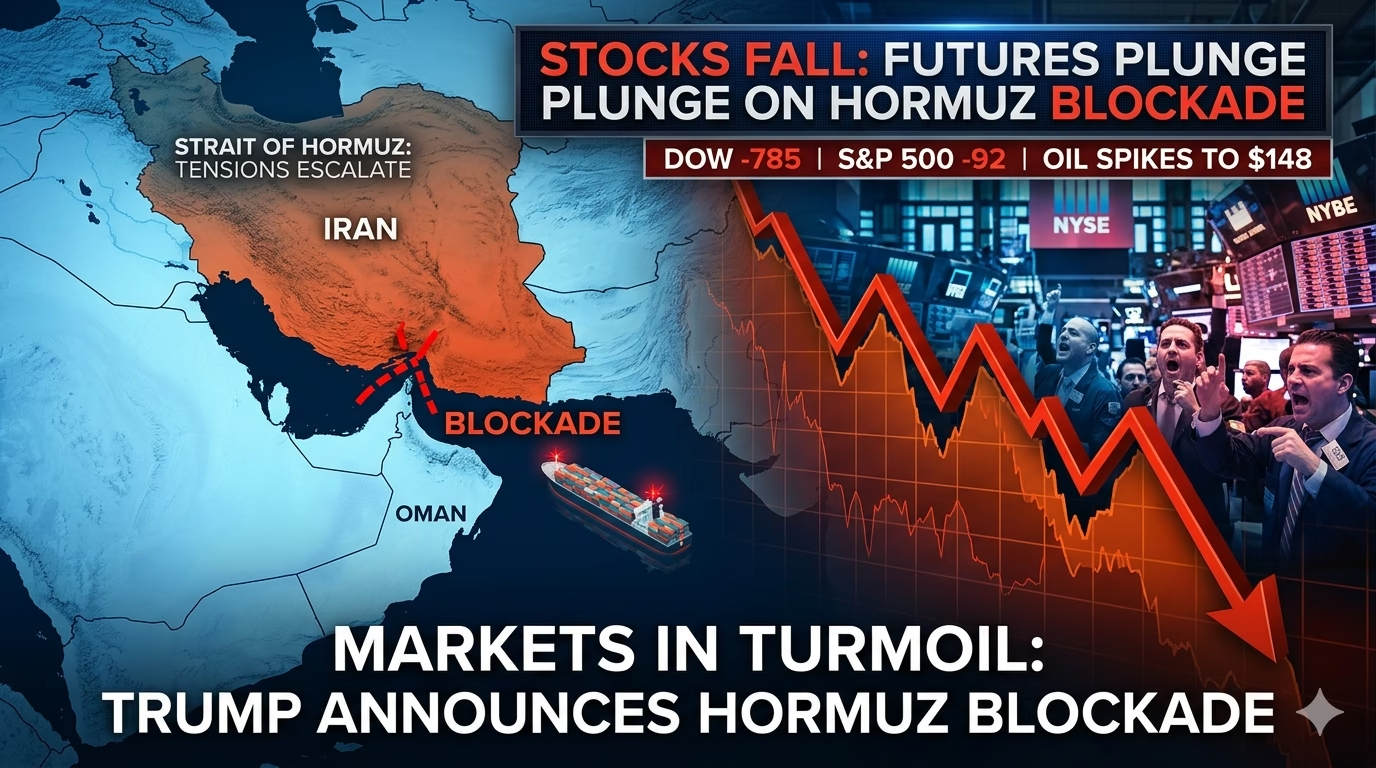
Global Markets in Turmoil: Stock Futures Plunge as Trump Announces Strait of Hormuz Blockade Following Failed Negotiations
The global financial landscape was struck by a seismic wave of uncertainty late Sunday night as stock futures plummeted in response to a dramatic escalation in Middle Eastern tensions. President Donald Trump, citing a total collapse in diplomatic negotiations with Tehran, announced a strategic blockade of the Strait of Hormuz. This move, described by geopolitical analysts as a “maximum pressure maneuver taken to its absolute limit,” has sent shockwaves through Wall Street, London, and Tokyo, raising the immediate specter of a global energy crisis and a potential military confrontation.
As the news broke, the Dow Jones Industrial Average futures dropped by over 900 points, while S&P 500 and S&P 500 futures saw similar steep declines, triggering circuit breakers in overnight electronic trading. The primary catalyst for this freefall is the sheer economic significance of the Strait of Hormuz, a narrow waterway through which approximately one-fifth of the world’s total oil consumption passes daily.
The Failure of Diplomacy: Why Negotiations Collapsed
The path to this crisis began several months ago with a series of high-stakes, behind-the-scenes negotiations aimed at de-escalating tensions regarding nuclear enrichment and regional maritime security. However, the rhetoric from the Trump camp had been growing increasingly impatient. According to official statements, the “final straw” came when a proposed framework for a new security pact was rejected by Iranian officials, who cited infringements on national sovereignty.
In a televised address that caught world leaders off guard, Trump declared that “strategic patience is over.” He asserted that the United States, utilizing its naval superiority and regional alliances, would ensure that no Iranian oil—and potentially no shipping of any kind from hostile entities—would pass through the Strait until a “fair and comprehensive deal” was signed.
The immediate result of this declaration was not just a diplomatic void, but an immediate re-pricing of risk across every asset class. Investors, who had been banking on a period of relative geopolitical stability to combat domestic inflation, are now facing a “black swan” event that threatens to undo years of economic recovery.
The Economic “Choke Point”: Understanding the Strait of Hormuz
To understand why the stock market reacted with such violence, one must understand the geography of global energy. The Strait of Hormuz is the world’s most important oil transit or “choke point.” It connects the Persian Gulf with the Gulf of Oman and the Arabian Sea.
- Volume of Trade: Over 20 million barrels of oil pass through this waterway every single day.
- Key Exporters: It is the primary artery for petroleum exports from Saudi Arabia, the United Arab Emirates, Kuwait, Iraq, and Iran.
- Liquefied Natural Gas (LNG): Beyond oil, a massive portion of the world’s LNG, particularly from Qatar, travels through this route, meaning the blockade threatens not just transportation fuel but also the heating and electricity generation of Europe and Asia.
When Trump announced a blockade, he effectively threatened to cut the jugular vein of the global energy supply. Within minutes of the announcement, Brent Crude and West Texas Intermediate (WTI) oil prices surged by double digits, with analysts predicting a move toward $160 or $180 per barrel if the blockade is enforced for more than a few days.
Wall Street’s Reaction: A Sea of Red
The reaction in the futures market serves as a precursor to what is expected to be one of the most volatile trading weeks in recent history.
1. The Energy Sector Paradox
While high oil prices typically benefit energy stocks, the specter of a full-scale blockade introduces a variable known as “supply destruction.” If the oil cannot move, the companies cannot sell it. Large integrated oil firms saw their stock prices fluctuate wildly as traders weighed the benefits of high prices against the logistical nightmare of a closed shipping lane.
2. The Death of the “Soft Landing” Narrative
For much of early 2026, the Federal Reserve and economists had been hopeful for a “soft landing”—a scenario where inflation is tamed without causing a recession. A $150-per-barrel oil price acts as a massive tax on the global consumer. It drives up the cost of everything from groceries to plastics. This move by Trump has effectively killed the soft-landing narrative, as the Fed may now be forced to keep interest rates high to combat energy-driven inflation, even as the economy slows down.
3. Transport and Tourism Under Siege
Airlines, cruise lines, and trucking companies were the hardest hit in the futures market. Jet fuel is the single largest variable cost for airlines. With the threat of an oil scarcity, shares of major carriers like United, Delta, and American Airlines plunged in pre-market trading. Shipping giants like Maersk also saw their valuations slashed as the risk of “war insurance” premiums for vessels in the Middle East skyrocketed.
Geopolitical Fallout: Allies and Adversaries
The international community has reacted with a mixture of shock and condemnation. European leaders, already struggling with the transition away from Russian energy, have called for an emergency meeting of the UN Security Council. China, which is the largest importer of Middle Eastern oil, finds itself in a precarious position. A blockade of the Strait is a direct threat to Chinese national security and industrial output.
The military implications are equally harrowing. A blockade is considered an act of war under international law. If the U.S. Navy begins intercepting tankers, the risk of a direct military exchange with Iranian fast-attack boats or coastal missile batteries becomes a near-certainty. This “war premium” is now being priced into the markets, causing a flight to safety.
The Flight to Safety: Gold and the Dollar
In times of extreme geopolitical stress, investors flee “risk-on” assets like stocks and crypto and move into “safe havens.”
- Gold: Spot gold prices surged to all-time highs as the blockade announcement was made. Gold is seen as the ultimate store of value when currencies and markets are in chaos.
- The U.S. Dollar: Despite the blockade being an American-led initiative that causes global instability, the dollar ironically strengthened against the Euro and Yen. This is because the USD remains the world’s reserve currency, and in a crisis, liquidity is king.
- U.S. Treasuries: There was a massive “bid” for 10-year and 30-year Treasuries, driving yields down as investors scrambled to park their cash in the safest debt instruments available.
What Happens Next? Scenarios for the Coming Week
The market is currently pricing in the worst-case scenario. However, three potential paths lie ahead:
- The De-escalation Path: If the threat of a blockade forces Iran back to the table within 48 hours, markets may recover some losses. This would be seen as a successful, albeit terrifying, “strongman” tactic.
- The Prolonged Standoff: A week-long blockade would likely trigger a 10-15% correction in the major stock indices. The “energy shock” would begin to filter into consumer prices, causing a sharp drop in consumer confidence.
- Military Escalation: If shots are fired and tankers are sunk, the Dow could see its largest single-day drop in history. At that point, the focus shifts from “market returns” to “capital preservation” and global security.
Conclusion: A New Era of Volatility
The announcement of a Strait of Hormuz blockade marks a turning point in the intersection of geopolitics and finance. It reminds the world that despite the rise of digital assets and AI-driven trading, the global economy is still fundamentally reliant on narrow strips of water and the fossil fuels that flow through them.
For the average investor, the coming days will require a steady hand. The temptation to panic-sell is high, but history suggests that geopolitical shocks, while violent, are often met with equally sharp reversals if a resolution is found. For now, however, the “Live Updates” tickers remain red, and the world holds its breath as the sun rises over the Persian Gulf.
Frequently Asked Questions (FAQs)
1. What exactly is a “Stock Future” and why are they falling?
Stock futures are contracts that allow investors to bet on the future price of a market index. They trade 24 hours a day. When they “fall” overnight, it means that based on the current news (like the blockade), investors believe the market will open much lower when the New York Stock Exchange officially starts its day.
2. Why is the Strait of Hormuz so important to the average person?
Even if you don’t live near the Middle East, the oil that flows through the Strait sets the global price for gasoline and diesel. If the Strait is blocked, the price at your local gas station will likely skyrocket within days, and the cost of shipping goods to your door will also increase.
3. Has the Strait of Hormuz ever been blocked before?
While there have been many threats and “tanker wars” (notably in the 1980s), a total, enforced blockade by a superpower is unprecedented in modern times. Previous disruptions have usually been short-lived or involved limited harassment of ships rather than a full closure.
4. How should I manage my investments during this crisis?
Most financial advisors suggest not making “emotional” trades during a geopolitical shock. Diversified portfolios often include gold or energy stocks which can hedge against these specific risks. However, consulting with a professional to assess your exposure to the transport and tech sectors is advisable.
5. Could this lead to a global recession?
Yes. If oil prices stay above $130-$150 for an extended period, it usually triggers a recession because consumers spend all their money on energy and food, leaving nothing for other parts of the economy.
6. What is the likelihood of the blockade being permanent?
Very low. A permanent blockade would destroy the economies of both U.S. allies (like Japan and the UAE) and adversaries (like China). Usually, such extreme measures are used as a high-stakes bargaining chip to force a quick diplomatic resolution.
📩 Start Growing Your Digital Presence Today
Partner with RojrzTech to craft digital experiences designed for long-term success and real audience connection. Let’s build an online presence that works harder for your busines