

Yen Strength Lifts Japanese Bonds, Pushes Down Stocks
The Japanese financial markets experienced a marked shift this week as the yen strengthened, driving significant gains in government bonds and applying downward pressure on domestic equities. Investors worldwide reacted swiftly to currency moves, recalibrating risk exposures across fixed income, stocks, and foreign exchange positions. The market response highlighted how currency strength can ripple through asset classes and reshape investor strategies.
Financial markets focus heavily on currency trends, and in Japan’s case this week, the upward momentum in the yen reshaped market dynamics. A stronger yen shifted capital flows, lifted bond prices, and triggered losses in equity indexes that remain highly sensitive to export earnings and global demand forecasts.
Currency Market Movements: Yen Strength Under the Spotlight
Across Asia trading floors, the focus centered on yen performance. The currency posted gains against major counterparts as traders covered short positions and repositioned ahead of anticipated central bank rhetoric. Market sentiment shifted quickly, signaling broader confidence in the yen’s upward trajectory.
The strengthening of the yen coincided with renewed expectations around interest rate stability and potential monetary policy shifts. As the yen strengthened, market participants interpreted the move as a sign of easing inflation pressures linked to import costs and potential support from policy authorities aimed at stabilizing currency levels.
Investors tracked the yen strengthening or weakening cycle with intense scrutiny. During the previous quarter, the currency experienced periods of pronounced weakness, at one point pushing the yen to levels not seen in decades. That earlier trend heightened sensitivity to currency moves and intensified reactions when the market sentiment began to shift.
Impact on Japanese Government Bonds
Japanese Government Bonds (JGBs) responded positively to the strengthened yen. Higher demand for bonds drove prices upward and yields lower across key maturities. This movement reflected enhanced appetite for sovereign debt perceived as offering stability amid turbulent currency conditions.
Institutional investors, including pension funds and domestic institutions, moved capital into JGBs as hedge instruments. As the yen gained strength, bonds became more attractive due to improved risk-adjusted returns and a belief that inflationary pressures from imports might soften.
The bond market’s reaction demonstrated confidence in safe-haven assets within Japan’s financial system. The rise in bond prices and compression of yields underscored the market’s pivot toward stable instruments in anticipation of currency-driven volatility.
Equities Feel the Strain of a Stronger Yen
In contrast with bonds, Japanese equity markets faced notable declines as the currency strengthened. Major stock indexes fell sharply, particularly among export-oriented companies whose earnings depend heavily on favorable exchange rates.
Automakers, electronics manufacturers, and industrial exporters took the brunt of the sell-off. When the yen strengthens, foreign buyers need fewer units of the currency to buy domestic goods, which translates into lower revenue figures once earnings are converted back into yen. Analysts explained that this dynamic diminishes profit margins and erodes investor confidence in future earnings.
Investors weighed the impact of the stronger yen on earnings forecasts and revised valuations downward across the board. Equity market volatility climbed as traders reduced exposure to sectors most hurt by currency appreciation.
Macro Drivers Behind the Yen’s Performance
Several forces contributed to the yen’s renewed strength, capturing broad attention across global macroeconomic circles.
Firstly, speculative activity around possible policy shifts placed upward pressure on the currency. Market participants responded to hints of strategic interventions from authorities aimed at rebalancing exchange rate levels after prolonged periods of weakness.
Safe-haven demand also played a role. Uncertainty in global economic conditions, including concerns around trade flows and geopolitical tensions, pushed investors toward assets perceived as secure. The yen, historically a safe-haven currency, benefited as traders sought protection from global volatility.
At the same time, longer-term narratives about foreign exchange intervention underscored how central bank signaling can move markets. Traders interpreted subtle language shifts from policymakers as incentives to unwind short yen positions, triggering a rapid rebound.
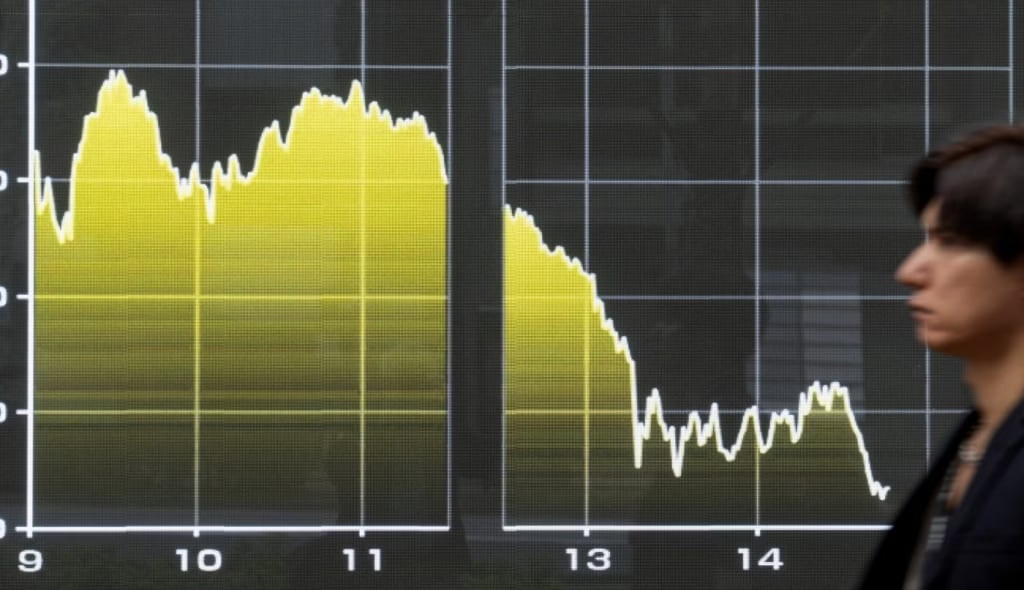
Historical Context: Currency Volatility and Market Response
Earlier in the year, the yen briefly weakened to levels not seen in decades. That period of depreciation created significant pressure on exporters, spurred government commentary, and drew scrutiny from global economic observers. The currency’s most recent surge represented a reversal of that trend, illustrating the brittle nature of exchange rate dynamics in a world of interconnected markets.
The swing from weakness to strength amplified the reactions across asset classes. Investors noted that a stronger yen can reduce inflationary import costs but also compress profit margins for export giants. The unique balance of risks made it clear that currency trends can no longer be treated as secondary to other macro variables.
Investor Sentiment and Outlook
Market sentiment shifted to caution as the yen’s performance triggered broad asset reallocation. Equities weakened, bonds strengthened, and currency traders adjusted positions in anticipation of future policy announcements.
Institutional investors emphasized that currency outlooks would dominate portfolio strategy meetings in the weeks ahead. Analysts highlighted that near-term economic indicators, interest rate expectations, and external demand trends would determine how far the yen’s strength persists.
Consumer confidence, domestic spending habits, and corporate earnings forecasts also entered discussions as analysts tried to gauge the broader impact of a stronger currency on economic performance.
Policy Watch: Central Bank Messaging and Intervention Possibilities
The Bank of Japan remains under close scrutiny as financial markets watch for any indications of policy adjustments. Although authorities have reiterated commitments to current monetary frameworks, speculation persists around tactical interventions aimed at stabilizing the yen.
Market watchers recognize that any deviation from established policy could have profound implications for short-term capital flows and asset valuations. The possibility of coordinated foreign exchange intervention remains part of investor calculus, particularly amid pronounced currency moves.
Global Implications and Cross-Market Spillovers
The ripples of yen strength did not stop at domestic markets. International investors recalibrated currency hedges, and cross-asset exposure adjustments emerged as funds evaluated balance sheet impacts. A stronger yen can influence trade balances, capital flows, and comparative yield dynamics across global fixed income markets.
Some global managers noted that strong currency moves often precede shifts in risk appetite, linking currency movements to broader patterns of financial confidence and economic growth projections.
Conclusion: Navigating Currency-Driven Market Shifts
The surge in yen strength reshaped Japanese financial markets this week, lifting government bonds and pressuring equities. As investors navigate currency-driven volatility, portfolio strategies increasingly reflect concerns around export profitability, policy signaling, and macroeconomic risk.
The interplay between currency markets, fixed income, and equities underscores a broader truth in modern finance: exchange rates remain fundamental to asset valuation and investor confidence. With the yen’s trajectory still unfolding, market participants will continue to monitor developments closely as they adjust strategies in pursuit of stability and performance.
FAQ — Understanding the Yen’s Impact on Markets
Q1. What does it mean when the yen strengthened?
A stronger yen means the currency gained value against other currencies. This makes imports cheaper but can reduce export earnings when converted back into yen.
Q2. Why did Japanese government bonds rise as the yen strengthened?
Bond prices rose because investors shifted capital into safer, yen-denominated assets. The stronger yen reduced inflationary pressure from imported goods and supported demand for Japanese Government Bonds.
Q3. How does a stronger yen affect Japanese stocks?
A stronger yen typically hurts exporters by reducing yen-based earnings after foreign sales are converted. This leads to lower stock valuations in export-oriented sectors.
📩 Start Growing Your Digital Presence Today
Partner with RojrzTech to craft digital experiences designed for long-term success and real audience connection. Let’s build an online presence that works harder for your business