
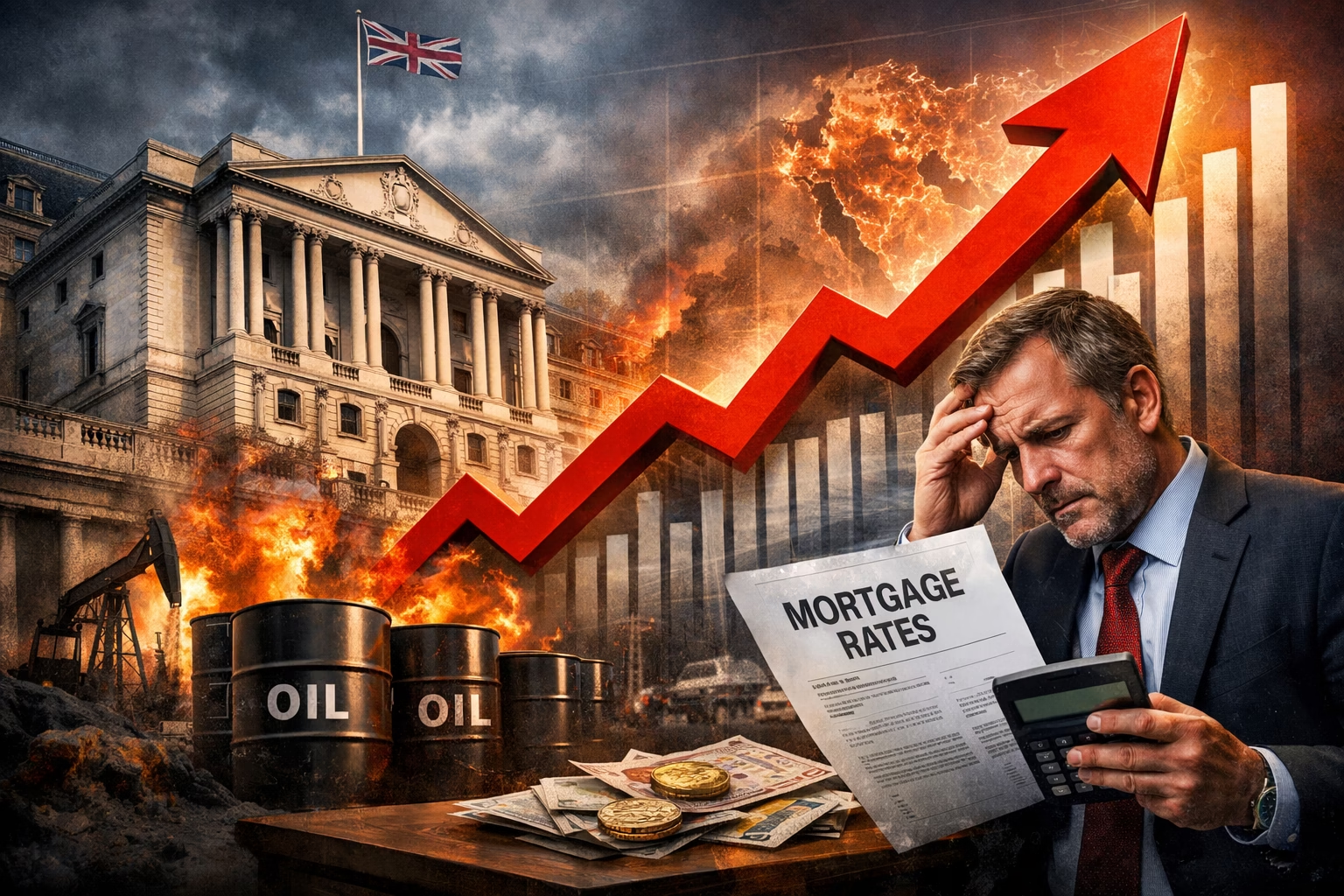
Bank of England Expected to Raise UK Interest Rates Twice This Year to Fight Inflation
The story around the Bank of England expected to raise UK interest rates twice this year to fight inflation isn’t just about numbers—it’s about how global events are once again shaping everyday life in the UK.
Just a few months ago, things were looking calmer. Inflation was slowing down, and many people were hoping interest rates would start coming down too. But now, that outlook has changed. A fresh energy shock linked to tensions in the Middle East has pushed prices back up, and the Bank of England is under pressure to respond.
Where Things Stand Right Now
At the moment, the Bank of England has kept its main interest rate at 3.75%. On the surface, that might look like a sign of stability—but it’s really more of a pause to assess what’s happening next.
Behind the scenes, expectations have shifted quickly. Economists and financial markets now believe the central bank will likely raise rates twice during 2026, possibly taking them above 4% again.
So instead of relief, borrowers may be facing another round of pressure.
What’s Driving This Change?
A Global Energy Shock
The biggest reason for this sudden shift is the rise in energy prices. Ongoing tensions in the Middle East have disrupted oil and gas supplies, which has pushed prices higher across global markets.
When energy gets expensive, everything else follows:
- Transport costs increase
- Manufacturing becomes more expensive
- Household energy bills rise
This ripple effect feeds directly into inflation.
Inflation Isn’t Done Yet
Inflation in the UK was slowly moving toward the Bank of England’s 2% target, which is where policymakers want it to be. But now, that progress is at risk.
New estimates suggest:
- Inflation could climb back above 3%
- It might even go higher if energy prices stay elevated
For ordinary people, this means the cost of living could start rising again—just when things were beginning to ease.
The Fear of a Longer-Term Problem
One of the biggest concerns isn’t just short-term inflation—it’s what comes next.
If prices stay high:
- Workers may ask for higher wages
- Businesses may raise prices further
- Inflation could become more persistent
This kind of cycle is exactly what central banks try to avoid, which is why interest rate hikes are back on the table.
What the UK Interest Rates Chart Is Telling Us
If you look at the UK interest rates chart over the past few years, it tells a clear story:
Rates went up quickly when inflation surged, then they paused as things started to settle. Now, with new pressures emerging, that pause may be temporary.
In simple terms: the fight against inflation isn’t over yet.
Mortgage Rates UK: Why People Are Already Feeling It
Even though the Bank of England hasn’t raised rates yet, mortgage rates UK are already creeping up—and that’s frustrating for many homeowners.
The reason is simple: lenders don’t wait.
They look ahead. If they think interest rates are going to rise, they start adjusting mortgage deals early. That means:
- Fixed-rate mortgages are becoming more expensive
- Monthly payments for new buyers are increasing
- Remortgaging is getting tougher
For many households, the impact is already being felt before any official decision is made.
What This Means for Everyday Life
For Households
This situation could make things tighter again:
- Higher mortgage payments
- Rising energy bills
- Less money left at the end of the month
Even small increases in interest rates can make a big difference when budgets are already stretched.
For Businesses
Companies aren’t immune either:
- Borrowing becomes more expensive
- Costs go up due to energy and wages
- Expansion plans may be delayed
This can slow down economic growth overall.
For the Economy
The Bank of England is walking a difficult line:
- Raise rates too much → risk slowing the economy
- Don’t raise them enough → inflation stays high
There’s no easy answer, which is why the next few months are so important.
What Happens Next?
Everything now depends on a few key factors:
- Whether energy prices stabilize
- How quickly inflation rises
- What happens with wages and spending
If inflation keeps climbing, interest rate hikes are very likely. If things calm down, the Bank may take a more cautious approach.
Final Thoughts
The Bank of England expected to raise UK interest rates twice this year to fight inflation shows how quickly the economic picture can change. Just when it seemed like things were improving, global events have forced a rethink.
For people across the UK, this means staying prepared. Borrowing may get more expensive, and the cost of living could remain under pressure for a while longer.
FAQs
1. Why are interest rates expected to rise again?
Because inflation is increasing due to higher energy prices and global instability.
2. What is the current bank of england interest rate?
It is currently 3.75%, but increases are expected later in 2026.
3. How are mortgage rates UK affected?
Mortgage rates are already rising because lenders expect future rate hikes.
4. What does the UK interest rates chart show?
It shows a pause in rising rates, followed by expectations of another increase.
5. Will rates definitely go up twice this year?
It’s not guaranteed, but most experts believe two hikes are likely.
🚀 Power Up Your Digital Presence with RojrzTech
Your business deserves technology that moves fast, performs strong, and keeps you ahead of the competition. At RojrzTech, we build digital solutions that help brands grow smarter—from website development and smart automation to marketing systems that actually deliver results.
Whether you’re aiming for higher visibility, stronger engagement, or next-level digital performance, our team is ready to help you take the next step.
📩 Let’s Build Something Game-Changing.
Connect with RojrzTech today and unlock the future of your brand