
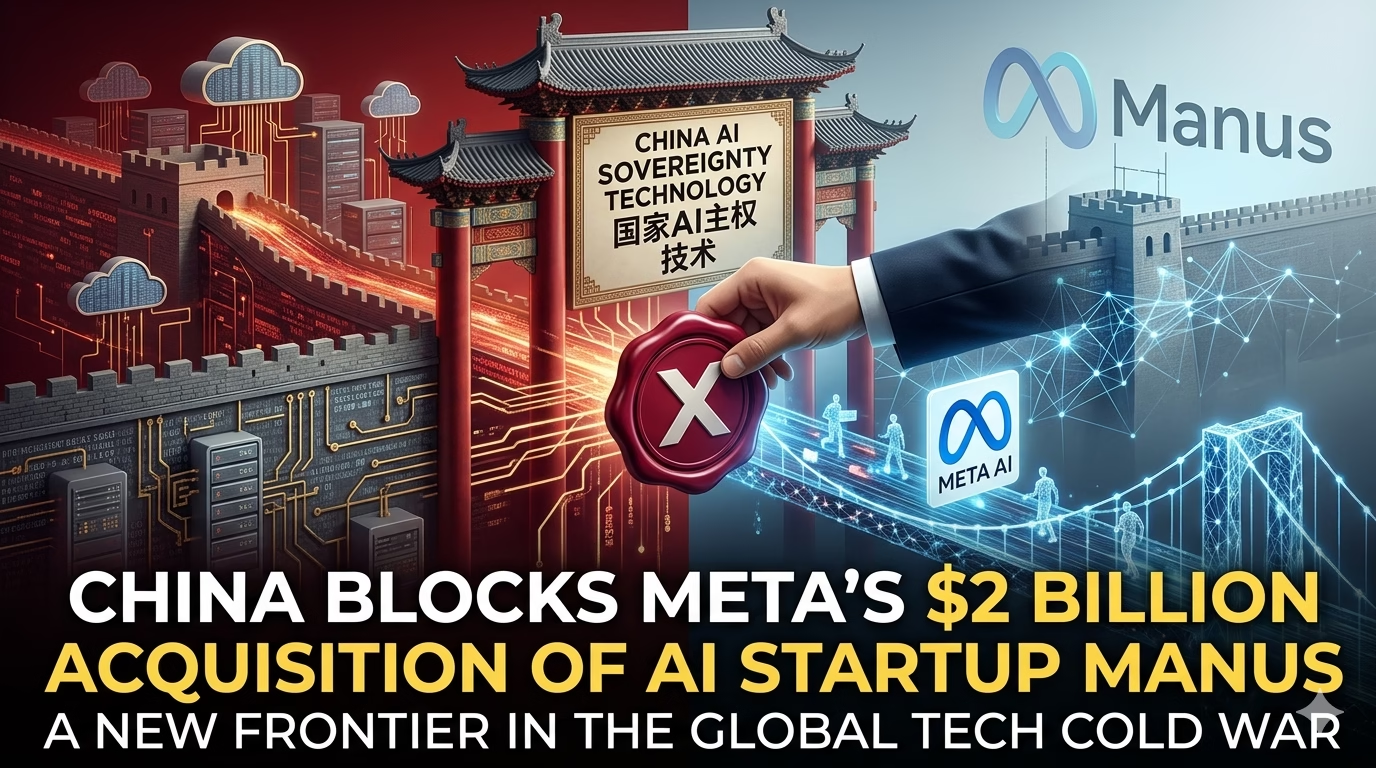
China Blocks Meta’s $2 Billion Acquisition of AI Startup Manus: The Great Tech Schism
The global Artificial Intelligence landscape has hit a definitive turning point. In a move that underscores the deepening divide between Eastern and Western technology ecosystems, China has officially blocked Meta Platforms Inc.’s attempted $2 billion acquisition of the high-flying AI startup, Manus.
This intervention is far more than a routine regulatory veto; it is a clear signal that AI has become the primary battleground for national sovereignty and digital dominance.
The Manus Advantage: Why Meta Was Ready to Pay Billions
Manus is not your typical chatbot developer. Based in China’s tech hubs, the startup gained international attention for its pioneering work in “Agentic AI.” Unlike traditional Large Language Models (LLMs) that primarily focus on text generation and conversation, Manus developed “universal AI agents” capable of autonomous task execution. These agents can navigate complex software, write and debug code, and manage multi-step professional workflows with minimal human oversight.
For Meta, acquiring Manus was a strategic play to close the gap with competitors like OpenAI and Google. By integrating Manus’s agentic technology into the Meta AI ecosystem, Mark Zuckerberg hoped to transform Facebook, Instagram, and WhatsApp into proactive personal assistants. However, Beijing’s intervention has effectively neutralized this shortcut.
The Regulatory Great Wall: Why China Said No
The decision by Chinese regulators to halt the deal is rooted in a fundamental shift in how technology is governed. Under China’s updated Export Control Laws and Data Security Law, advanced AI algorithms are now treated as restricted national assets.
By blocking the Meta-Manus deal, Beijing is asserting that its top-tier innovation is not for sale to foreign entities—especially those based in the United States. This “protectionist” stance is a direct response to U.S. efforts to limit China’s access to high-end semiconductors, creating a cycle of tech-tit-for-tat that is splitting the global industry in two.
The State of the Chinese AI Market: Resilience Amidst Scrutiny
While Western reports often focus on China’s struggles with the “chip gap”—referencing the difficulty of obtaining NVIDIA’s top-tier GPUs—the domestic sentiment in China remains remarkably optimistic.
- Application over Abstraction: While the U.S. focuses on massive, general-purpose models, Chinese firms are excelling at industry-specific AI. From automated manufacturing in Shenzhen to smart logistics in Shanghai, China is winning the “applied AI” race.
- The “Lean” Innovation: Deprived of unlimited computing power, Chinese engineers are becoming experts in efficiency. They are developing Small Language Models (SLMs) that offer high performance with significantly lower hardware requirements.
- Domestic Capital Influx: As U.S. venture capital retreats due to geopolitical tensions, the Chinese government has stepped in with massive “Guidance Funds” to ensure that startups like Manus remain well-funded and under domestic control.
The “OpenAI Gap” and the Chip Rivalry
The tech rivalry with the U.S. has highlighted a critical vulnerability: China currently lacks a singular, globally dominant equivalent to OpenAI. This is largely due to the U.S. “chokepoint” strategy on high-end chips.
However, reports from Reuters and other major outlets suggest that China is rapidly pivoting. By focusing on domestic chip production and innovative software architectures, they are attempting to bypass the need for Western hardware altogether. The blocking of the Manus deal ensures that any breakthroughs made during this “pivot” stay within China’s borders.
Frequently Asked Questions (FAQs)
1. Why did China block Meta’s acquisition of Manus?
China blocked the deal primarily due to concerns over “National Security” and “Data Sovereignty.” Under current laws, advanced AI agents are considered critical intellectual property that should not be transferred to a foreign power.
2. What makes Manus different from ChatGPT?
While ChatGPT is primarily a conversational tool, Manus is an “Action-Oriented” AI. It is designed to act as an agent that can perform tasks across different software platforms, making it a highly valuable tool for automation and productivity.
3. Is China winning or losing the AI race?
It depends on the metric. The U.S. leads in raw computing power and foundational models (like GPT-4), but China is widely considered a leader in the practical application of AI in industry, infrastructure, and facial recognition.
4. How does this affect Meta’s future in AI?
This is a significant setback for Meta. Without the acquisition of Manus, Meta must rely on internal development or seek partnerships within the U.S. and Europe, which may take longer to yield the same level of autonomous “agent” technology.
5. Will we see more blocked deals in the future?
Yes. As AI becomes more central to national security, it is highly likely that both the U.S. and China will continue to block cross-border acquisitions to prevent the “leakage” of sensitive algorithms and data.
🚀 Elevate Your Digital Presence with RojrzTech
The digital landscape evolves rapidly. Brands thrive when they adapt quickly, innovate continuously, and leverage robust online systems. RojrzTech empowers your business with tailored solutions in Website Development, UI/UX Design, Social Media Management, SEO, Branding, and Custom Digital Services.
Our expert team builds strategies that align perfectly with your goals, helping you achieve a stronger online presence, higher engagement, and sustainable growth. Every project is designed to give your brand a competitive edge in a fast-moving digital world.
📩 Ready to Transform Your Digital Future?
Don’t wait to take your brand to the next level. Contact RojrzTech today and start creating a digital experience that resonates, converts, and grows. Together, we’ll design, innovate, and elevate your brand’s online journey