
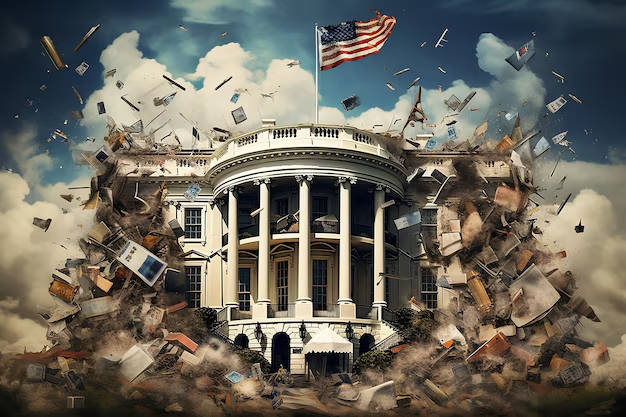
The Slopaganda Era: 10 AI Images Posted by the White House — and What They Teach Us
Washington — Artificial intelligence has begun reshaping political communication in ways few could have predicted. In recent months, the White House has repeatedly shared AI-generated images across official platforms, marking what media analysts describe as the slopaganda era. This trend blends low-effort viral visuals with political messaging, raising serious questions about credibility, intent, and the future of public trust.
The phrase “The slopaganda era: 10 AI images posted by the White House – and what they teach us” has gained traction among journalists and researchers who are closely watching how digital imagery is being used by institutions traditionally expected to communicate with clarity and restraint.
From Information to Provocation
Historically, government imagery served a clear purpose: documentation, transparency, and official record-keeping. Today, AI tools have blurred that boundary. Several of the White House’s AI-generated posts rely on exaggeration, symbolism, and internet meme culture rather than factual representation.
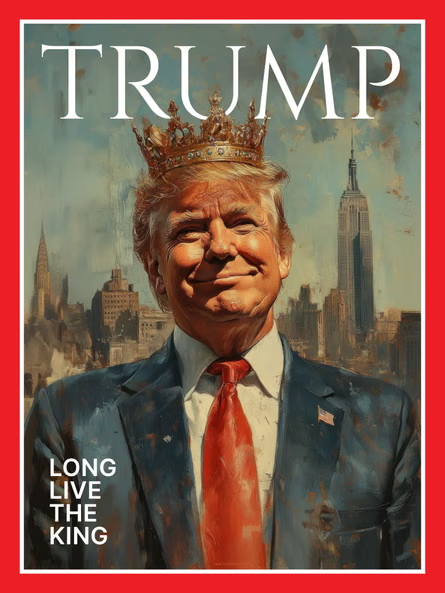
One widely discussed image depicted a political leader in a grand, almost mythical role, fueling debates similar to those seen in controversies like trump obama portrait snopes and ai obama discussions that previously circulated online. These visuals are designed to spark emotion first, accuracy second.
The Role of Misinformation Culture
The rise of AI visuals coincides with a media environment already strained by misinformation. Fact-checking platforms such as those referenced in department of war snopes debates have long struggled to keep up with viral claims. AI imagery accelerates this challenge by presenting fictional scenes with realistic detail.
Past examples involving snopes obama basketball court or misleading celebrity-political claims like singer suing trump demonstrate how easily fabricated visuals can enter mainstream discussion. When similar tactics appear on official government channels, the implications become far more serious.
Emotional Impact Over Accuracy
Experts note that AI-generated images are especially effective because they bypass rational analysis and trigger emotional reactions. Whether humorous, dramatic, or confrontational, such images spread rapidly and dominate attention. Searches related to google news obama and obama yahoo often show how visuals outperform policy reporting in engagement metrics.
This approach reflects a broader shift in communication strategy, where virality is prioritized over nuance. The concern is that repeated exposure to artificial imagery may condition audiences to accept distortion as normal.
Global Narratives and Symbolism
Some AI posts have extended beyond domestic politics, referencing global themes and financial power. Claims or symbolic references tied to figures like 60 billion to argentina illustrate how complex international issues can be reduced to simplistic visuals, stripping them of context and depth.
Such representations may influence public opinion without offering factual grounding, reinforcing narratives rather than informing citizens.
What These Images Teach Us
The slopaganda era teaches several critical lessons. First, AI is not merely a creative tool; it is a powerful amplifier of political messaging. Second, when authority figures use artificial visuals, the distinction between reality and performance weakens. Third, media literacy is no longer optional — audiences must learn to question not just written claims, but images themselves.
The use of AI imagery by official institutions signals a turning point. It reflects a willingness to adopt the tactics of internet culture to command attention in a crowded digital space. Whether this strategy strengthens engagement or further erodes trust remains an open question.
A Defining Moment for Digital Politics
As technology advances, governments face a choice. They can use AI responsibly to clarify and educate, or they can lean into spectacle at the cost of credibility. The slopaganda era shows how easily that line can be crossed.
What is clear is that AI-generated political imagery is no longer a fringe experiment. It is now part of mainstream governance communication — and its long-term consequences will shape how future generations understand truth, authority, and power.
Frequently Asked Questions (FAQ)
❓ What is meant by the slopaganda era?
The slopaganda era refers to the growing use of low-effort, high-impact AI-generated images in political communication. These visuals prioritize emotional reaction and virality over accuracy, often blurring the line between information and propaganda.
❓ Why did the White House post AI-generated images?
The White House used AI imagery to attract attention in a crowded digital space. Officials appear to be adopting modern visual tactics to shape narratives, though critics argue this approach risks misleading the public.
❓ How do AI images affect public trust?
AI-generated visuals can weaken trust when audiences struggle to distinguish between real and artificial content. Similar concerns emerged in past controversies involving ai obama imagery and disputed political portraits.
Ready to Grow Your Business with RojrzTech?
RojrzTech gives you everything you need to scale fast. Our team builds powerful eCommerce stores, creates high-performance websites, and delivers expert business consultation that guides you in the right direction. You also receive daily updates on trends, tech news, and strategies so your business always stays ahead.
Let’s Build Your Digital Success Today
Your growth starts with the right team. RojrzTech designs digital solutions that bring traffic, boost sales, and create long-term success. You focus on your business — we handle the technology