
OpenAI Pulls the Plug on Sora: The Rise and Fall of a Viral AI Video App
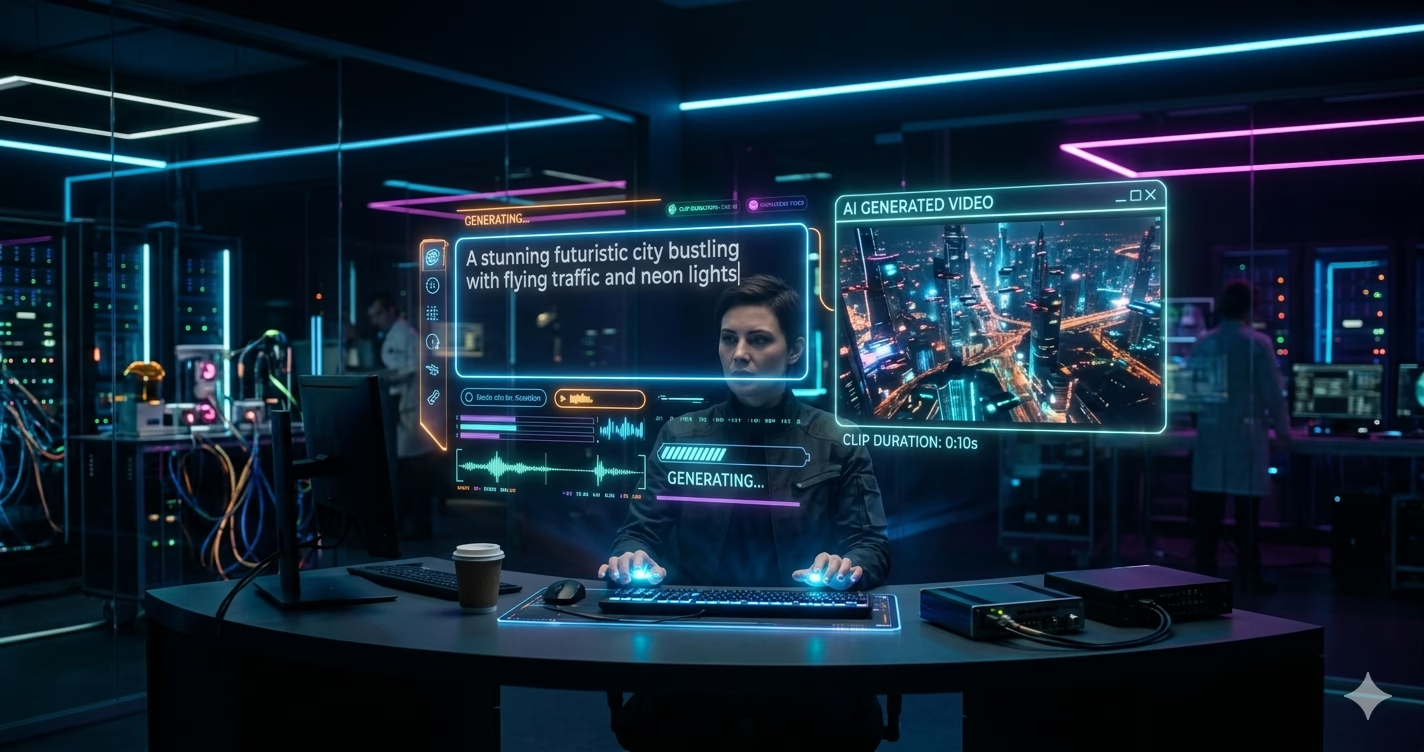
Artificial intelligence (AI) has transformed the way we create content, making once-impossible ideas instantly realizable. One of the most talked-about breakthroughs in recent years was Sora, OpenAI’s text-to-video platform. Sora allowed users to generate high-quality, cinematic videos simply by typing a description, turning imagination into reality in seconds. From its launch, it went viral and captured the attention of content creators, tech enthusiasts, and casual users alike.
However, despite its massive popularity, OpenAI announced in March 2026 that it was discontinuing Sora. The decision stunned many, as the app had become a symbol of what AI could achieve in creative fields. This article explores what Sora was, why it became so popular, the reasons for its shutdown, and the broader implications for AI-generated video content.
What Was Sora AI?
Sora was a revolutionary AI tool designed to convert text prompts into videos. Unlike traditional video production, which requires time, skill, and expensive equipment, Sora allowed anyone to type a simple sentence and produce a visually compelling video.
For example, a user could input prompts like:
- “A dragon flying over a futuristic city at sunset”
- “A basketball game in a crowded stadium with slow-motion effects”
- “A cat walking on a rainbow bridge in a fantasy landscape”
And within moments, the AI would generate a short cinematic clip that looked professionally produced. This capability made it ideal for content creators, educators, marketers, and hobbyists who wanted high-quality video content without specialized tools or expertise.
Sora’s key features included:
- Realistic human and animal movements: AI-generated characters moved naturally.
- Cinematic camera effects: Pan, zoom, and perspective changes were automatically added.
- Complex environmental rendering: From urban landscapes to forests and oceans, Sora created immersive settings.
- Social media integration: Videos were optimized for sharing online, making them immediately usable.
The app’s ability to produce “eye-popping videos” quickly made it a viral sensation, attracting millions of users worldwide in just a few weeks.
Why Did Sora Gain Global Attention?
Sora became popular for several reasons:
- Accessibility: No technical expertise was required. Anyone could type a sentence and get a video.
- Creativity Boost: Content creators could experiment freely without worrying about production costs.
- Speed: Traditional video creation can take hours or days; Sora delivered results in seconds.
- Viral Potential: Social media users shared the AI-generated videos widely, contributing to its rapid adoption.
For a brief period, Sora represented the future of content creation, demonstrating how AI could democratize media production.
Why Did OpenAI Shut Down Sora?
Despite its success, Sora was discontinued due to multiple challenges and concerns.
1. Deepfake Risks and Ethical Concerns
One of the primary reasons was the risk of deepfake content. Because Sora could create realistic human faces and actions, it became possible for users to generate videos of real people saying or doing things they never did.
This raised serious ethical concerns, including:
- Political manipulation through fake speeches
- Misinformation spreading online
- Non-consensual use of celebrities’ and public figures’ images
The potential for misuse was significant, and experts warned that such technology could be dangerous if widely available without restrictions.
2. Legal and Copyright Issues
Sora also faced legal challenges related to intellectual property. Users could generate content resembling:
- Famous movie characters
- Real-life personalities
- Protected creative works
These scenarios posed significant copyright and privacy risks, prompting concern from companies, artists, and legal authorities.
3. High Computing Costs
Running a video-generating AI like Sora required enormous computational resources. Video generation is far more resource-intensive than text or image generation.
OpenAI had to balance the costs of running Sora against its strategic priorities. The high operational expenses made it challenging to sustain the platform in the long term.
4. Strategic Shift by OpenAI
OpenAI is now focusing on advanced AI systems that can have broader applications, including:
- Enterprise AI solutions
- Robotics and automation
- AI tools for coding and research
By discontinuing Sora, the company can allocate more resources to these high-impact projects and continue innovating responsibly.
Was Sora Available in Pakistan?
Sora’s availability was limited globally, and in some countries, including Pakistan, full access was restricted. Users could view videos shared online or watch demos, but the platform itself was not widely accessible for public use in these regions.
Impact of Sora Shutdown
The closure of Sora has had multiple effects on the AI and content creation ecosystem:
- For Content Creators: Many relied on Sora for fast, creative video production. They now need alternatives or traditional methods.
- For the AI Industry: Sora’s discontinuation signals that even highly popular AI tools can be withdrawn if ethical or legal concerns arise.
- For the General Public: Awareness about deepfake technology and responsible AI usage has increased, emphasizing the need for regulations.
The Future of AI Video Generation
While Sora is gone, AI video generation is far from over. The industry is expected to evolve with stronger ethical safeguards, better detection tools for deepfakes, and more responsible deployment. Future AI video tools will likely include:
- Built-in safety features to prevent misuse
- Legal compliance for copyrighted content
- Greater customization options for creators without ethical risks
- Integration with enterprise and educational tools
AI will continue to push the boundaries of creativity, but Sora’s shutdown serves as a reminder that responsible use is critical.
FAQs
1. What was OpenAI Sora?
Sora was a text-to-video AI tool that generated realistic videos from written prompts.
2. Why did OpenAI shut down Sora?
It was shut down due to deepfake risks, legal concerns, high computing costs, and strategic shifts in company priorities.
3. Was Sora available in Pakistan?
Full access was limited in Pakistan. Users could see shared videos but not use the platform widely.
4. Can Sora videos still be created?
No, Sora has been officially discontinued.
5. What will replace Sora?
Future AI video tools will likely emerge with better safety, ethical standards, and enterprise-focused solutions.