
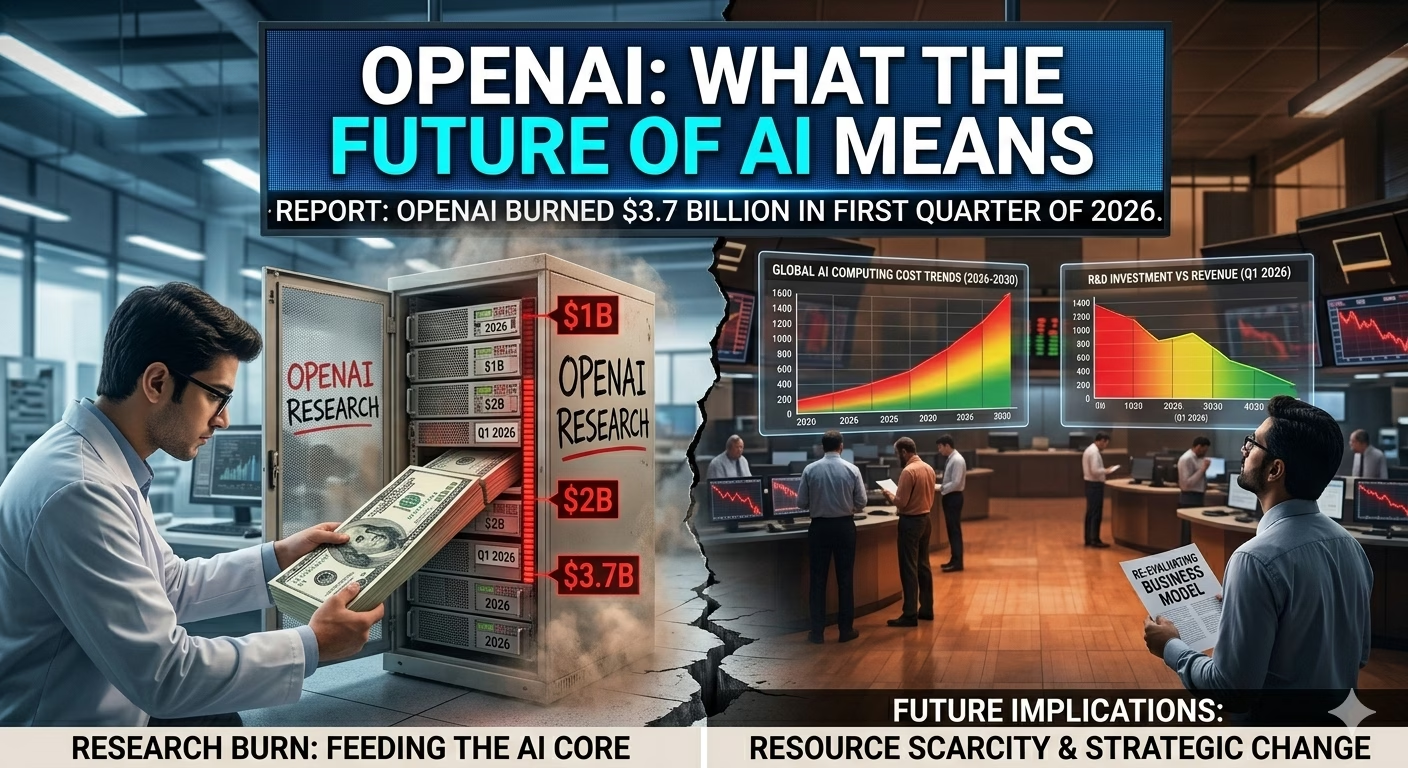
OpenAI Burned $3.7 Billion in First Quarter of 2026: What It Means for the Future of AI
OpenAI, one of the world’s leading artificial intelligence companies, reportedly burned through $3.7 billion during the first quarter of 2026, highlighting the enormous costs associated with developing and scaling advanced AI technologies. Despite generating billions in revenue, the company continues to invest aggressively in infrastructure, research, talent acquisition, and product development as competition in the AI industry intensifies.
The financial figures have sparked widespread discussion among investors, analysts, and technology experts. While OpenAI remains one of the fastest-growing technology companies globally, its spending patterns demonstrate just how expensive the race for artificial intelligence leadership has become. Reports indicate that the company may still face significant annual losses despite impressive revenue growth. (investing.com)
Why OpenAI Burned $3.7 Billion in Q1 2026
Artificial intelligence development requires enormous financial resources. Unlike traditional software companies, AI firms must invest heavily in computing infrastructure, specialized hardware, cloud services, and research operations.
Several major factors contributed to OpenAI’s spending:
Massive Computing Costs
Training and operating advanced AI models require vast amounts of computing power. Large language models consume significant resources during both training and deployment.
Infrastructure Expansion
As user demand continues to grow, OpenAI must expand its data center capacity and cloud infrastructure to support millions of customers worldwide.
Research and Development
The company continues investing heavily in next-generation AI systems, safety research, and model improvements.
Talent Acquisition
Competition for AI researchers and engineers remains intense, leading to substantial compensation expenses across the industry.
These investments are viewed as essential for maintaining technological leadership in a rapidly evolving market.
OpenAI Revenue Growth Remains Strong
Despite high spending levels, OpenAI’s revenue continues to grow at an impressive pace.
The company has expanded revenue streams through:
- ChatGPT subscriptions
- Enterprise AI solutions
- API services for developers
- Business productivity tools
- Strategic partnerships
Growing adoption of generative AI technologies across industries has created substantial commercial opportunities. Businesses increasingly rely on AI-powered solutions for customer support, content creation, software development, data analysis, and workflow automation.
This growing demand has helped OpenAI generate billions in annual revenue.
Why OpenAI Could Lose $5 Billion This Year
One of the most discussed projections suggests OpenAI may lose approximately $5 billion during the year despite strong revenue performance.
This situation is not unusual for high-growth technology companies pursuing market leadership.
Several reasons explain potential losses:
Aggressive Growth Strategy
OpenAI continues prioritizing expansion over short-term profitability.
Heavy Infrastructure Investments
AI systems require continuous investment in hardware and cloud computing resources.
Product Development Costs
The company regularly launches new models, features, and enterprise services that require significant upfront investment.
Global Competition
Competition from major technology companies is forcing AI firms to innovate rapidly and spend aggressively.
Many analysts believe these losses represent strategic investments rather than signs of financial weakness.
OpenAI Projects a $5B Loss Despite Billions in Revenue
Reports indicate that OpenAI could generate substantial revenue while still reporting significant losses.
This reflects the economics of modern artificial intelligence development, where infrastructure costs can scale almost as quickly as revenue.
Key expense categories include:
- AI model training
- Data center operations
- Cloud computing
- Employee compensation
- Research initiatives
- Safety and compliance programs
Industry observers note that profitability may become more achievable as AI models become more efficient and infrastructure scales further.
Microsoft’s Multi-Billion-Dollar Investment in OpenAI
OpenAI’s growth has been significantly supported by strategic investments from Microsoft.
Microsoft first announced its major investment in OpenAI in 2019, beginning a partnership that has become one of the most important alliances in the technology industry. Additional investments followed in subsequent years as Microsoft’s commitment to AI expanded.
The partnership provides:
- Cloud infrastructure through Azure
- Financial support
- Enterprise distribution channels
- AI integration across Microsoft products
Microsoft’s backing has enabled OpenAI to accelerate development while accessing world-class computing resources.
The Growing Cost of Artificial Intelligence
OpenAI’s financial results highlight a broader trend across the AI sector.
Leading AI companies are spending billions of dollars annually on:
- Graphics processing units (GPUs)
- Data centers
- Model training
- Energy consumption
- Talent recruitment
As AI systems become more advanced, costs continue to increase.
Industry experts estimate that next-generation models may require even larger investments, making financial partnerships and scale increasingly important.
Can OpenAI Become Profitable?
A key question facing investors is whether OpenAI can eventually achieve sustainable profitability.
Several factors support a positive outlook:
Expanding Enterprise Adoption
Businesses are increasingly integrating AI into daily operations.
Premium Subscription Growth
Paid AI services continue attracting individual and corporate customers.
New Revenue Streams
OpenAI is developing products beyond chatbots, including agents, enterprise tools, and advanced AI platforms.
Improved Efficiency
Future technological improvements may reduce training and inference costs.
While profitability may not be immediate, many analysts view current losses as part of a long-term growth strategy.
Impact on the AI Industry
OpenAI’s spending levels provide insight into the broader economics of artificial intelligence.
The company has effectively set a benchmark for industry investment, encouraging competitors to increase spending on AI research and infrastructure.
This trend is influencing:
- Technology company strategies
- Venture capital investment
- Cloud computing demand
- Semiconductor markets
- Enterprise software development
The AI race is increasingly becoming a competition not only of innovation but also of financial resources.
Future Outlook
Looking ahead, OpenAI is expected to continue investing heavily in advanced AI systems and global expansion.
Potential priorities include:
- More capable AI models
- Enterprise solutions
- AI agents and automation
- Global infrastructure growth
- Enhanced safety and governance programs
Although operating expenses remain high, growing adoption of AI technologies could help strengthen revenue generation over the coming years.
Conclusion
OpenAI’s reported $3.7 billion cash burn during the first quarter of 2026 underscores the enormous financial demands of building cutting-edge artificial intelligence systems. While the company may face significant annual losses, its revenue growth, expanding customer base, and strategic partnerships continue to position it as a dominant force in the AI industry.
The situation highlights a fundamental reality of today’s AI race: leadership requires massive investment. For OpenAI, short-term losses appear to be part of a broader strategy focused on long-term innovation, market expansion, and technological leadership.
As artificial intelligence becomes increasingly integrated into business and everyday life, OpenAI’s financial performance will remain closely watched by investors, competitors, and policymakers around the world.
FAQs
Why did OpenAI burn $3.7 billion in Q1 2026?
OpenAI spent heavily on AI infrastructure, cloud computing, research, talent acquisition, and model development.
Is OpenAI losing money?
Reports suggest OpenAI may record significant losses despite generating billions in revenue because of its aggressive investment strategy.
Why could OpenAI lose $5 billion this year?
High spending on AI training, infrastructure, and expansion may exceed revenue growth during the year.
How does OpenAI make money?
The company earns revenue through ChatGPT subscriptions, enterprise services, APIs, and business AI solutions.
When did Microsoft invest in OpenAI?
Microsoft first announced a major investment in OpenAI in 2019 and later expanded the partnership through additional funding.
Is OpenAI profitable?
OpenAI is focused on growth and expansion, and reports indicate it is not yet consistently profitable.
Why is AI development so expensive?
AI requires massive computing power, specialized hardware, skilled researchers, and extensive infrastructure.
What role does Microsoft play in OpenAI?
Microsoft provides financial backing, Azure cloud infrastructure, and enterprise distribution support.
Will OpenAI continue investing heavily?
Yes, the company is expected to continue spending significantly on AI innovation and global expansion.
What does OpenAI’s spending mean for the AI industry?
It demonstrates that leading AI companies must invest billions of dollars to remain competitive in the rapidly evolving artificial intelligence market.
🚀 Build a Powerful Online Presence with RojrzTech
Quiet updates often carry the loudest consequencesIn an ever-evolving digital landscape, brands grow by adapting fast and executing smart. RojrzTech offers customized solutions in web development, UI/UX design, SEO, branding, and social media—helping businesses improve visibility, engagement, and overall digital performance.
📩 Start Growing Your Digital Presence Today
Partner with RojrzTech to craft digital experiences designed for long-term success and real audience connection. Let’s build an online presence that works harder for your business