
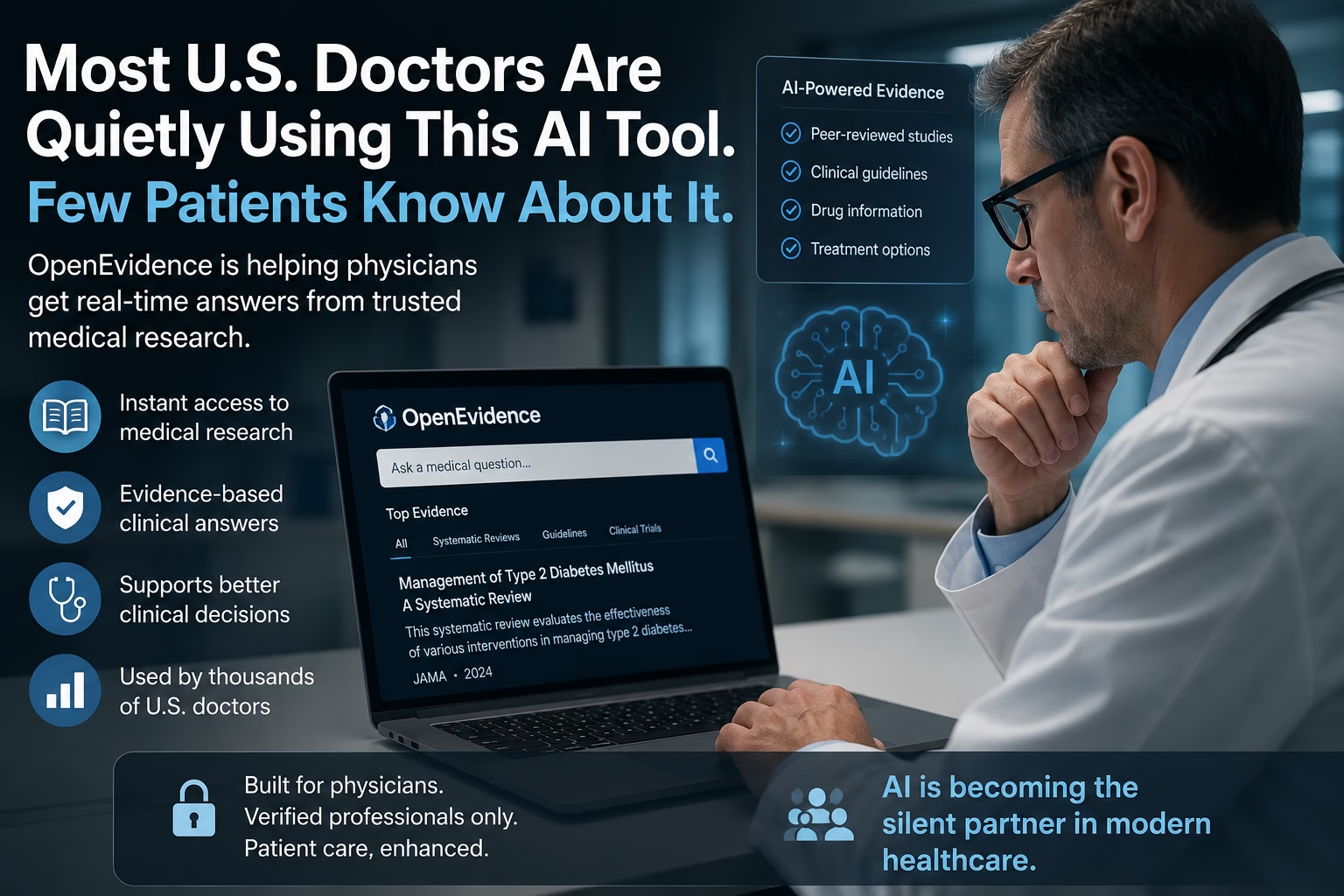
Most U.S. Doctors Are Quietly Using This AI Tool — Few Patients Know About It
Introduction
Artificial intelligence is increasingly becoming part of modern healthcare in the United States. A growing number of physicians are now using a specialized AI system called OpenEvidence to support clinical decisions, access medical research faster, and stay updated with the latest medical studies.
What makes this trend notable is that most patients are completely unaware that such AI tools are being used during their care.
What Is OpenEvidence?
OpenEvidence is an AI-powered medical search and clinical decision-support platform designed specifically for licensed healthcare professionals. It helps doctors quickly find accurate, research-based answers from trusted medical literature.
Its main functions include:
- Instant access to peer-reviewed medical journals
- Evidence-based clinical answers
- Summarized treatment guidelines
- Support for diagnosis and patient management
It is often described as a “ChatGPT-like tool for doctors,” but it is restricted to verified medical professionals only.
Growing Use Among U.S. Doctors
Reports suggest that OpenEvidence has seen rapid adoption across the United States.
Key highlights include:
- A large percentage of U.S. physicians have used the platform
- It is increasingly part of hospital and clinic workflows
- It is used during real-time patient consultations in some cases
Doctors rely on it to quickly verify medical information and support clinical decisions.
Why Doctors Are Using AI Tools
Modern medicine generates an overwhelming amount of research every year. No doctor can manually keep up with everything.
AI tools like OpenEvidence help by:
1. Faster Access to Medical Research
Doctors can retrieve relevant studies within seconds.
2. Better Clinical Decision Support
AI helps summarize evidence during real patient cases.
3. Reduced Information Overload
Instead of reading hundreds of papers, doctors get concise, relevant insights.
Why Patients Rarely Know About It
Despite widespread use, patients usually do not know about these tools because:
- It is not a public or consumer app
- Only verified medical professionals can access it
- It is used quietly during consultations or background research
As a result, AI often supports decisions without being directly visible to patients.
Benefits of AI in Healthcare
Experts believe tools like OpenEvidence may improve healthcare by:
- Increasing diagnostic accuracy
- Speeding up medical decisions
- Improving access to up-to-date research
- Supporting evidence-based treatment
AI is becoming a powerful assistant for doctors rather than a replacement.
Concerns and Challenges
Even though the technology is promising, there are important concerns:
1. Over-Reliance on AI
Doctors may depend too much on automated summaries.
2. Risk of Misinterpretation
AI may oversimplify complex medical studies.
3. Lack of Transparency
Patients may not always know AI is involved in decision-making.
4. Ethical Questions
Healthcare systems are still developing rules for AI use.
Future of AI in Medicine
AI tools like OpenEvidence are part of a larger transformation in healthcare. In the future, AI may be widely used for:
- Diagnosis assistance
- Drug interaction checks
- Radiology and imaging support
- Personalized treatment planning
However, strong regulation and oversight will be essential.
Conclusion
The rise of OpenEvidence shows how deeply AI is entering modern medicine. While patients may not notice it, many doctors are already using AI tools to improve speed, accuracy, and access to medical knowledge.
This shift could make healthcare more efficient — but it also raises important questions about transparency, ethics, and trust.
FAQs
1. What is OpenEvidence?
OpenEvidence is an AI-powered medical tool used by doctors to quickly search and analyze medical research and clinical data.
2. Is OpenEvidence available to patients?
No, it is only available to licensed healthcare professionals.
3. Why are doctors using AI tools like this?
Doctors use it to access medical research faster and improve clinical decision-making.
4. Do patients know when doctors use AI?
Most of the time, patients are not informed because it works behind the scenes.
5. Is OpenEvidence replacing doctors?
No, it is designed to assist doctors, not replace human judgment.
🚀 Build a Powerful Online Presence with RojrzTech
Quiet updates often carry the loudest consequencesIn an ever-evolving digital landscape, brands grow by adapting fast and executing smart. RojrzTech offers customized solutions in web development, UI/UX design, SEO, branding, and social media—helping businesses improve visibility, engagement, and overall digital performance.
📩 Start Growing Your Digital Presence Today
Partner with RojrzTech to craft digital experiences designed for long-term success and real audience connection. Let’s build an online presence that works harder for your business