Instagram Investigating AI Profiles ‘Fetishising’ Disabled People
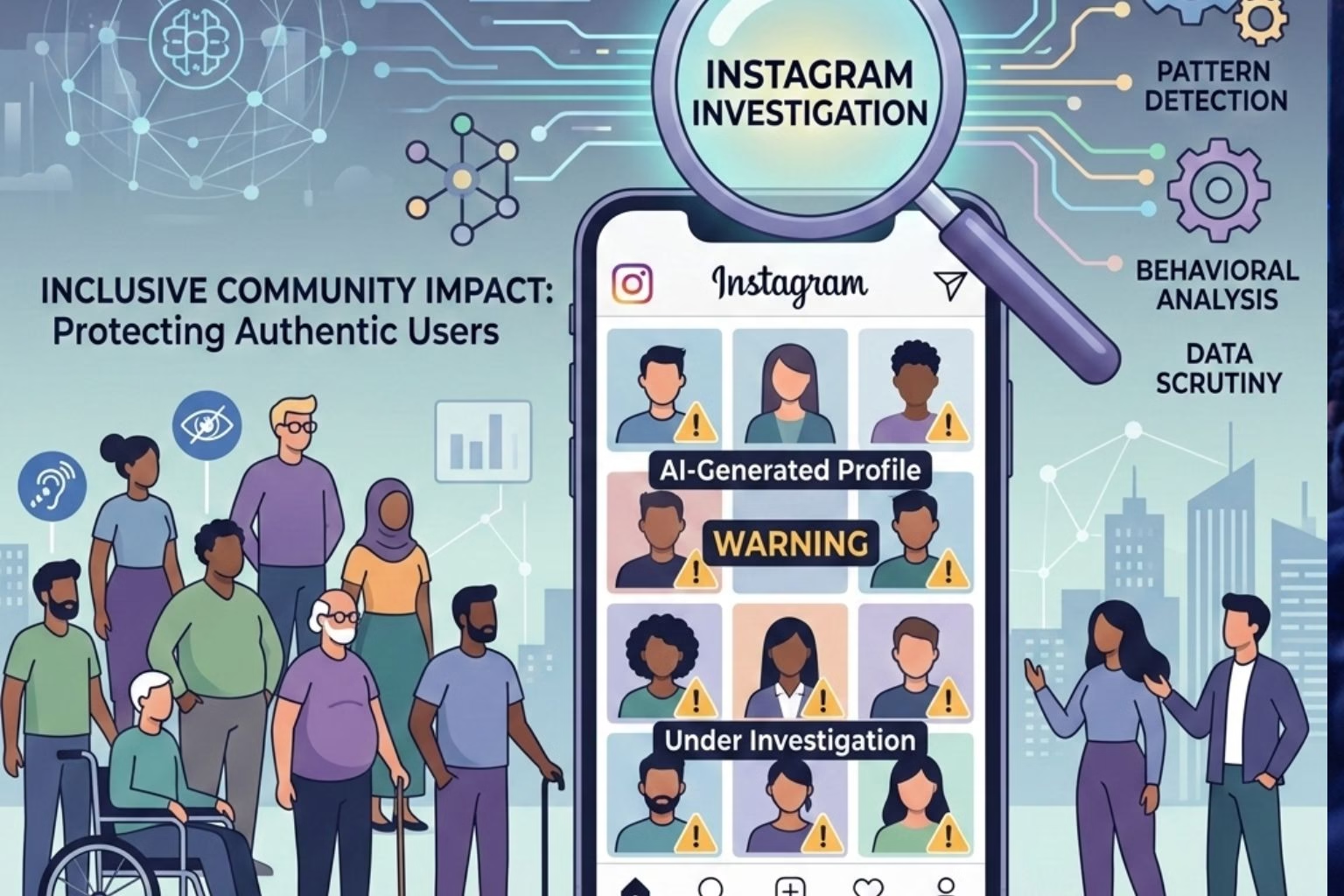
Instagram is investigating a surge of AI‑generated profiles that appear to be fetishising disabled people, raising serious concerns over harmful representation and misuse of artificial intelligence on the platform. The issue has drawn widespread attention from disability advocates, digital rights experts, and users who say the accounts promote exploitative and disrespectful images.
The profiles in question use generative AI tools to create highly realistic images and videos featuring people with various disabilities. Many have attracted large followings despite having no real person behind them. Some accounts depict fictional individuals with conditions such as Down’s syndrome, limb differences, or other physical traits — often framed in ways that observers describe as sensationalised or sexualised rather than respectful or authentic.
Meta, the parent company that owns Instagram, has confirmed it is looking into the matter to determine whether these profiles violate the platform’s community standards. Instagram’s policies prohibit material that promotes sexual exploitation, harassment, or attacks people based on characteristics such as disability. However, moderating AI‑generated content remains a growing challenge as generative technologies become more advanced and widespread.
What the Problem Looks Like
The AI‑generated accounts often post images of people with visible disabilities in scenarios that focus on appearances rather than human stories. Some users describe the content as fetishistic because it appears to reduce complex identities to objects of curiosity or excitement. The highly realistic nature of the content makes it harder for users — and moderation systems — to easily distinguish between real and synthetic profiles.
Because these profiles attract attention quickly, they can appear in user feeds, recommendations, and search results, further exposing more people to questionable material. Disability rights groups have criticised the trend, saying it undermines efforts to promote dignity, respect, and accurate representation for people with disabilities.
Why AI Is at the Heart of This
The rise of generative AI tools — software that can create images and videos that look like photographs — has made it easier for anyone to produce convincing visual content. While many AI tools have safeguards, others either lack strong filters or have vulnerabilities that can be bypassed.
Experts in artificial intelligence point out that biases in AI training data can lead to unintended and harmful outputs. If a tool has been trained on datasets that include problematic associations or stereotypes, it may reproduce or amplify those issues in new images. That means even without explicit harmful input, AI can generate output that reflects biased patterns.
Platform and Community Reactions
Disability advocacy organisations have been among the most vocal critics of the AI profiles. They argue that technology companies need to do more to prevent exploitative and dehumanising uses of generative tools. Many say this is not just about removing certain accounts, but about building systems and policies that protect vulnerable communities from harassment, objectification, and misrepresentation.
Instagram and its parent company have said they are reviewing the flagged profiles and taking action where violations are found. However, platform moderators and automated systems face an uphill battle as generative AI continues to evolve faster than the rules designed to govern it.
Some technology ethicists also stress that this controversy highlights the need for stronger industry‑wide guidelines on how AI can be used responsibly and ethically on social platforms. They argue that protecting users and fostering respectful online spaces must keep pace with innovation.
Why This Matters Beyond Social Media
While this may appear to some as a niche digital problem, the implications are broader. How people with disabilities are portrayed — and who gets to control those portrayals — affects public perception, inclusion, and social norms. Exploitative depictions not only harm individuals psychologically but can also reinforce harmful stereotypes within society at large.
Critics of the AI profiles say that such content makes it harder to advance genuine representation and understanding. They emphasise that people with disabilities deserve to be seen as whole individuals with diverse lives, not as characters in a digital fad.
The debate also points to larger questions about free expression, platform governance, and where responsibility lies when technology can create images that mimic reality. As AI tools become more mainstream and accessible, these ethical questions are likely to become more urgent.
FAQs
1. What is Instagram investigating?
Instagram is looking into AI‑generated profiles that appear to depict disabled people in sensationalised or exploitative ways. The goal is to determine whether these profiles violate community standards related to harassment and harmful content.
2. What kind of profiles are being flagged?
The flagged accounts involve AI‑generated images or videos showing fictional people with disabilities. Critics argue the depictions focus on appearance rather than respectful representation.
3. Why are these profiles considered harmful?
Advocates believe the profiles objectify people with disabilities and promote fetishistic or exploitative content. Such depictions can perpetuate stereotypes and diminish the dignity of real individuals.
4. How does AI contribute to the problem?
AI tools that generate images and videos can produce highly realistic content. When those tools lack proper safeguards or are trained on biased data, they can create outputs that reflect harmful patterns or misuse.
5. What is Instagram doing about it?
Instagram says it is reviewing the profiles to see whether they violate its policies and removing content that is judged to be harmful or exploitative. However, enforcing community standards on AI content remains technically and ethically challenging.