Former NPR Host Accuses Google of Copying His Voice for AI Offering
A former longtime broadcaster for National Public Radio (NPR) has filed a lawsuit against Google, claiming that the tech giant used his voice without permission in one of its artificial intelligence tools. The case highlights growing legal and ethical questions about how AI technologies reproduce human voices and whether creators’ rights are being respected as generative AI becomes more advanced.
Lawsuit Alleges Voice Was Copied Without Consent
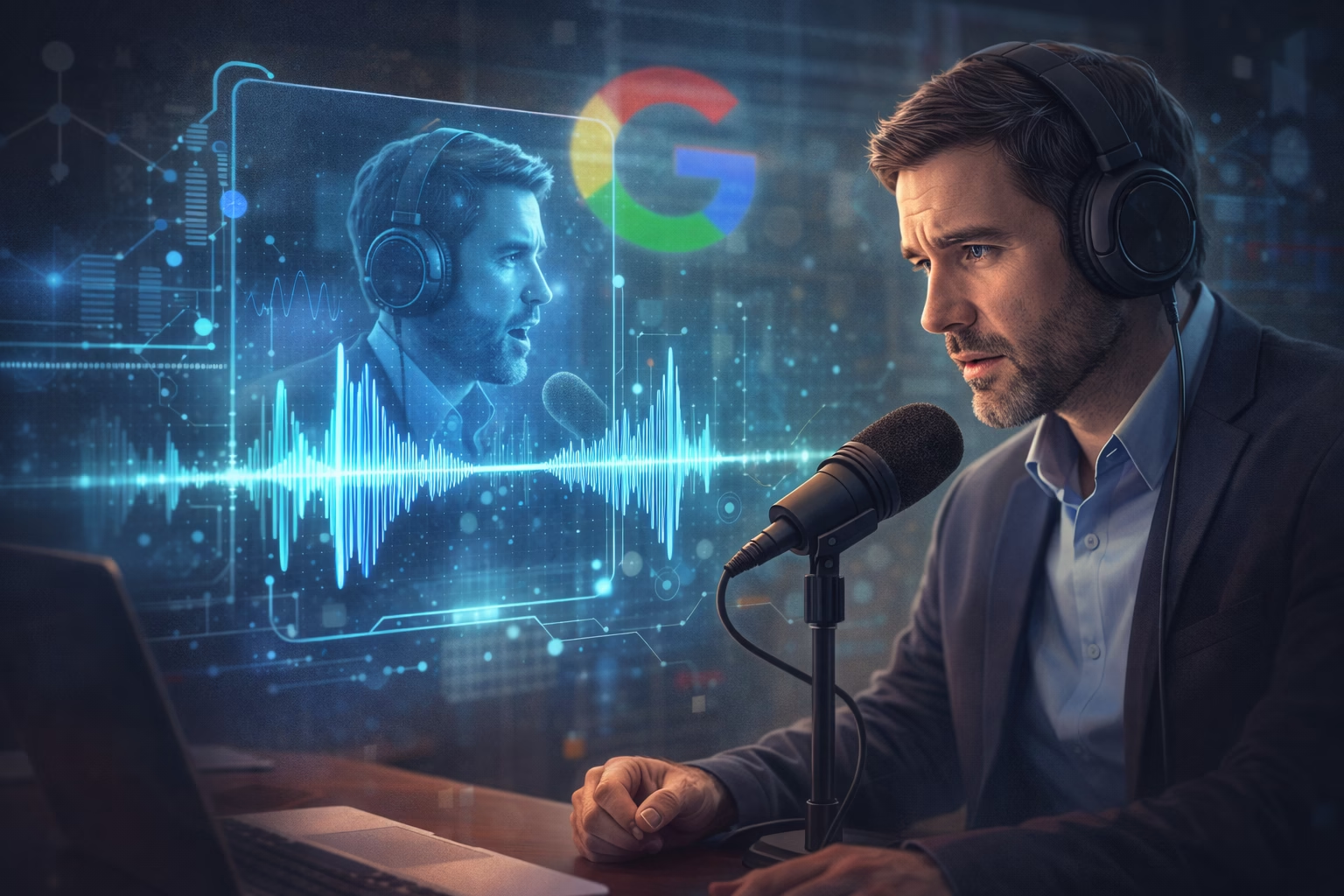
David Greene, a journalist and former host of NPR’s Morning Edition, says that Google’s AI tool, NotebookLM, uses a synthetic male voice that closely mimics his own. Greene asserts that the way the AI speaks — including cadence, tone, and delivery — sounds unmistakably like his voice, despite his never having granted permission for his recordings to be used.
Greene, who now co-hosts a political podcast, said he was “completely freaked out” when he first heard the synthetic voice. He added that friends and colleagues began reaching out to ask if he had licensed his voice to Google — a clear sign, he believes, that the resemblance goes beyond coincidence.
In his lawsuit, Greene argues that Google replicated features of his vocal style without consent or compensation, using it as part of NotebookLM’s “Audio Overviews” feature, which generates spoken summaries from notes and documents.
An independent analysis cited in the complaint suggested a relatively high confidence that the synthetic voice was trained on Greene’s own recorded speech. This forensic result helped convince Greene and his legal team that there may be merit to his claims.
Google Denies the Allegations
Google has responded to the lawsuit by calling the allegations unfounded. Company representatives say the male voice used in NotebookLM’s audio summaries is based on a paid professional voice actor that the company hired specifically for the product, not on Greene’s voice or any unauthorized source.
Greene’s legal team counters that even if a professional actor was used, AI systems may have been trained on large volumes of publicly available audio — including Greene’s own NPR recordings — without permission. They contend that the similarity between the AI voice and Greene’s voice could mislead listeners into thinking he endorsed or was involved with the tool.
Part of a Broader Pattern of Disputes
This lawsuit is one of several recent disputes over the use of human voices and likenesses in AI systems. Public figures, artists, and voice professionals have increasingly raised concerns about how voice cloning and synthetic speech technologies are developed and deployed.
Legal experts say Greene’s case could test how existing laws on publicity rights and intellectual property apply when AI mimics a real person’s voice and style. Unlike a traditional copyright dispute, these cases often hinge on whether the AI output is too close to the real voice and whether the resulting use harms the individual’s control over their identity.
Greene’s View: Identity, Consent, and Creative Control
Greene has stressed that his concern is not about opposing AI in general, but about protecting his own voice and professional identity. He described hearing the AI voice as an “eerie moment” that felt like listening to himself, despite having no involvement with the development or training of the AI tool.
In his statements, Greene said that his voice is central to his career and public presence. The idea that a synthetic version could be used without his consent or benefit feels deeply unsettling to him, both personally and professionally.
The lawsuit seeks unspecified damages and aims to prevent further use of the synthetic voice. A court in California may have to weigh complex legal questions about AI training data, consent, and ownership rights if the case moves forward.
Implications for the AI Industry
As artificial intelligence continues to expand into narration, media production, and voice synthesis, Greene’s lawsuit underscores a central question facing creators and companies alike: When does an AI voice cross the line from generic to unlawfully derivative?
Experts in AI ethics and law suggest that this case could set an important precedent. If developers are found responsible for compensating individuals or obtaining consent when training voice models, it could reshape how companies approach voice synthesis and the use of public recordings in AI training.
In the meantime, Google and Greene remain on opposing sides, each presenting very different views of how AI should treat the voices and identities of individuals. The outcome of this case will likely influence future disputes and might shape policy — both within the tech industry and in broader legal frameworks.
The lawsuit also highlights a broader cultural debate about creative rights and artificial intelligence. As voice cloning technology becomes more sophisticated, questions of consent, attribution, and control will become increasingly urgent for anyone whose voice or image might appear in large AI training datasets.
❓ Frequently Asked Questions (FAQs)
1. Who is the former NPR host suing Google?
David Greene, a former host of NPR’s Morning Edition and current podcast co-host, has filed a lawsuit against Google over AI-generated voice cloning.
2. What is the lawsuit about?
Greene alleges that Google used his voice without permission in its AI tool NotebookLM. The synthetic voice closely mimics his tone, cadence, and speaking style.
3. How did Google allegedly copy Greene’s voice?
According to the lawsuit, the AI voice was likely trained on publicly available audio recordings of Greene, resulting in a voice that sounds very similar to his own.
🚀 Elevate Your Digital Presence with RojrzTech
The digital landscape evolves rapidly. Brands thrive when they adapt quickly, innovate continuously, and leverage robust online systems. RojrzTech empowers your business with tailored solutions in Website Development, UI/UX Design, Social Media Management, SEO, Branding, and Custom Digital Services.
Our expert team builds strategies that align perfectly with your goals, helping you achieve a stronger online presence, higher engagement, and sustainable growth. Every project is designed to give your brand a competitive edge in a fast-moving digital world.
📩 Ready to Transform Your Digital Future?
Don’t wait to take your brand to the next level. Contact RojrzTech today and start creating a digital experience that resonates, converts, and grows. Together, we’ll design, innovate, and elevate your brand’s online journey