
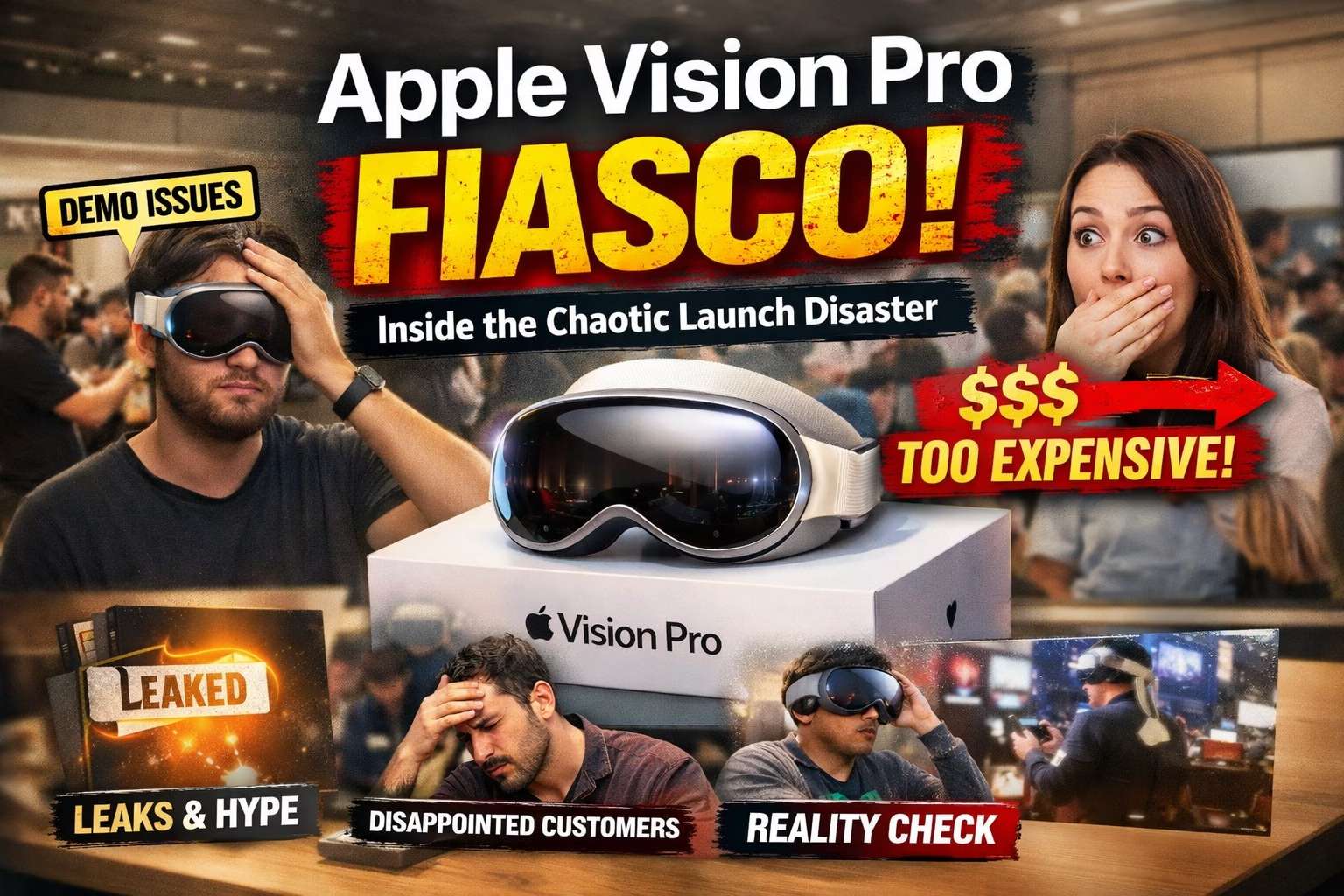
An Inside Look at the ‘Fiasco’ of the Vision Pro Launch in Apple Stores
The launch of the Apple Vision Pro was supposed to mark a new era in spatial computing. Positioned as a revolutionary device that blends augmented reality (AR) and virtual reality (VR), Apple’s ambitious headset promised to redefine how we work, consume media, and interact with digital environments.
However, what unfolded in many Apple Stores during its rollout has been described by insiders and customers alike as a “vision pro fiasco.” From confusing demos to underwhelming customer reactions, the launch exposed a gap between Apple’s futuristic vision and real-world execution.
Let’s take an inside look at what really happened.
The Hype: A Revolution in Progress
Before its release, the Apple Vision Pro was marketed as nothing short of groundbreaking. Apple showcased immersive experiences—users watching movies in virtual theaters, working across floating screens, and interacting with digital objects as if they existed in the real world.
This narrative fueled the keyword idea: “apple vision pro review a revolution in progress.” On paper, the device truly is a technological marvel:
- Ultra-high-resolution displays
- Advanced eye and hand tracking
- Seamless integration with the Apple ecosystem
Yet, hype can be a double-edged sword. The higher the expectations, the harder the fall.
Inside Apple Stores: Where Things Went Wrong
1. Complicated Demo Experience
Unlike iPhones or MacBooks, the Vision Pro isn’t a device you can casually pick up and try. The demo process in Apple Stores required:
- Scheduled appointments
- Staff-assisted setup
- Personalized calibration
This made the experience feel more like a medical fitting than a tech demo. Many customers walked in expecting a quick trial but were turned away or asked to wait.
The result? Frustration and missed opportunities.
2. Staff Struggles and Training Gaps
Retail employees faced a steep learning curve. Explaining spatial computing concepts to everyday customers proved challenging.
Even simple questions like:
- “What can I actually do with this?”
- “Is it better than VR headsets I already own?”
…were not always answered convincingly.
This contributed to the growing narrative of an “apple vision fiasco,” where even Apple’s famously polished retail experience felt unprepared.
3. The Price Shock
At $3,499, the Vision Pro sits far beyond mainstream consumer budgets.
While Apple positioned it as a premium, next-gen product, many customers perceived it as:
- Too expensive for casual use
- Not essential for daily life
- Lacking clear practical value
The disconnect between price and perceived utility played a major role in the apple vision pro result being less enthusiastic than expected.
Real-World Usage: Where Expectations Meet Reality
Practical Example: Work vs Reality
One of the most promoted use cases was productivity—replacing traditional monitors with floating digital screens.
In theory:
- Infinite screen space
- Seamless multitasking
- Immersive workflows
In practice:
- Eye strain after extended use
- Limited app ecosystem
- Physical discomfort from wearing the headset
This highlights the keyword: “apple vision pro practical example”—the difference between concept and usability is still significant.
The “Unboxing Experience” vs Reality
Online, the Vision Pro looked stunning. Premium packaging, sleek design, and futuristic aesthetics made unboxing videos go viral.
The phrase “an ignorant vision pro unboxing apple vision pro” reflects a growing sentiment—people were impressed by the packaging but confused about actual usage.
Once the initial excitement faded, users began asking:
- What problem does this solve?
- How often will I realistically use it?
Leaks vs Launch Reality
Before release, numerous apple vision pro leaks hinted at revolutionary features and seamless performance.
While many leaks were accurate, they didn’t fully capture:
- The complexity of onboarding
- The limitations of current apps
- The physical experience of wearing the device
This mismatch added to the perception that the launch was overpromised and underdelivered.
Why the Launch Felt Like a “Fiasco”
The term vision pro fiasco may sound harsh, but it reflects a combination of issues:
1. Overhyped Expectations
Apple set the bar extremely high, making any imperfection more noticeable.
2. Retail Experience Breakdown
Apple Stores, usually a strong point, struggled to deliver smooth demos.
3. Lack of Clear Use Cases
Consumers couldn’t justify the price without strong, everyday applications.
4. Early-Adopter Product Reality
Despite its polish, Vision Pro still feels like a first-generation device.
Is It Really a Failure?
Not necessarily.
The Apple Vision Pro represents the beginning of a long-term vision. Just like the first iPhone or Apple Watch, early versions are rarely perfect.
Instead of a failure, it may be more accurate to call it:
- A prototype for the future
- A developer-focused platform
- A premium experiment in spatial computing
The “fiasco” is less about the technology and more about how it was introduced to the public.
The Road Ahead for Vision Pro
For Vision Pro to succeed, Apple will likely need to:
- Lower the price in future versions
- Expand the app ecosystem
- Simplify the onboarding experience
- Improve comfort and battery life
If these improvements happen, today’s criticism could turn into tomorrow’s success story.
FAQs
1. What is the Apple Vision Pro?
The Apple Vision Pro is a mixed reality headset that combines augmented and virtual reality to create immersive digital experiences.
2. Why is it being called a “Vision Pro fiasco”?
The term refers to the disappointing in-store launch experience, high price, and lack of clear everyday use cases.
3. Is the Apple Vision Pro worth buying?
It depends. For developers and tech enthusiasts, it’s exciting. For average users, it may feel expensive and unnecessary right now.
4. What are the main problems with Vision Pro?
Key issues include high cost, limited apps, complex demos, and physical discomfort during long use.
5. Are the leaks about Vision Pro accurate?
Many leaks were accurate about features, but they didn’t fully reflect real-world usability challenges
🚀 Build a Stronger Digital Footprint with RojrzTech
In a constantly changing digital environment, brands succeed by staying flexible and focused. RojrzTech delivers tailored solutions across web development, UI/UX, SEO, branding, and social media to help businesses strengthen visibility and performance online.
📩 Start Your Digital Growth Journey
Connect with RojrzTech to create digital experiences that support long-term growth and meaningful engagement. Let’s shape a smarter, more impactful online presence